
Leisure
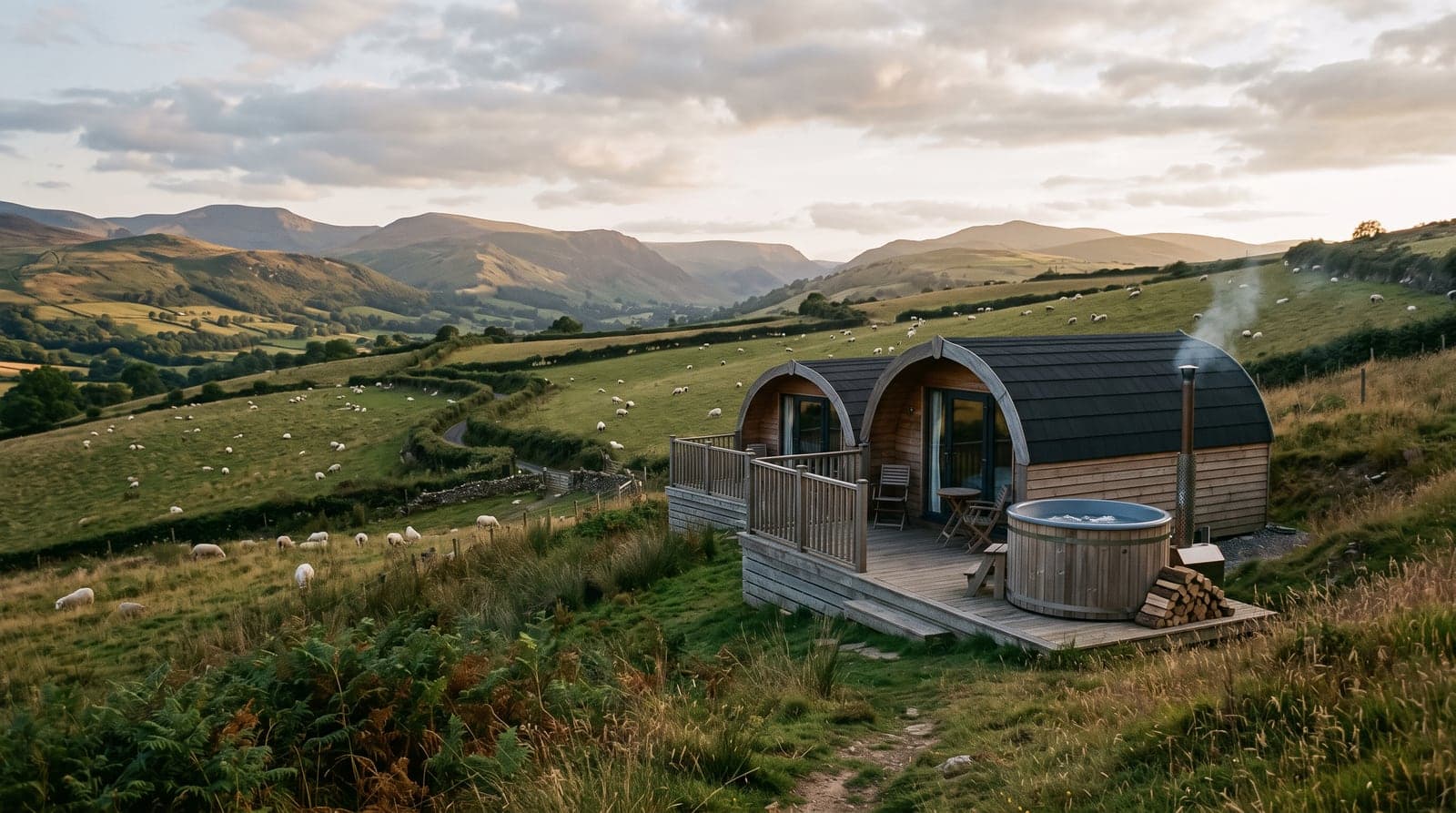
Holiday lodges, Wales
Refused once on noise, with eight objections second time round. The case had to not depend on guests behaving.
Assessed against
- IEMA Guidelines for Environmental Noise Impact Assessment (2014)
- BS 4142:2014+A1:2019
- BS 8233:2014
- ISO 1996-2:2017
- WHO Guidelines for Community Noise (1999)
The challenge
A rural landowner was resubmitting a scheme for holiday lodges after committee refused the first one. Noise was a stated reason: the units, the parking and the activity were held to disturb neighbours in a quiet spot.
The resubmission cut hard: half the units, capacity down by nearly two thirds, every unit solid-walled, parking reduced and moved, and nothing sited within thirty-five metres of a neighbouring house against a local guide figure of twenty-one. It still drew seven objections from neighbours and one from the community council, all about guests outdoors, hot tubs, cars coming and going, and, the recurring theme, scepticism that any policy about guest behaviour could be relied on.
There was also a technical obstacle. The sources in dispute were people talking and personal speakers, and the standard normally used for this kind of comparison explicitly does not apply to either. Using it anyway would have been a misapplication an objector could have taken apart.
What we did
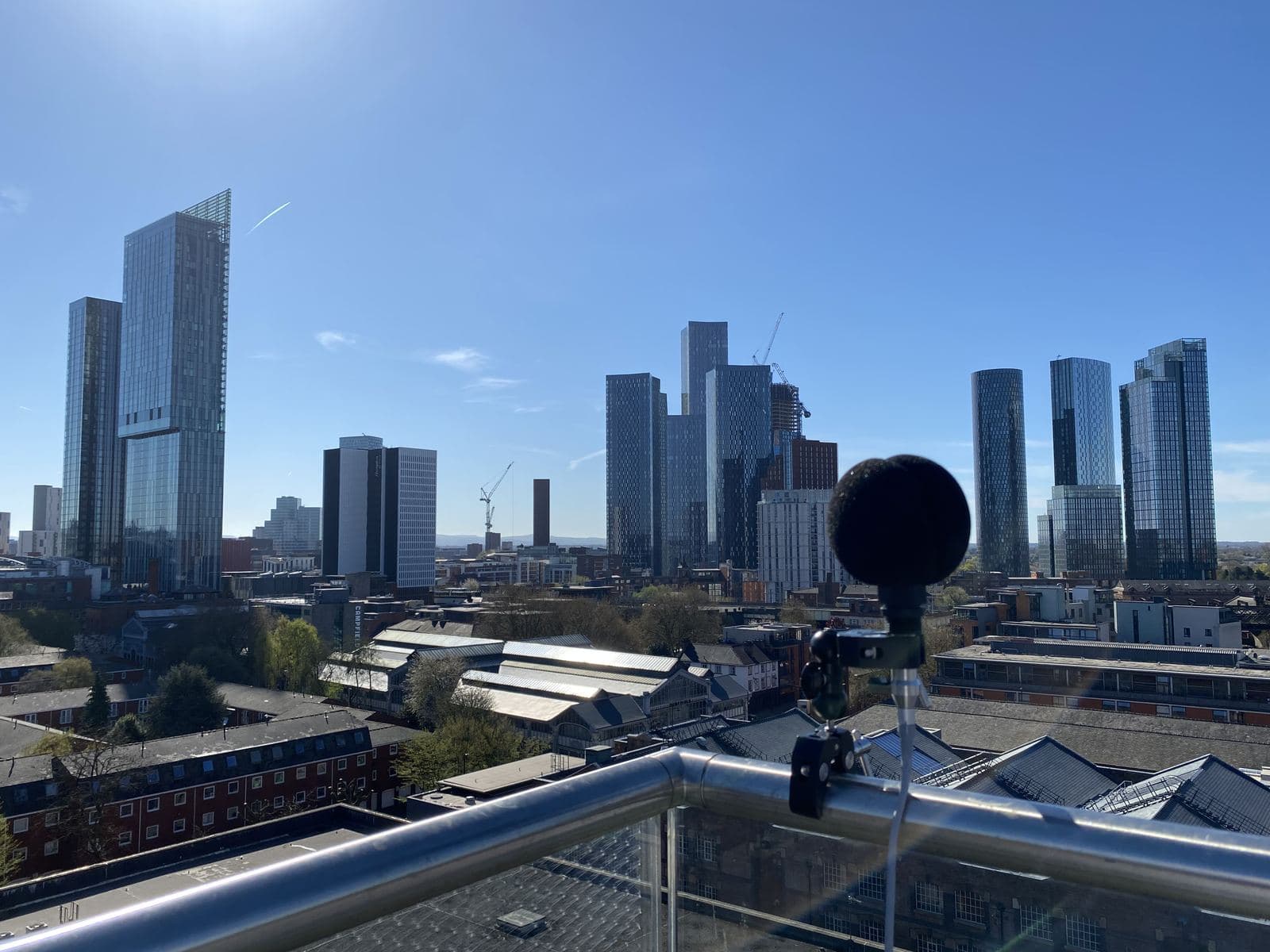
We monitored for a full week at the corner of the nearest neighbour's garden closest to the lodges, so the measurement position represented both the person affected and the path the sound would travel. Despite the rural setting, a dual carriageway half a kilometre away and in clear view dominates the soundscape.
We assessed the change in the overall sound level rather than against an absolute limit, which is the appropriate framework for this kind of noise. Crucially, we used the quietest days recorded as the baseline rather than a typical one, because a quieter starting point makes any addition look bigger, which is the conservative direction.
Then we built a worst case that deliberately assumed the objectors were right. Every lodge occupied and generating noise at once, someone talking with a raised voice at every one, *and* a portable speaker playing at every one, which the site's own rules prohibit, all running continuously, with no credit for screening, ground or air absorption. We ran a second test for after eleven at night, dropping to normal conversation with the music stopped.
The outcome
The change at the neighbour's house came out below one decibel in every period, smaller than the smallest difference people can detect even in laboratory conditions. We also checked the absolute level in a bedroom after eleven, and it sits far below the guideline for sleep.
The point that mattered, though, is what the conclusion does *not* rest on. It does not depend on guests behaving, or on any management measure, because the assessed case already assumes speakers at every lodge in breach of the site's own policy and conversation outdoors after quiet hours. That met the objectors' central argument head-on rather than asking the committee to take the operator's word for it.
Good-practice management measures were still offered, capable of being secured by condition, but as reassurance, not as something the assessment leans on. The report concluded noise should not be a barrier to permission.
A similar project on your desk?
That is genuinely enough to price most jobs. You will have a fixed quote back the same working day.