Skip to content
Murray Acoustics
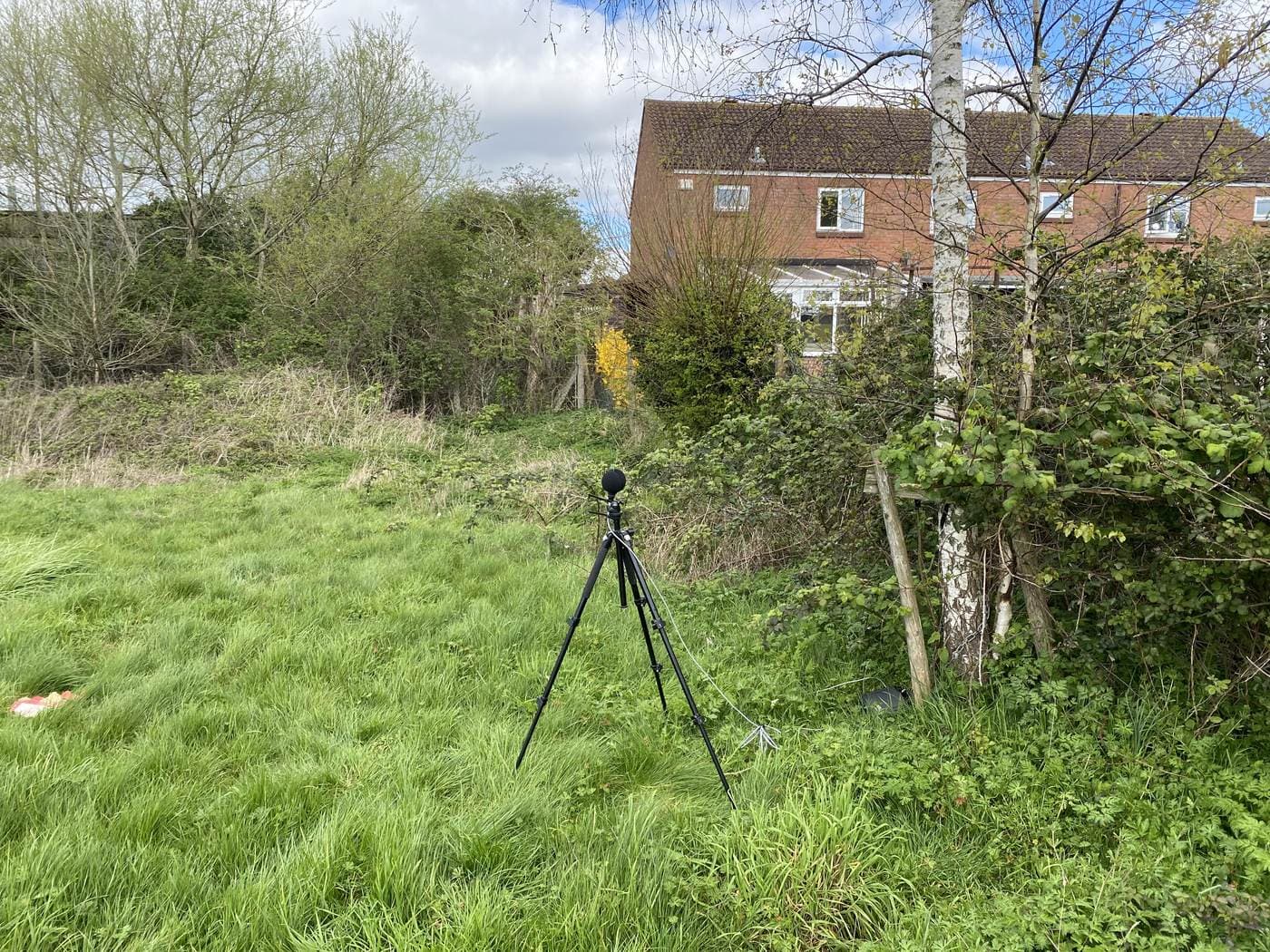
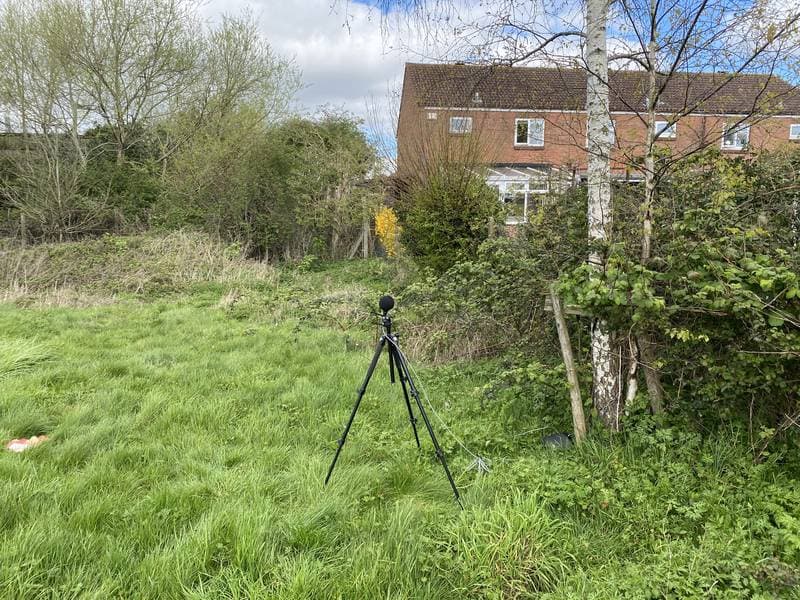
A sound level meter on a tripod logging environmental noise in a field beside housing

Noise Surveys

Noise surveys: measure first, decide with data.

Baseline and environmental monitoring, attended or unattended.

Fixed fee agreed up front · Quote back the same working day

The service

What it is, and when you need it.

A noise survey establishes what the site sounds like now: background (LA90) and ambient (LAeq) levels, measured with Class 1 instrumentation, attended or unattended. It's the evidence base for BS 4142 and BS 8233 assessments, and for answering the council with data rather than opinion.

The council asked for one

A survey requirement in planning correspondence, or “noise survey” on a validation checklist.

Before you commit

Feasibility: understand a site's noise climate before you buy the land or fix the design.

A complaint landed

Baseline data to respond to an Environmental Health Officer properly.

A licence application

Venues, events and late-opening premises that need evidence behind the application.

What you get

What the fee covers.

One fee, fixed before anything starts. Everything listed here is inside it.

  • Class 1 sound level meters deployed at agreed, justified positions
  • Attended measurement or multi-day unattended logging, whichever the job needs
  • Analysis of LA90 background and LAeq ambient levels, with weather records to show valid conditions
  • A clear written report (methodology, results, recommendations) suitable for any UK local planning authority
  • The raw data is yours to keep
  • Fixed fee agreed up front. No day rates, no surprises.

How a survey runs, start to finish

Send the site postcode and whatever the council has said so far. We confirm the scope and a fixed fee the same day, then book the survey around your programme. Most planning surveys need at least 24 hours of unattended logging (longer where night-time operation or weekend variation matters), and all we need from you is somewhere secure to site the kit.

On site, Class 1 meters are calibrated before and after measurement. Unattended loggers run in weatherproof enclosures, capturing LA90 and LAeq levels in agreed intervals across the full monitoring period; attended measurement adds an engineer listening and noting exactly which sources are doing what, which matters when a specific plant item, road or premises is in question. Weather data sits alongside the noise data, so nobody can argue the conditions were invalid.

The report lands within five working days of the survey: methodology, measurement positions, results, time-history charts, and what the numbers mean for your project, with the raw data included. If the survey is feeding a BS 4142 or BS 8233 assessment, the same data carries straight through, so you never pay to measure the same site twice.
What the survey actually measures

A noise survey is not one number. The logger records a set of statistical indices every period, and each answers a different question. The LAeq is the equivalent continuous level, the energy average, and it is what BS 8233 internal targets and most planning conditions are written against. The LA90 is the level exceeded for 90% of the time, which is taken as the background sound level and is what BS 4142 compares plant against. The LAmax captures individual events, and it is what governs sleep disturbance where a railway or a delivery yard is the concern.

Reporting only the LAeq is the most common shortcoming we see in surveys carried out by others. A site can have a perfectly ordinary average level and a background low enough that any plant proposal fails, or an unremarkable average punctuated by pass-by events well above the threshold at which people wake. The indices have to be reported together, because the conclusion depends on which one governs.

Alongside the numbers, a survey should record what was actually audible. Where a level is driven by a specific source, an assessment that identifies it is worth considerably more than one reporting an anonymous figure, because mitigation depends on knowing what is making the noise.

Getting the survey period right

The single biggest determinant of whether a survey survives scrutiny is whether it was carried out over a representative period. A weekday survey on an industrial estate misses the Sunday morning conditions that generate complaints. A survey in the school holidays misses term-time traffic. A survey in still weather misses the wind-induced levels that mask plant for half the year.

For most planning applications that means at least 24 hours of unattended logging, extended where the environment varies. Where a night-time background is the controlling figure, we would normally log several consecutive nights, because a single night can be unrepresentatively quiet or unrepresentatively noisy and there is no way to tell from one night's data which you have.

Weather matters more than people expect, and not just for equipment protection. Measurements taken during rain or in wind above roughly 5 m/s are unreliable, and a survey that does not record the weather conditions alongside the levels cannot demonstrate that they were valid. We log weather throughout and exclude affected periods rather than quietly averaging them in.

What the fee covers, and what changes it

The fee is fixed against a defined scope: the number of measurement positions, the duration of logging, whether attended measurement is needed alongside the unattended logger, and which standards the assessment is written to. Those four variables account for almost all the difference between a straightforward survey and an expensive one.

What does not change the fee is travel. Most surveys are unattended, so equipment is deployed and collected, and distance affects our costs rather than yours. Nor does the result: we are paid to measure and assess, not to reach a particular conclusion, and a survey that finds a problem takes the same effort as one that does not.

What can change it is a change of scope after the fact. If the council asks for something the original condition did not require, or the scheme changes so that a different receptor becomes the worst affected, that is additional work and we will quote it before doing it rather than after. The one thing we will not do is discover extra cost once the survey is already on site.

Questions

Asked often.

What is a background noise survey?

A background noise survey measures the LA90: the sound level exceeded for 90% of each measurement period, effectively the steady hum beneath individual noise events. It's measured at the nearest noise-sensitive locations, covering the quietest periods that matter to your project, and it's the reference level that BS 4142 rates plant and commercial noise against.

What's the difference between a noise survey and a noise impact assessment?

A survey measures what's there. An assessment interprets it, comparing measured levels against the relevant standards and setting out conclusions and mitigation in a report. Planning conditions almost always require the assessment, not just the measurement. Every survey we do is designed so the data feeds straight into the assessment if you need one.

What's the difference between attended and unattended monitoring?

Unattended monitoring leaves a logger running for days at a time. It captures how levels vary across day, night and weekend without anyone standing next to it. Attended measurement puts an engineer on site with a handheld meter, noting exactly which sources contribute what. Unattended gives duration; attended gives diagnosis. Many surveys combine both, and we'll recommend whichever the job actually needs.

When do I need a noise survey for planning?

If you're proposing a noise-sensitive development near an existing source (a road, railway or industrial premises) or a development that generates noise, such as new plant, hospitality or industry, your council is likely to ask for one. Common triggers: a BS 4142 or BS 8233 requirement in planning correspondence, NPPF paragraph 191, ProPG for new residential, or “noise impact assessment” on a validation checklist.

How much does a noise survey cost?

Across the UK, most planning noise surveys land between £1,450 and £2,500 +VAT; complex multi-source schemes cost more. What moves the figure is scope: measurement positions, logging duration, whether attended measurement is needed, and which standards the assessment is written to. Yours is a fixed fee agreed up front. Send a postcode and a sentence and we'll come back with the number, and it won't move.

How long does a noise survey take?

Most planning surveys need at least 24 hours of unattended logging. From instruction to final report is typically inside two weeks, and the report itself lands within five working days of the survey. If you're up against a deadline, tell us. Rush delivery is available.

How long does the monitoring equipment stay on site?

Usually 24 hours minimum, and often 48 hours to a week where night-time levels, weekend variation or worst-case conditions matter to the assessment. The kit is a self-contained logger, installed and collected around your site's access, with no supervision needed in between.

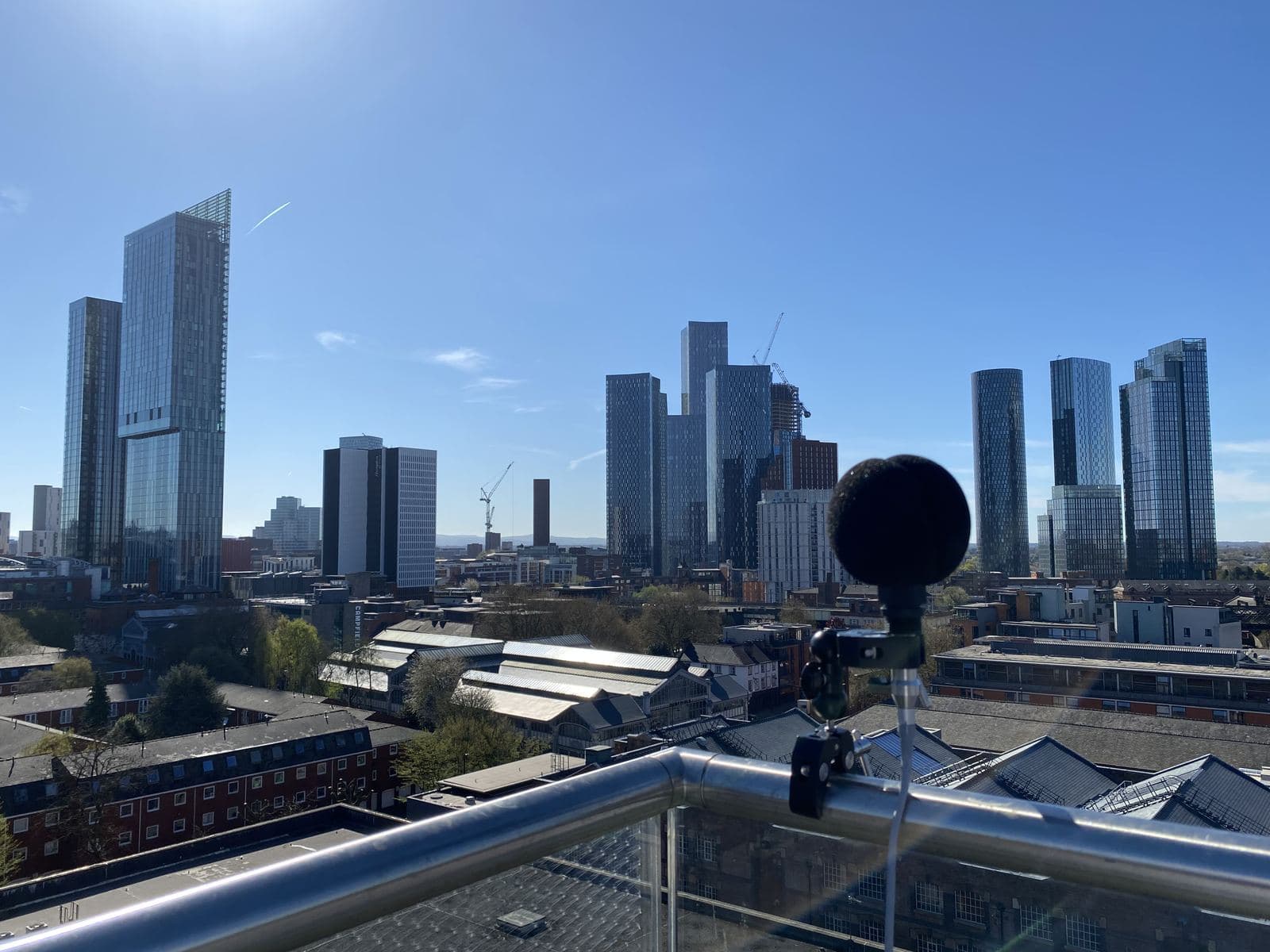
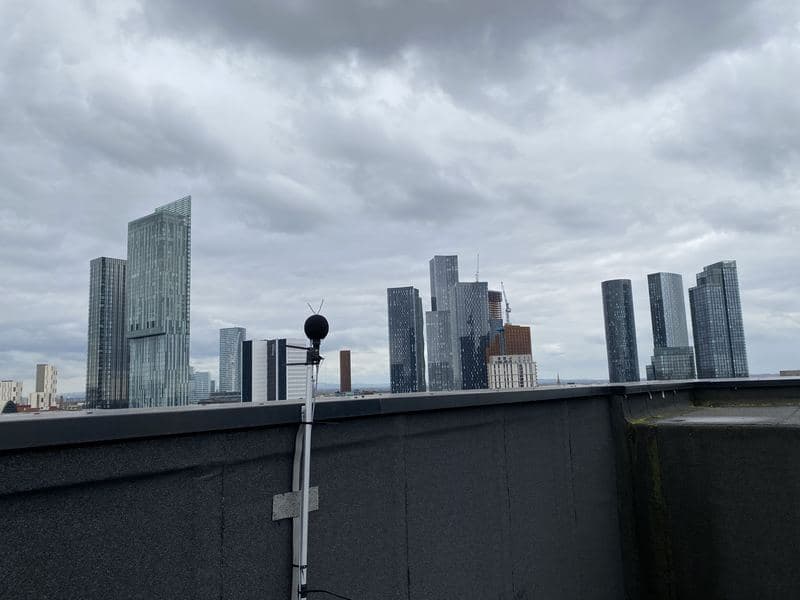
A sound level meter monitoring overnight on a Manchester rooftop

Send a postcode and a sentence.

That is genuinely enough to price most jobs. You will have a fixed quote back the same working day.