Skip to content
Murray Acoustics
Environmental Statement volumes open at a figure drawing on a desk

EIA Noise & Vibration Chapters

EIA noise: the chapter that gets read twice.

Noise and vibration chapters for Environmental Statements, written to survive the scrutiny an EIA scheme attracts.

Fixed fee agreed up front · Quote back the same working day

The service

What it is, and when you need it.

On an EIA scheme, noise is one of the topics objectors and consultees reliably go to first. The chapter has to be defensible line by line, not just conclusive.

A scheme requiring formal EIA

Either because it falls within a Schedule of the EIA Regulations, or because a screening opinion has determined that significant effects are likely.

A scoping opinion mentioning noise

The scoping stage sets what your chapter has to cover. Getting it agreed properly limits the work later and avoids a request for further information.

A Nationally Significant Infrastructure Project

NSIP schemes are examined rather than determined by a council, and the evidence standard is correspondingly higher.

A chapter that has been challenged

Where a consultee or an objector has criticised the noise assessment, and the response has to be technical rather than rhetorical.

What you get

What the fee covers.

One fee, fixed before anything starts. Everything listed here is inside it.

Written to

  • Scoping input: what should be assessed, at which receptors, against which criteria, agreed with the authority
  • Baseline survey across representative periods, with the method recorded in full
  • Construction noise and vibration effects by phase, to BS 5228
  • Operational effects, to BS 4142 or the relevant source-specific method
  • Cumulative and in-combination effects with other committed development
  • Significance evaluation, mitigation, residual effects and the monitoring commitments to secure them

Significance is the whole job

An EIA chapter is not a noise report with more pages. The question it answers is not what the levels are but whether the effects are significant, and significance is a reasoned judgement combining the magnitude of change, the sensitivity of the receptor and the duration and reversibility of the effect.

That judgement has to be transparent. A chapter that reports levels and then asserts a conclusion is the easiest kind to attack, because the reader cannot see how one produced the other. Setting out the significance criteria before applying them, and applying them consistently across every receptor, is what makes a chapter hold up when it is read adversarially.

Cumulative effects

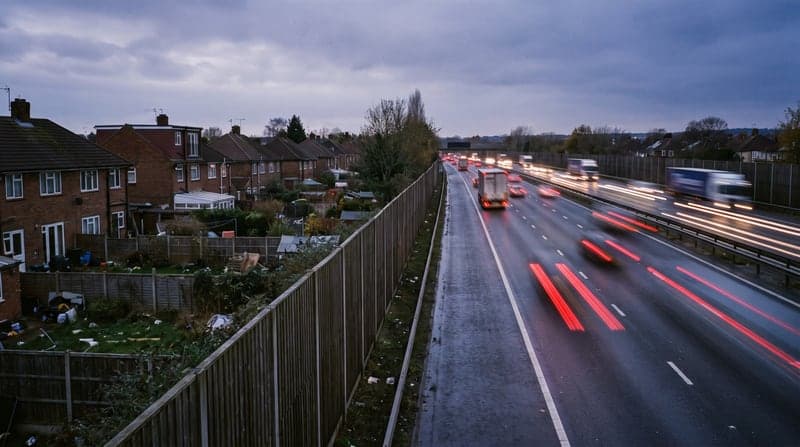
Cumulative assessment is where chapters most often fall short. Two questions have to be answered: the combined effect of different environmental topics on the same receptor, and the combined effect of this scheme alongside other committed development nearby.

The second requires knowing what else is consented or in the system, which means agreeing the list of committed schemes with the authority at scoping rather than choosing it yourself later. Where several schemes affect the same homes, a chapter that assesses only its own contribution is technically correct and practically indefensible.

Write it to be attacked

Chapters on EIA schemes are read by objectors, consultees and sometimes an inspector at examination, all of whom are looking for the weak point. The ones that survive share the same characteristics: every assumption stated, every limitation acknowledged, the baseline survey long enough that its representativeness is not arguable, and the mitigation secured through a mechanism such as a condition, a management plan or a monitoring commitment rather than merely recommended.

The most damaging thing a chapter can contain is an unexplained departure from standard practice. Where there is a good reason to deviate, say so and give the reason. Where there is not, do not deviate.

Questions

Asked often.

Does my scheme need EIA?

It depends on the type and scale of development and its location. Schedule 1 development always requires it; Schedule 2 development requires it where significant environmental effects are likely, which is determined through a screening opinion from the authority. We can advise whether noise is likely to be a screening issue.

What is the difference between an EIA chapter and a standalone noise report?

Scope and framing. A standalone report assesses noise against a standard. An EIA chapter assesses the significance of effects within a defined methodology, covers construction and operation together, considers cumulative effects with other development, and has to secure its mitigation rather than recommend it.

Can you take over a chapter from another consultant?

Yes, though we would review what exists before committing to a timescale. If the baseline survey is sound the rest is usually recoverable; if the baseline is too short or unrepresentative, that has to be redone and it drives the programme.

How long does the baseline survey take?

Longer than for a standard planning assessment. EIA baselines normally need several days of unattended monitoring at multiple positions, chosen to represent the range of receptors, and it is worth allowing for that in the programme rather than compressing it.

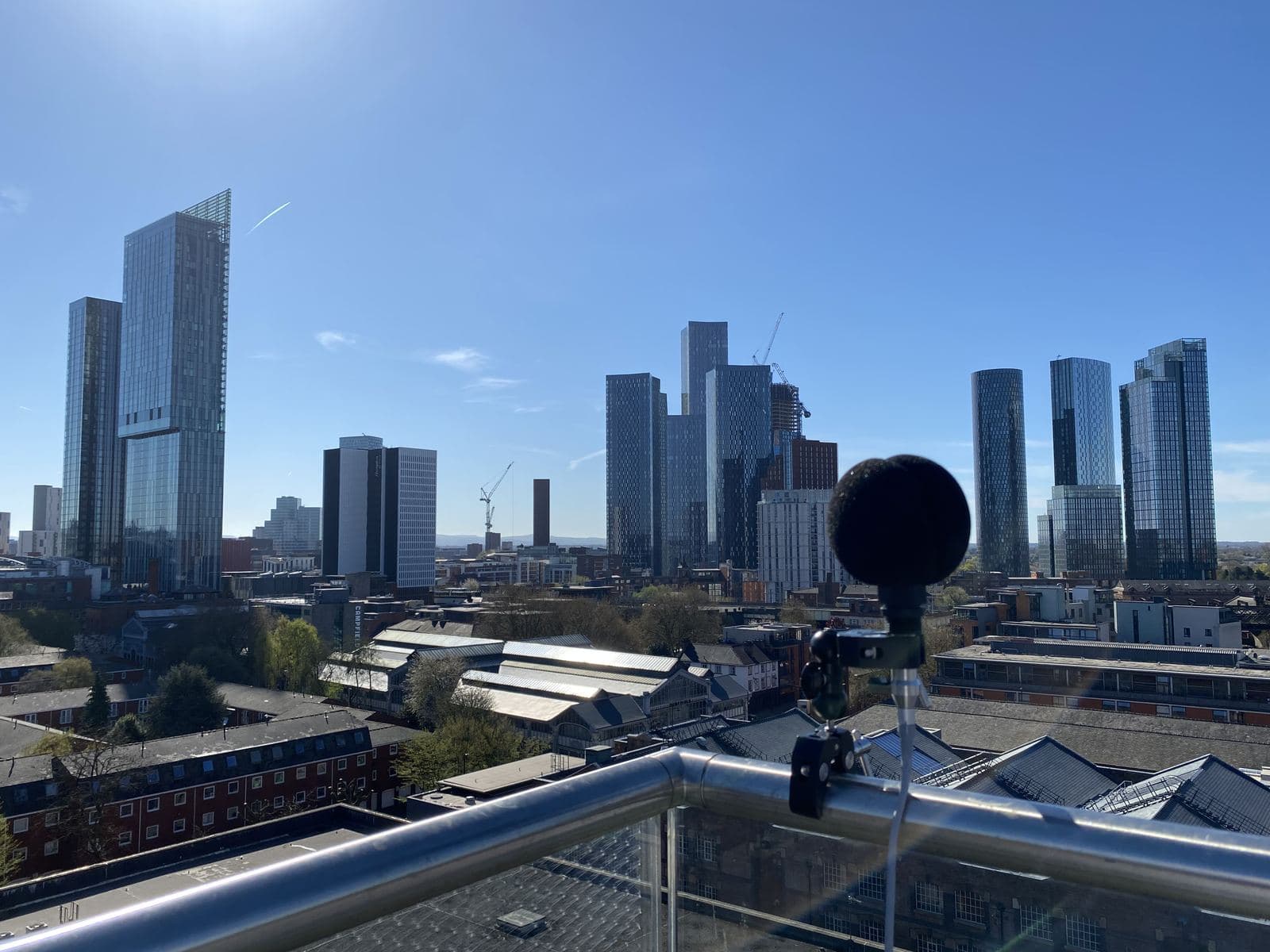
A sound level meter monitoring overnight on a Manchester rooftop

Send a postcode and a sentence.

That is genuinely enough to price most jobs. You will have a fixed quote back the same working day.