Skip to content
Murray Acoustics
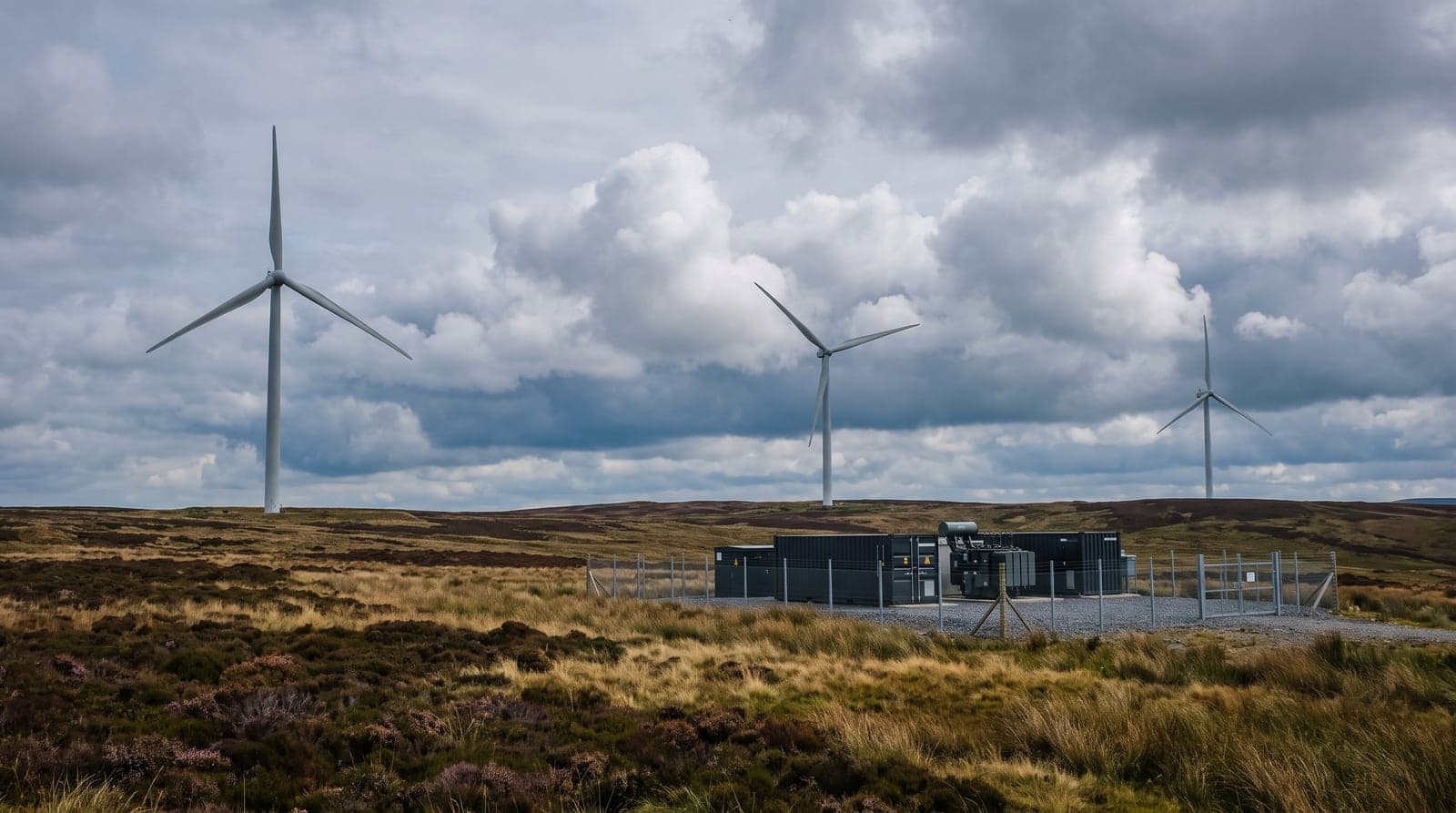
Battery storage containers alongside solar panels and a wind turbine

Renewables & Data Centres

Renewable energy noise: quiet technology in very quiet places.

Battery storage, solar, wind and data centres. Continuous, tonal plant, usually proposed somewhere very quiet.

Fixed fee agreed up front · Quote back the same working day

The service

What it is, and when you need it.

Battery storage and data centres are not loud by industrial standards. They are proposed in fields, run all night, and hum on a single note, which is a harder combination than it sounds.

A battery energy storage scheme

BESS sites are now among the most commonly refused developments on noise grounds, and almost always for the same reasons.

A solar farm with inverters or a substation

The panels are silent. The inverters, transformers and cooling are not, and they are what the assessment is about.

A data centre or compute facility

Continuous cooling load, frequently the largest single plant item in the area, with residential closer than the operator would like.

A wind development

Wind turbine noise has its own assessment framework rather than being handled under BS 4142, and it is worth knowing that from the start.

What you get

What the fee covers.

One fee, fixed before anything starts. Everything listed here is inside it.

Written to

  • Background sound survey covering the quietest representative night-time periods, logged over several days
  • Source data from manufacturer information, verified against measurement of comparable installed plant
  • Three-dimensional modelling where multiple units, screening or terrain make a simple calculation unreliable
  • Assessment with tonality corrections properly justified rather than omitted
  • Mitigation design: layout, separation, acoustic barriers, enclosures, attenuators or unit selection
  • A report written for the planning committee as well as the environmental health officer

Why battery storage keeps failing

BESS schemes fail on noise for a consistent set of reasons. The sites are rural, so the night-time background sound level is often in the low twenties, and BS 4142 compares against that background rather than against a fixed limit. A development that would be unremarkable on an industrial estate has almost no headroom in a field.

The sound itself makes it worse. Cooling fans and inverters produce strongly tonal noise, a hum at a specific frequency that is noticeable well below the level at which broadband noise would be. That attracts a tonality correction of up to 6 dB, and an assessment that reports no correction for plant that is audibly tonal is the first thing a competent objector will attack.

The third factor is quantity. These sites are arrays of many identical units, and identical units at similar distances add up predictably. Assessments based on a single unit's data, without properly combining the array, understate the result significantly.
Wind is a separate framework

Wind turbine noise is not assessed under BS 4142. The established UK framework is ETSU-R-97, supported by the Institute of Acoustics Good Practice Guide, which sets noise limits relative to background that vary with wind speed and differ between day and night, with separate provision for quiet daytime periods and for financially involved receptors.

The complication specific to wind is that both the source and the background change with wind speed at the same time, so the assessment works in terms of the relationship between wind speed and noise level rather than single figures. Amplitude modulation, the characteristic beating some turbines produce, is assessed separately again.

Data centres

Data centres present a straightforward source with a difficult context: very large continuous cooling loads, running at full capacity in exactly the warm, still conditions when windows are open and background sound is lowest. Assessments based on average operation rather than the worst credible cooling scenario systematically understate the result.

As with BESS, the practical fix is usually spatial rather than technical. Where the plant sits, how it is oriented and what screens it typically achieve more than an attenuator specification bolted on afterwards, and cost far less.

Questions

Asked often.

Why do BESS applications get refused on noise?

A combination of three things: very low rural background levels leaving no headroom, strongly tonal cooling and inverter noise attracting a character correction, and arrays of many units whose combined level is understated when the assessment is built from one unit's data.

What is ETSU-R-97?

The established UK framework for assessing wind turbine noise, supported by the Institute of Acoustics Good Practice Guide. It sets limits relative to background that vary with wind speed, with separate day and night provisions, and it is used instead of BS 4142 for wind development.

Are solar farms a noise issue at all?

The panels are silent, but the inverters, transformers and their cooling are not, and on a rural site with a low background they need assessing. It is normally a straightforward BS 4142 assessment provided the source data reflects the actual equipment and its layout.

When should we get the assessment done?

Before the layout is fixed. On these schemes separation distance and unit position do more for the result than any mitigation product, and both are effectively free while the drawing is still in progress.

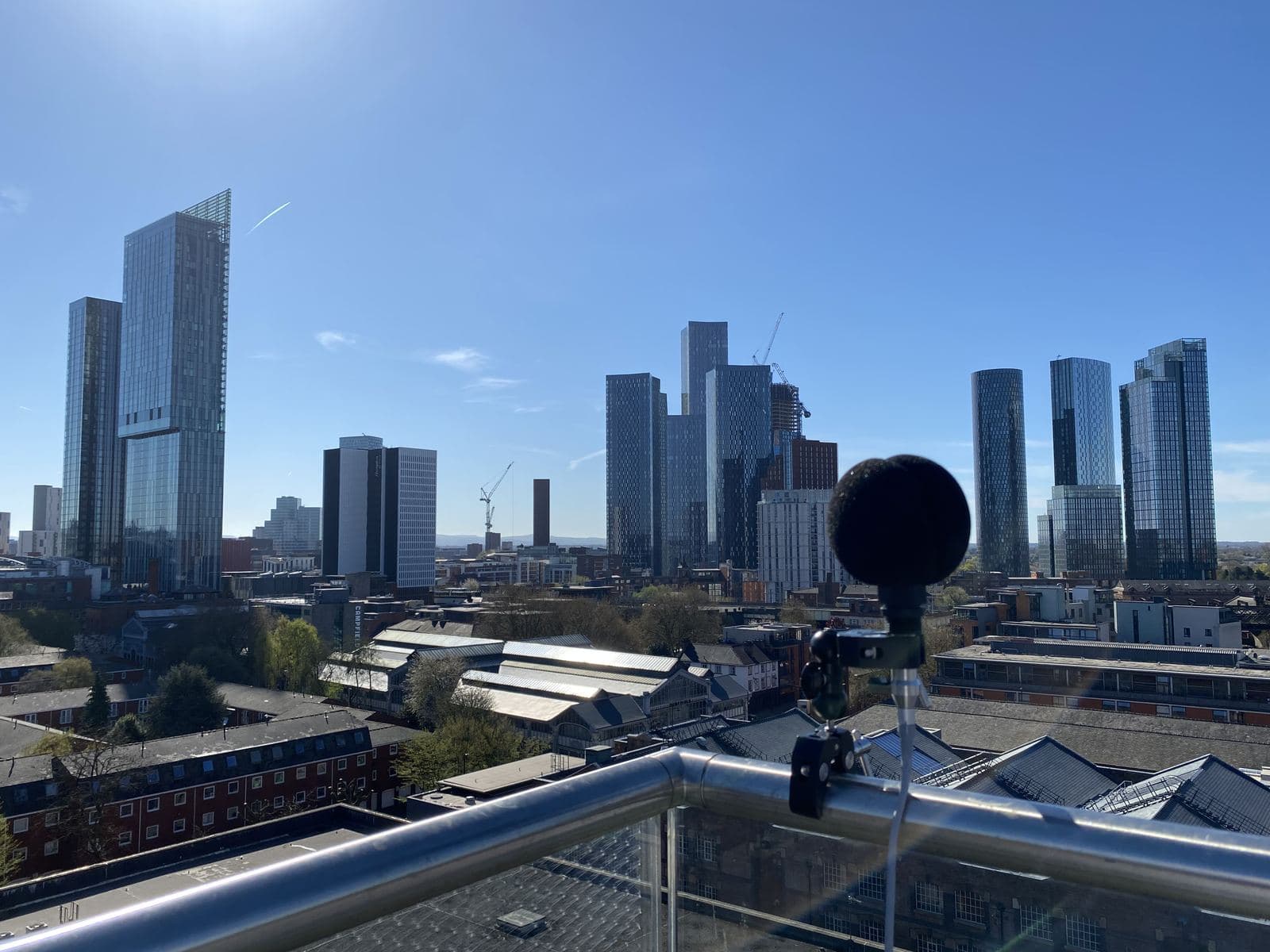
A sound level meter monitoring overnight on a Manchester rooftop

Send a postcode and a sentence.

That is genuinely enough to price most jobs. You will have a fixed quote back the same working day.