Skip to content
Murray Acoustics
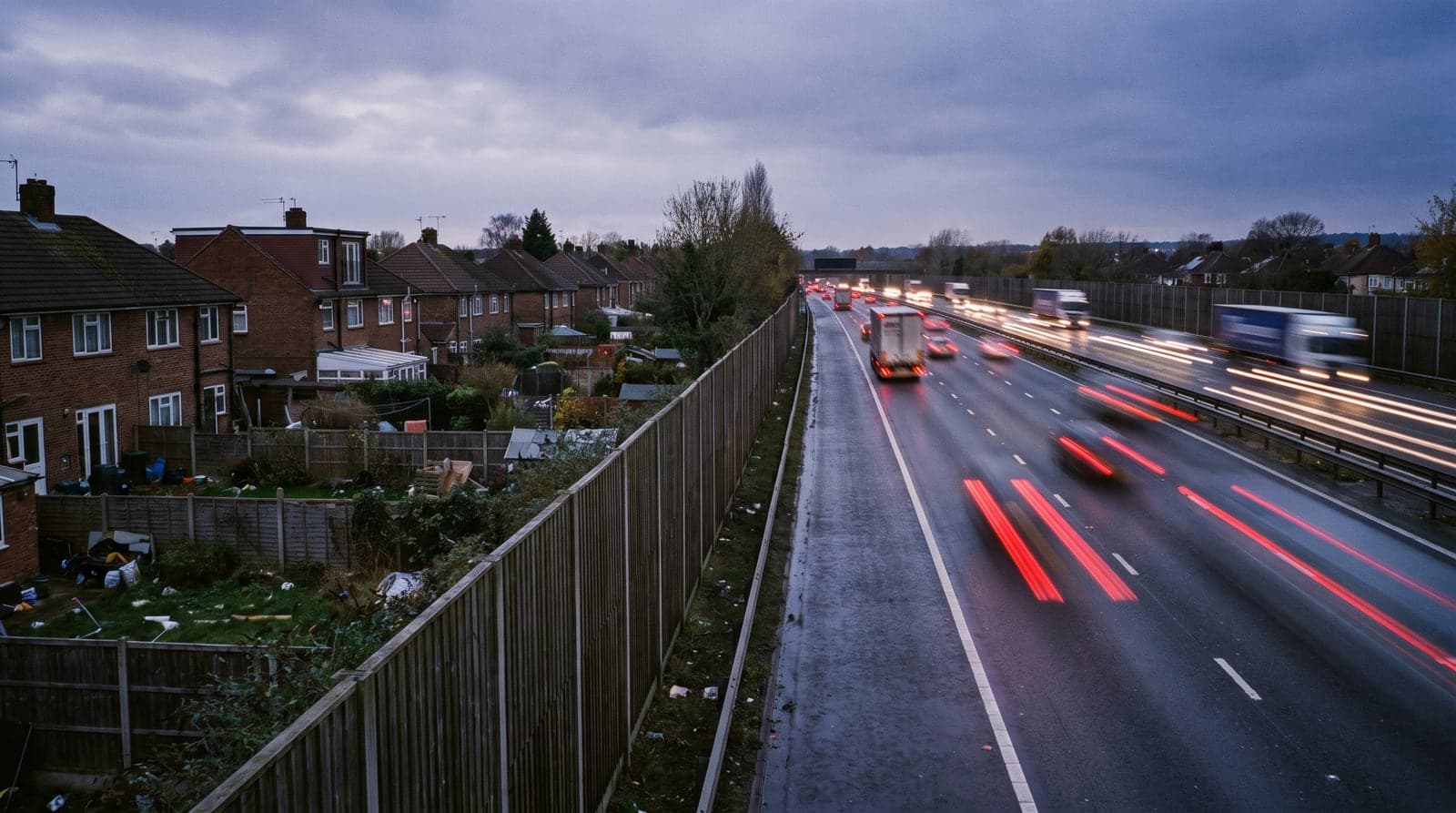
Sound level meter on a tripod beside a motorway, with an acoustic barrier behind

Road, Rail & Aircraft Noise

Transport noise: there before your scheme was.

Development affected by traffic, trains or flight paths. Facade levels, glazing specifications and the ventilation that has to come with them.

Fixed fee agreed up front · Quote back the same working day

The service

What it is, and when you need it.

Most residential sites in this country are affected by a road, a railway or a flight path. The question is never whether it is there, but what the building has to do about it.

A residential site beside a road or railway

The council will want internal noise levels demonstrated against BS 8233 targets, usually within the ProPG framework.

A site under a flight path

Aircraft noise is event-based and needs both the average and the individual events assessing, particularly for bedrooms.

A scheme where glazing has become the whole answer

If the design has reached the point of specifying acoustic glazing everywhere, something earlier in the process usually went wrong.

Groundborne noise or vibration from rail

Close to a line or tunnel, the problem travels through the ground rather than the air, and glazing does nothing at all for it.

What you get

What the fee covers.

One fee, fixed before anything starts. Everything listed here is inside it.

Written to

  • Facade noise levels at every relevant elevation and floor, measured and modelled
  • Internal levels calculated room by room against BS 8233 targets, plus a bedroom maximum level criterion
  • Glazing and ventilation specification expressed in performance terms your architect can procure against
  • External amenity assessment for gardens, balconies and communal space
  • Groundborne noise and vibration assessment near railways, where relevant
  • A report structured for the ProPG framework the officer will be reading against

Three sources, three different methods

Road traffic is the steadiest of the three. It varies through the day but does not stop, and it is broadband, so it is well described by an average level and is normally assessed using the Calculation of Road Traffic Noise method or from measurement. Because it is steady, meeting an average internal target usually deals with it.

Railway noise is the opposite. It is a series of discrete, intense pass-by events separated by relative quiet. A scheme can comfortably meet the average LAeq target and still wake people every time a freight train passes, which is why a maximum level criterion for bedrooms at night normally governs the design rather than the average.

Aircraft noise sits between the two and varies with runway operations, wind direction and time of day, so the assessment has to consider the pattern of operations rather than a single measured day. Near a major airport, published noise contours are usually the starting point.
Ventilation is the real constraint

The uncomfortable arithmetic of transport noise assessment is that internal targets are usually achievable with windows closed, and rarely achievable with them open. If the design relies on closed windows, the scheme must provide an alternative means of ventilation, that ventilation route has to be assessed acoustically in its own right, and it has to work in summer.

Approved Document O, covering overheating mitigation, has made this considerably harder. Its default strategy is openable windows, which is precisely what the acoustic assessment has ruled out. Resolving that conflict is a design problem rather than a specification problem, and it needs the acoustic and overheating strategies developed together rather than sequentially.

Design before you specify

The cheapest acoustic mitigation on a transport-affected site is layout. Putting bedrooms on the quiet elevation, using blocks to shelter amenity space, avoiding single-aspect units facing the source and arranging circulation along the noisy facade all cost nothing at concept stage and reduce what the glazing has to achieve.

This is what ProPG calls good acoustic design, and it is the element assessments most often skip. A report that goes straight to a glazing schedule has answered the specification question without answering the design one, and an experienced officer will notice.

Questions

Asked often.

What is CRTN?

The Calculation of Road Traffic Noise, the standard UK method for predicting road traffic noise levels from traffic flow, speed, composition, road surface and geometry. It is used where measurement is impractical or where a future traffic scenario has to be predicted.

Why does railway noise need a different criterion?

Because it is event-based. Individual pass-bys can be far above the average level, and sleep disturbance is driven by those events rather than by the average. A maximum level criterion for bedrooms at night is normally applied alongside the BS 8233 average targets.

Can acoustic glazing fix any site?

No, and relying on it is usually a sign the design stage was skipped. Glazing does nothing for groundborne vibration, nothing for external amenity space, and it interacts badly with overheating requirements. Layout and orientation do more, earlier, for less.

What about vibration from trains?

Close to a line or tunnel, vibration and groundborne noise can be the controlling issue. They travel through the ground into the structure and re-radiate inside the building, so facade treatment is irrelevant and the mitigation is structural. It needs identifying before the design is fixed.

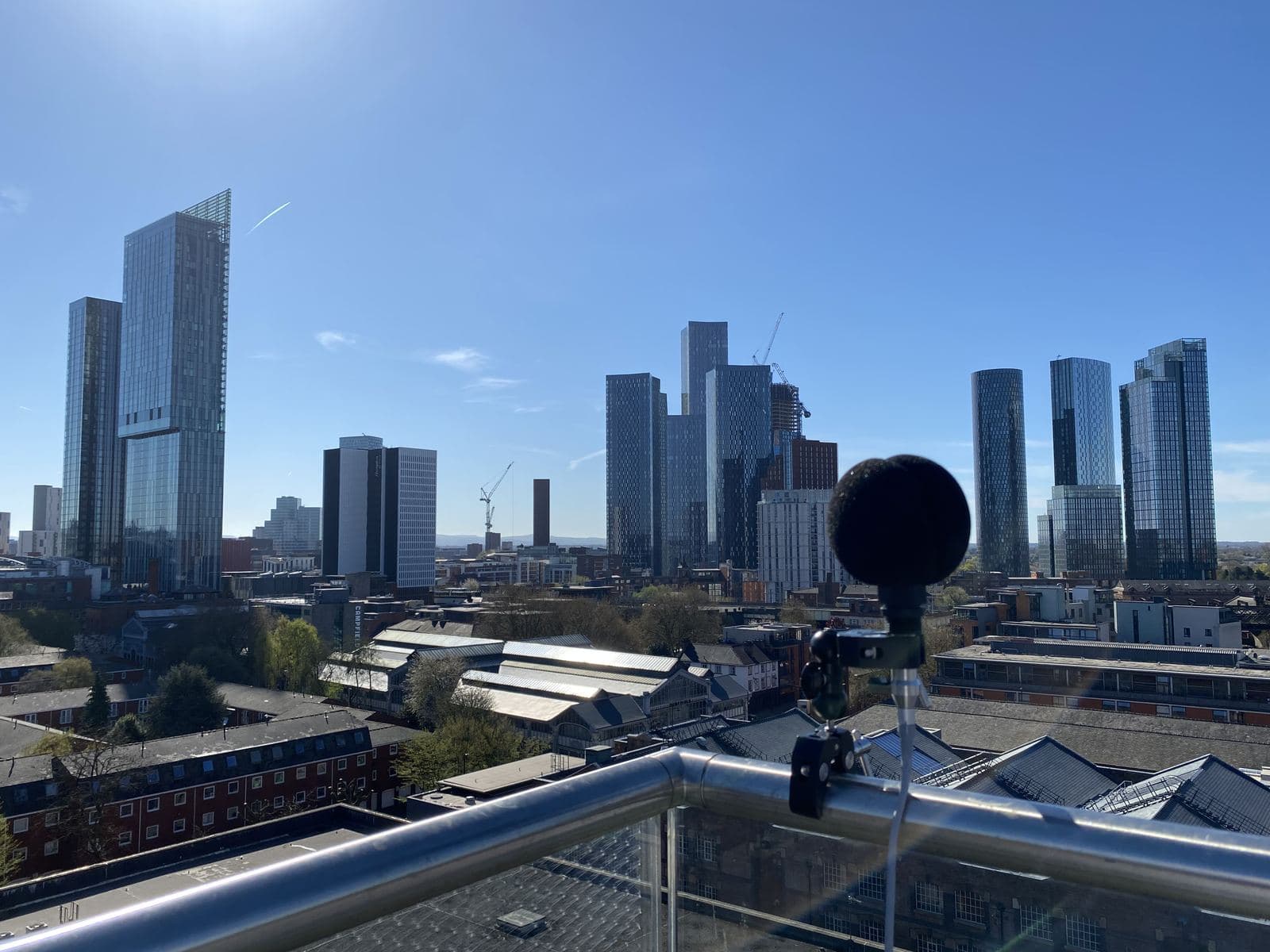
A sound level meter monitoring overnight on a Manchester rooftop

Send a postcode and a sentence.

That is genuinely enough to price most jobs. You will have a fixed quote back the same working day.