Skip to content
Murray Acoustics
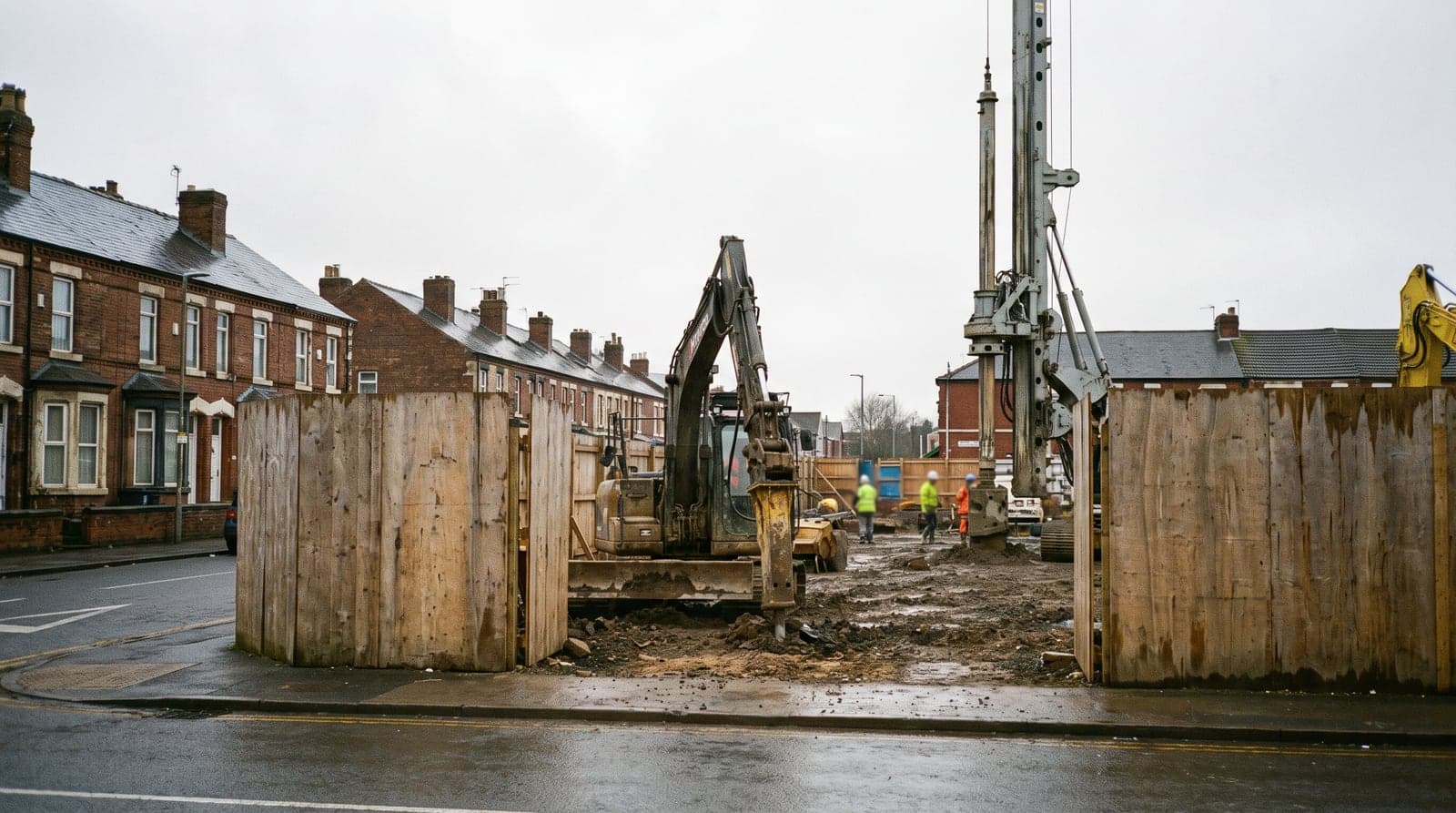
An urban construction site with an excavator working alongside terraced housing

Construction Noise & Vibration

Construction noise: keep the site moving.

BS 5228 assessments, Section 61 consents, CEMPs and site monitoring.

Fixed fee agreed up front · Quote back the same working day

The service

What it is, and when you need it.

Construction noise and vibration draw complaints and enforcement faster than almost anything else on a build. BS 5228 assessments, Section 61 prior consent, workable CEMPs and site monitoring, all planned early so the programme holds and the neighbours stay onside.

A BS 5228 condition

A planning condition requiring a construction noise assessment, CEMP or noise management plan before works can start.

Out-of-hours working

Section 61 prior consent for demolition, piling, weekend or night works near homes, agreed with the EHO before anyone complains.

Mid-build trouble

A complaint, a council warning or a Section 60 notice that needs measured evidence, fast.

Sensitive neighbours

Hospitals, schools, listed buildings and residents close to the hoarding.

What you get

What the fee covers.

One fee, fixed before anything starts. Everything listed here is inside it.

Written to

  • BS 5228 noise and vibration predictions for your programme and plant
  • Section 61 applications prepared, submitted and negotiated with the local authority
  • A Construction Environmental Management Plan that's practical on site, not just compliant on paper
  • Attended monitoring or unattended real-time systems with trigger alerts
  • Plain-English reporting the site team can act on
  • Fixed fee agreed up front. No day rates, no surprises.

In detail

How it runs, start to finish

Send the programme, a site plan and the plant you expect to run, or just the condition wording, if that's what's driving it. We confirm the scope and a fixed fee the same day. Predictions come first: BS 5228 calculations for each phase against the nearest receptors, so you know before anyone mobilises which activities need managing. Demolition, piling and concrete breaking are the usual culprits.

Where works run outside standard hours or close to homes, a Section 61 application is usually worth making: prior consent agreed with the local authority before works start, covering methods, hours and noise limits. Work within it and the council cannot serve a Section 60 notice on those works. We prepare the application, deal with the EHO directly and negotiate conditions your site can actually live with. The CEMP covers the rest: working hours, best practicable means, complaint handling and a monitoring regime that matches the risk.

On site, monitoring is attended for one-off events or unattended real-time systems with trigger alerts for longer programmes. Reports land within five working days of each survey, and if a complaint or council letter arrives mid-build, we respond with data, fast enough to matter.
Questions

Asked often.

What is a Section 61 consent and how long does it take to get?

Prior consent for construction noise under section 61 of the Control of Pollution Act 1974: you agree methods, hours and noise limits with the local authority before works start, rather than waiting for a complaint. The authority has 28 days to determine an application, but the real work is the negotiation beforehand. Allow several weeks ahead of the works you need it for. Work in accordance with the consent and the council cannot serve a Section 60 notice on those works.

Do I need a Section 61 consent?

It's voluntary, not mandatory, but strongly worth having for demolition, piling or any out-of-hours working near homes, and some authorities expect one as a matter of course on larger schemes. Without it, the council can serve a Section 60 notice imposing conditions at any point, usually at the worst possible moment for the programme.

What is BS 5228?

The code of practice for noise and vibration control on construction and open sites: Part 1 covers noise, Part 2 vibration. It provides the prediction methods and plant noise data used to assess construction impacts, and the criteria, such as the ABC method, that most councils use to judge them. If your planning condition names BS 5228, this is the assessment it's asking for.

How much does a construction noise assessment cost?

Every project is a fixed fee agreed up front, so we don't publish a price list. Send the site postcode, the programme and the condition or correspondence that's driving it, and we'll come straight back with a figure. No day rates, no surprises.

How long does it take?

Predictions can start from your programme and drawings: no survey is needed to get moving. Where baseline measurements are required, the report lands within five working days of the survey. For a Section 61, start earlier: the statutory determination period is 28 days, and negotiation time on top of that is normal.

We've had a noise complaint mid-build. What should we do?

Get measured evidence before the council does. We attend, measure at the affected properties, compare the results against BS 5228 criteria and any consent or CEMP limits, and give you a clear position: either demonstrating compliance or identifying exactly which activity needs to change. A measured, documented response usually keeps things out of enforcement.

A sound level meter monitoring overnight on a Manchester rooftop

Send a postcode and a sentence.

That is genuinely enough to price most jobs. You will have a fixed quote back the same working day.