Skip to content
Murray Acoustics
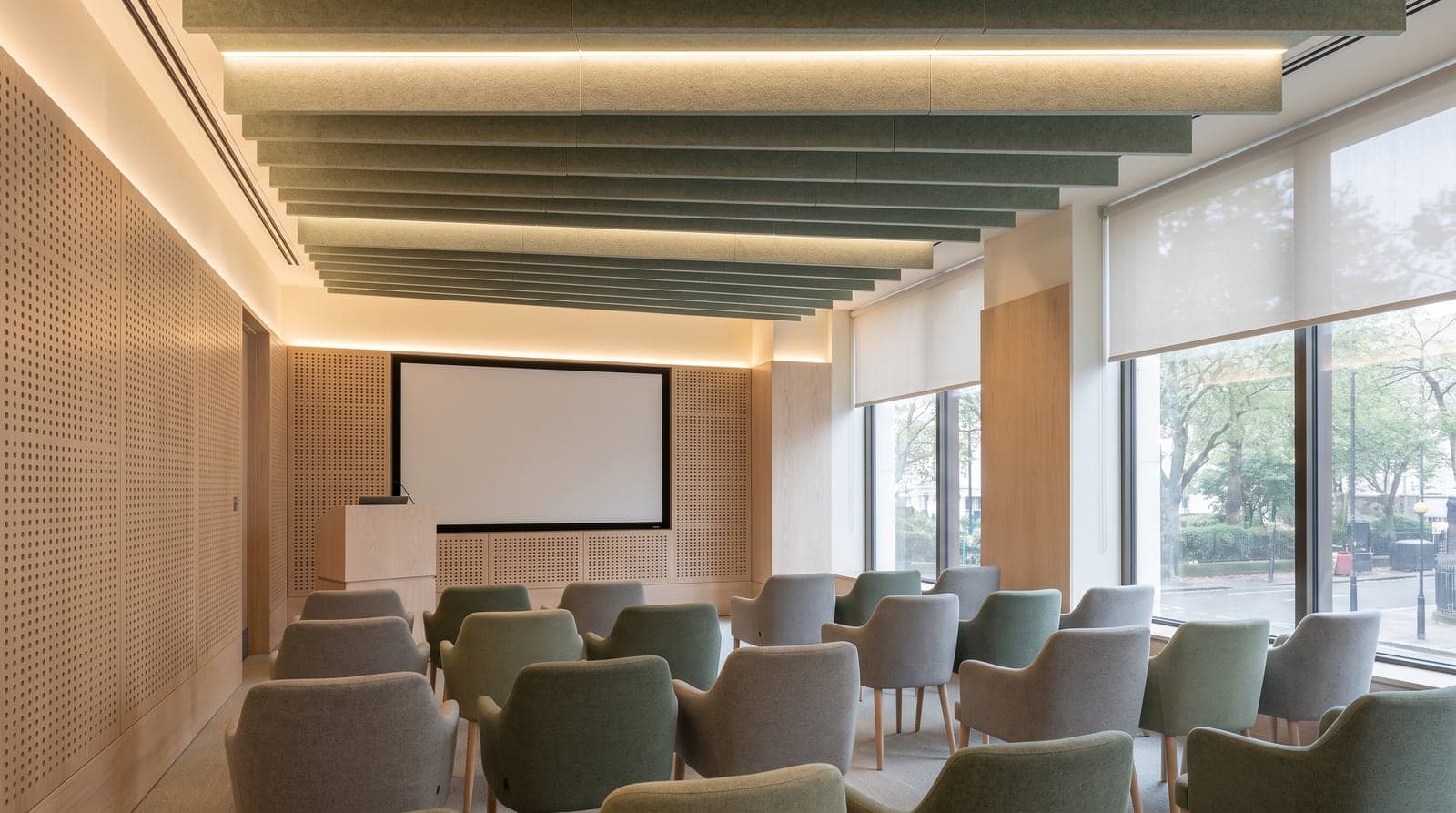
Open-plan teaching room with a perforated acoustic ceiling and full-height glazing

Room Acoustics

Room acoustics: rooms people can actually hear in.

Reverberation, speech intelligibility and sound absorption inside the room. Schools to BB93, offices, halls and healthcare.

Fixed fee agreed up front · Quote back the same working day

The service

What it is, and when you need it.

Most acoustics is about keeping sound out. This is the other half: what happens to sound once it is inside the room, and why some spaces are exhausting to be in.

A school that needs to meet BB93

New build and refurbishment school projects have to demonstrate compliance with Building Bulletin 93 reverberation and sound insulation criteria, room by room.

An office nobody can concentrate in

Open-plan floors with hard finishes are the most common complaint we get. It is usually reverberation and a lack of absorption, and it is usually fixable.

A hall, studio or place of worship

Spaces used for speech and music have competing requirements, and getting the balance wrong makes them useless for one or the other.

A room that fails on handover

Where a BREEAM credit or a contractual acoustic requirement is not met, the room needs measuring and a remedial specification producing.

What you get

What the fee covers.

One fee, fixed before anything starts. Everything listed here is inside it.

Written to

  • Reverberation time measurement across the relevant octave bands, to ISO 3382
  • Comparison against the applicable criteria: BB93 for schools, BS 8233 for offices, or the project specification
  • Absorption specification: how much, what class, and where it needs to go
  • Speech intelligibility assessment where the room is used for speech
  • Drawings or schedules your contractor can price and install from
  • Fixed fee agreed up front. No day rates, no extras

Reverberation is the number, but not the whole answer

Reverberation time is how long sound takes to decay in a room once the source stops, and it is the figure standards are written around. A long reverberation time in a room used for speech smears one word into the next, which is why a hard-surfaced classroom or restaurant becomes so tiring: everyone raises their voice, which raises the level, which makes it worse.

But a single reverberation figure hides things that matter. Two rooms with identical reverberation times can behave completely differently if one has parallel hard walls producing flutter echo, or a curved surface focusing sound into one part of the room. That is why we measure across frequency bands and look at the room rather than just reporting a number.
Schools and BB93

Building Bulletin 93 sets the acoustic performance standards for school buildings in England, covering reverberation times for each type of teaching space, sound insulation between spaces and indoor ambient noise levels. It is normally a condition of the funding or the contract rather than of planning, and compliance is usually demonstrated by testing on completion.

The rooms that cause trouble are predictably the ones with hard finishes and awkward shapes: sports halls, dining halls, atria and music rooms. Designing the absorption in early is straightforward. Retrofitting it after a failed handover test, into a finished building with services already installed, is not.

Open-plan offices

Open-plan office complaints are rarely about level. They are about distraction, and the driver is usually speech from other people being intelligible at distance. The fix is a combination of absorption, screening and sometimes sound masking, and the balance depends on how the floor is actually used rather than how the drawing labels it.

It is worth being honest that acoustics cannot make an open-plan floor behave like cellular offices. What it can do is reduce the distance over which speech remains distracting, which is usually the difference between a floor people can work on and one they avoid.

Questions

Asked often.

What is a good reverberation time?

It depends entirely on the room and its use. A primary classroom is typically targeted at around 0.6 seconds or less, an open-plan office around 0.8, and a music or performance space is often deliberately longer. The applicable criterion comes from BB93, BS 8233 or the project specification rather than a universal figure.

What is BB93?

Building Bulletin 93 is the acoustic design guidance for schools in England. It sets reverberation time limits by room type, sound insulation requirements between spaces and indoor ambient noise limits, and compliance is usually demonstrated by testing before handover.

Can you fix a room that is already built?

Usually, yes. Retrofit absorption in the form of ceiling rafts, wall panels or baffles is effective and can be installed with minimal disruption. It costs more than designing it in, and the options are constrained by services already in place, but rooms are rarely beyond help.

Do I need room acoustics for BREEAM?

If you are targeting the Hea 05 acoustic performance credit, yes: it covers indoor ambient noise, sound insulation and reverberation, and requires a suitably qualified acoustician to be involved and the performance verified by testing.

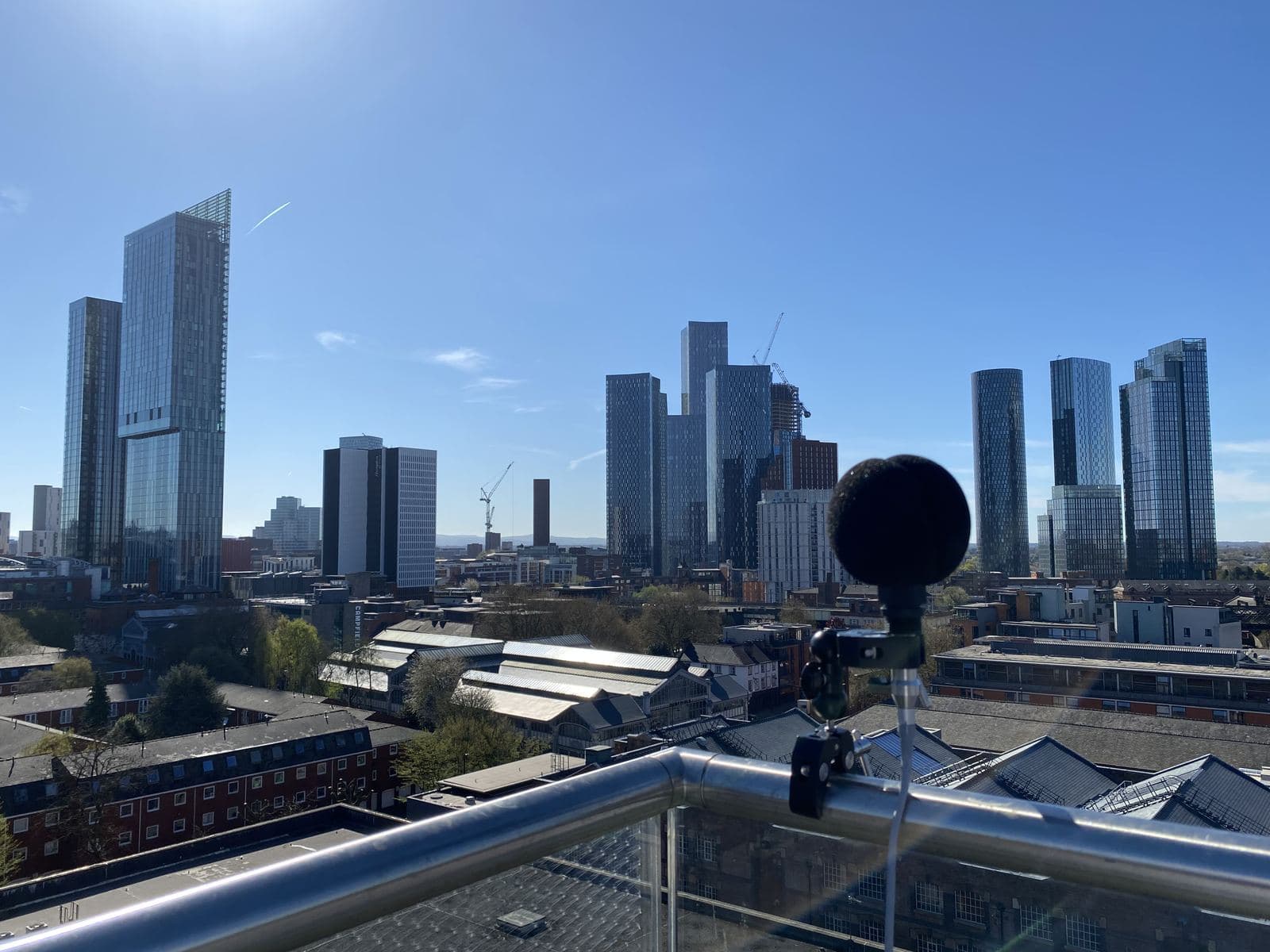
A sound level meter monitoring overnight on a Manchester rooftop

Send a postcode and a sentence.

That is genuinely enough to price most jobs. You will have a fixed quote back the same working day.