Skip to content
Murray Acoustics
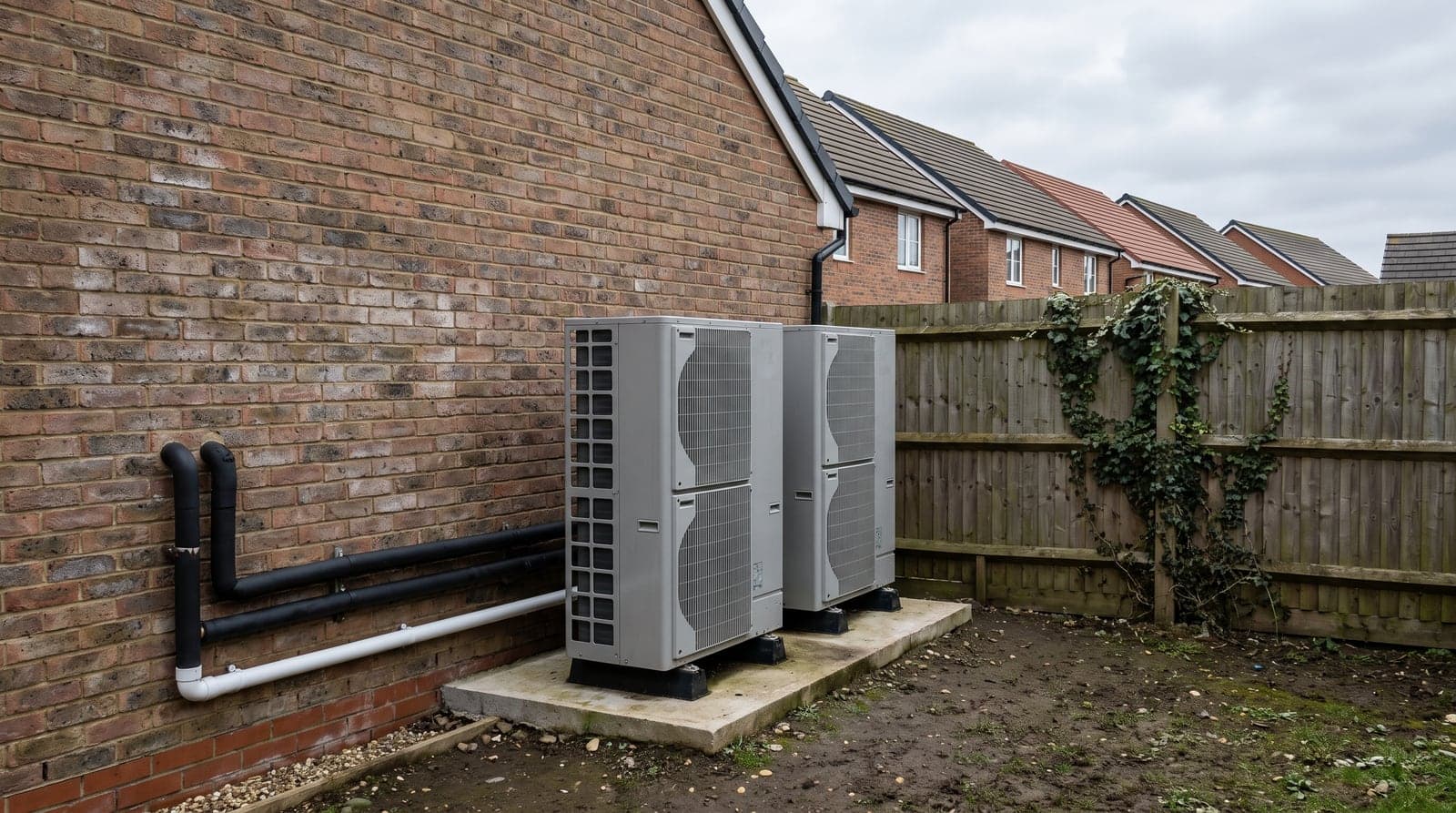
Two air source heat pump units on a plinth against the rear wall of a house

Heat Pump Noise Assessments

Your air source heat pump, cleared to install.

MCS 020 calculations and BS 4142 assessments for ASHPs, single units to multi-unit schemes.

Fixed fee agreed up front · Quote back the same working day

The service

What it is, and when you need it.

Every air source heat pump has a noise hurdle: the MCS 020 calculation for permitted development, or a BS 4142 assessment where planning is needed. We run the numbers, tell you straight if the siting works, and give you the document your installer, council or MCS certifier is asking for.

Permitted development check

MCS 020 is mandatory for an ASHP installed without planning permission. The calculation must show 42 dB LAeq or less at the nearest neighbour's window.

A planning application

Flats, conservation areas, listed buildings, second units, or a failed MCS position: planning applications usually call for a BS 4142 assessment.

A condition on your consent

A noise condition naming the heat pump on a new build or retrofit consent. We write the report that discharges it.

Multi-unit schemes

Developers and housing providers fitting ASHPs across a site, assessed once, properly, instead of plot by plot.

What you get

What the fee covers.

One fee, fixed before anything starts. Everything listed here is inside it.

  • MCS 020 calculation from the unit's certified sound power data, siting and geometry: the document your installer signs off against
  • BS 4142 assessment with background survey where planning requires it, day and night
  • A straight answer on siting, and the cheapest compliant position if the first one fails
  • Mitigation that works at domestic scale: barriers, screening, low-noise units, anti-vibration mounts
  • Council and MCS certifier liaison until sign-off, covered by the Approval Guarantee
  • Fixed fee agreed up front. No day rates, no surprises.

How it runs, start to finish

Send the unit make and model, a photo or sketch of where it's going, and your postcode. We confirm the route (MCS 020 or BS 4142) and a fixed fee the same day. The MCS 020 calculation is a defined desktop method built on the unit's certified sound power level, the distance to the nearest neighbour's habitable-room window, and what sits between them, so for most domestic installations there's no site visit at all and the turnaround is quick.

Where the calculation fails, that's rarely the end of it: a different position, a barrier or fence line, or a quieter unit usually gets the installation through, and we re-run the numbers until it does. Where planning is required (flats, multiple units, sensitive locations, or a council that has asked for more), a BS 4142 assessment compares the pump's rating level against the measured background at the quietest times it will run, which for a heat pump means winter nights.

You get a report your installer, certifier or planning officer can act on, within five working days of any survey, and typically much faster for desktop MCS 020 work. If the council comes back with questions, we answer them until the installation is signed off.
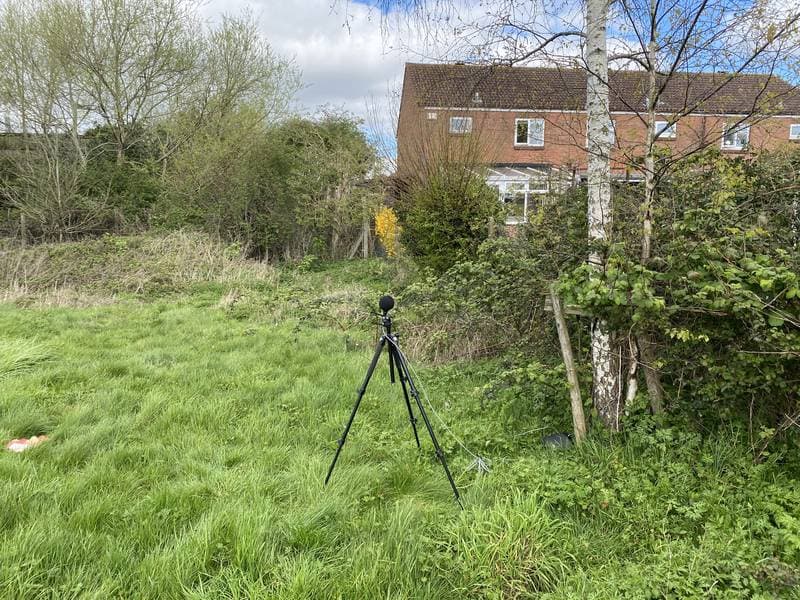
Position decides the result

For a domestic heat pump, where the unit goes affects the outcome more than any other single decision, and it is the cheapest variable to change. The MCS 020 calculation applies corrections based on the installation position: a unit standing clear on an open elevation, one against a single wall, and one in a corner formed by two walls give materially different results from identical equipment.

Distance to the assessment position compounds it. The relevant position is a habitable room window or door of the nearest neighbouring property, and gaining a few metres of separation, or moving the unit to an elevation that faces away from that window, will often turn a marginal failure into a comfortable pass without spending anything.

This is why we would rather look at a proposal before installation than assess one afterwards. Once the unit is fitted, the pipework run is committed and the options narrow to acoustic housings, barriers or replacement, all of which cost more than a different position would have.

When permitted development will not save you

MCS 020 exists to demonstrate compliance with the noise condition attached to permitted development rights. Where those rights do not apply, the calculation is not the relevant test. Listed buildings and conservation areas restrict permitted development, and a great many installations in those settings need a full planning application regardless of how quiet the unit is.

Scale takes a scheme outside it too. Multiple units, commercial installations and multi-dwelling schemes are assessed under BS 4142 against the measured background, which is a considerably more demanding test in a quiet area than a fixed 42 dB limit. We have seen schemes pass MCS 020 comfortably and indicate a significant adverse impact under BS 4142 on the same plot, because the night-time background there sat in the twenties.

The practical advice is to establish which test applies before selecting equipment. Choosing a unit on the basis of a 42 dB limit that turns out not to apply is an expensive way to discover the difference.

What a compliant unit still cannot promise

Meeting MCS 020 means the installation satisfies the noise condition attached to permitted development. It does not mean nobody will hear the unit, and it does not prevent a statutory nuisance complaint. Those are separate tests: one is a planning threshold, the other is a judgement by the council about whether the noise unreasonably interferes with the enjoyment of a neighbouring home.

The gap matters most in quiet areas. A unit at 42 dB in a location where the night-time background is 25 dB is clearly audible, and audibility is what drives complaints. This is the single most common source of disappointment we encounter: an installation that is entirely lawful and still generating an argument between neighbours.

Where that risk exists, we would rather flag it before installation than assess it afterwards. Usually the answer is a quieter unit, a better position, or an operating schedule that avoids the quietest hours, and all three are easier to arrange before the system is commissioned than after a complaint has been made.

Questions

Asked often.

Are air source heat pumps noisy?

Modern units are quiet (comparable to a fridge a few metres away), but they run for long periods, often at night, and they're usually installed close to boundaries. Whether one is a problem is entirely about siting: distance to the neighbour's window, reflecting walls, and the background level of the area. That's exactly what the MCS 020 calculation and BS 4142 assessment test.

Do I need planning permission for an air source heat pump?

Usually not. Most domestic ASHPs go in under permitted development, provided the installation meets the MCS planning standards including the MCS 020 noise calculation (42 dB LAeq or less at the nearest neighbour's habitable-room window). Planning permission is typically needed for flats, listed buildings, some conservation-area positions, or where the MCS criteria can't be met, and then a BS 4142 assessment usually supports the application.

What is MCS 020?

The MCS planning-standard noise calculation for heat pumps installed under permitted development. It works from the unit's certified sound power level, the distance to the nearest neighbour's habitable-room window and the geometry between them, and the result must not exceed 42 dB LAeq. Your installer needs it completed before the installation qualifies.

My MCS 020 calculation failed. What now?

A failed calculation means that position, not that project. Options in rough order of cost: move the unit, add a solid barrier or fence between unit and window, select a quieter model, or apply for planning permission with a BS 4142 assessment, which considers the real background sound and often supports positions the standard calculation can't.

How do I reduce heat pump noise to meet planning requirements?

Siting first: every metre of distance and every solid obstruction helps. Then screening: a close-boarded fence or purpose-built barrier breaking line of sight to the neighbour's window. Then the unit itself: sound power levels vary meaningfully between models, and night-time low-noise modes help where the standard allows them. Anti-vibration mounts deal with structure-borne noise on wall-mounted units.

How much does a heat pump noise assessment cost?

A fixed fee agreed up front. MCS 020 desktop calculations sit at the lowest end of anything we do, and a full BS 4142 assessment with a background survey costs more. Send the unit model and postcode and we'll come straight back with a price.

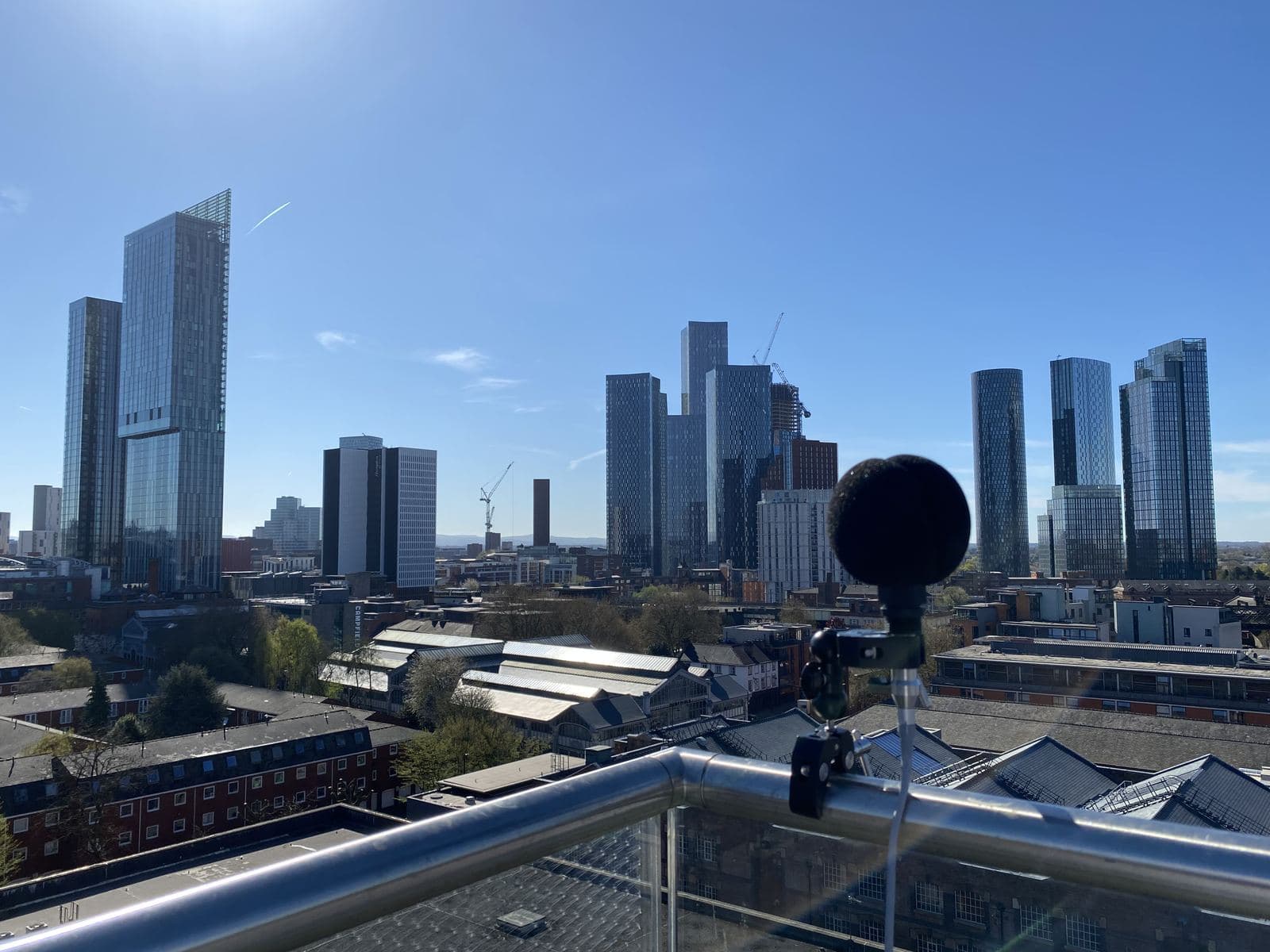
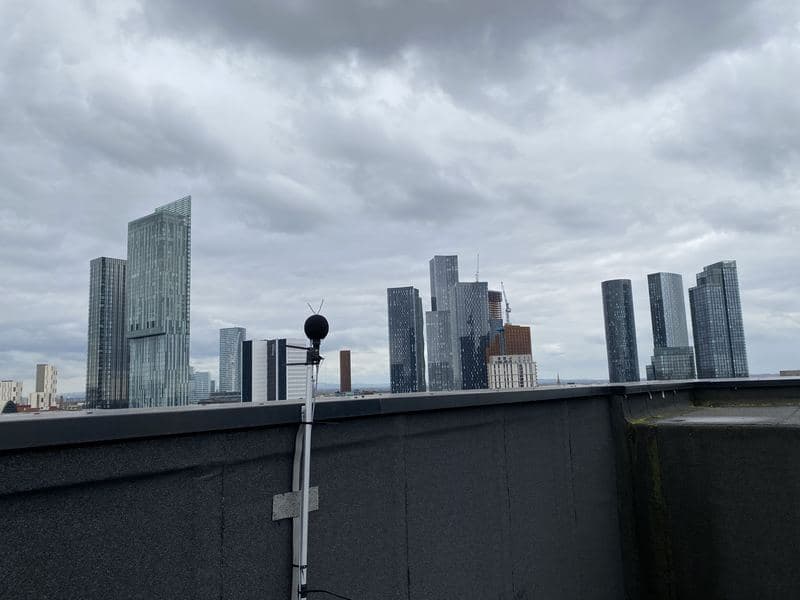
A sound level meter monitoring overnight on a Manchester rooftop

Send a postcode and a sentence.

That is genuinely enough to price most jobs. You will have a fixed quote back the same working day.