Skip to content
Murray Acoustics
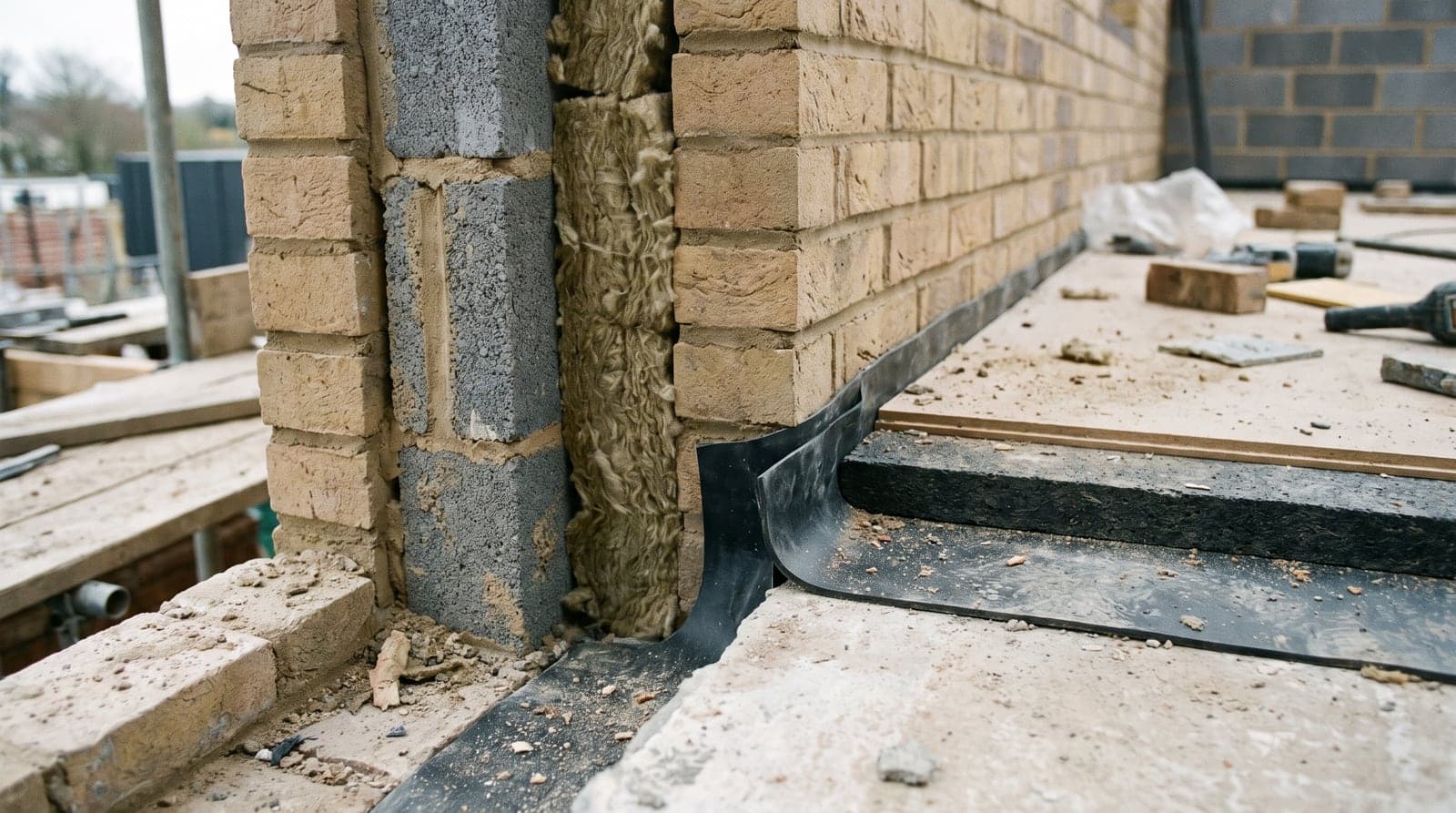
A building junction under construction, showing a twin-leaf wall and a floating floor build-up

Standards reference

BS 4142, explained properly.

The standard your council will name when it asks about plant noise: heat pumps, chillers, extract fans, generators, refrigeration. Here is what it actually requires, and where assessments go wrong.

BS 4142:2014+A1:2019

In one paragraph

BS 4142 is the British Standard for rating and assessing sound of an industrial or commercial nature affecting people in nearby residential premises. It compares the sound your plant makes against the background sound level already present, applies corrections for how noticeable that sound is, and expresses the result as a single rating level. The larger the excess over background, the greater the likely impact.

What the standard is for

BS 4142 exists to answer one question: is the sound from this commercial or industrial source likely to cause an adverse impact at the homes nearby? It does not set a fixed decibel limit. It is a comparison method, and the thing being compared against is whatever the area already sounds like when the source is not running.

That scope is broader than most people expect. It covers fixed plant, but it also covers the loading and unloading of goods, and mobile plant and vehicles where they form an intrinsic part of the sound coming from the premises. A service yard or a delivery bay is within scope. Assessments that quietly exclude yard activity, and assess only the building services plant, are a recurring weakness in reports we are asked to review.

It is not the right standard for road traffic, railways, aircraft, construction sites or entertainment noise. Those have their own methods, and applying BS 4142 to them produces answers that will not survive scrutiny.
The two numbers that decide the outcome

An assessment reduces to two measured or calculated quantities. The specific sound level is the sound from the source under assessment, expressed as an equivalent continuous level over a reference period: one hour during the day, fifteen minutes at night. The background sound level is the level exceeded for 90% of the time with the source absent, written as the LA90.

The background level does most of the work, and it is where assessments are most often weak. It has to represent the period being assessed. A background measured on a weekday afternoon beside a busy road tells you nothing about a still Sunday morning at three, which is when a heat pump generates complaints. Measuring long enough to capture the quietest representative periods, and choosing a defensible value rather than an average, is the difference between a report that holds up and one that does not.

Corrections for acoustic features

The specific sound level is adjusted upward where the sound has characteristics that make it more noticeable than its level alone would suggest. The standard describes corrections for tonality, impulsivity, other distinguishing characteristics such as intermittency, and for sound that is readily distinctive against the residual acoustic environment.

In practice this matters enormously for the sources we are most often asked about. Fan and compressor noise is frequently tonal. Reversing alarms are both tonal and intermittent. Dock and trailer impacts are impulsive. A correction of up to 6 dB for tonality and up to 9 dB for impulsivity can turn a comfortable pass into a clear adverse impact, which is why an assessment that reports no corrections at all deserves a second look.

The corrected specific sound level is the rating level. That is the number the assessment turns on.

How the result is interpreted

  • Around +10 dB or more above background: likely to be an indication of a significant adverse impact, depending on context
  • Around +5 dB above background: likely to be an indication of an adverse impact, depending on context
  • The lower the rating level relative to background, the less likely an adverse impact becomes
  • A rating level well below background does not automatically mean no impact, and context can modify every one of these conclusions

The word doing the heavy lifting is context. The standard is explicit that the initial estimate of impact must be modified by the character of the area, the absolute levels involved, the sensitivity of the receptors and any relevant local factors. A +10 dB excess in an area with a very low background may be less significant in absolute terms than the arithmetic suggests, and an assessment that reports only the arithmetic has done half the job.

How we run an assessment

  • Establish the background sound level at the nearest and most affected residential receptors, logging long enough to capture the quietest representative periods for each assessment period
  • Establish the specific sound level, from manufacturer data, from measurement of similar plant, or by measuring the installed plant where it already exists
  • Model propagation to each receptor where the geometry, screening or distance makes a simple calculation unreliable
  • Apply corrections for tonality, impulsivity and intermittency, and justify each one
  • Compare the rating level against background, then assess context
  • Where the result is adverse, design the mitigation and demonstrate that it works: attenuators, enclosures, barriers, plant selection or operating restrictions

Why assessments fail

  • Background measured over too short a period, or during periods that do not represent the assessment period
  • Night-time assessed against a daytime background
  • Yard, delivery and vehicle activity excluded without explanation
  • No character corrections applied to plant that is audibly tonal
  • Manufacturer sound power data used without accounting for installed conditions, ductwork or multiple units
  • The nearest receptor identified from a site plan rather than from the actual worst-affected window

A worked example

Take a condenser unit on the flat roof of a commercial unit, with the nearest bedroom window 25 metres away. The manufacturer quotes a sound power level of 78 dB. Propagating over that distance, with a directivity allowance for the roof mounting and no screening between unit and window, gives a specific sound level at the receptor of around 43 dB.

The background survey, logged across two weekday nights, shows the night-time LA90 settling at 36 dB in the small hours. On the raw numbers the unit sits 7 dB above background. Then the corrections: the unit has an audible tonal hum from the compressor, worth +2 dB under the one-third-octave method, and it cycles on and off through the night, which is intermittency, worth a further +3 dB where it is readily noticeable. The rating level is now 48 dB, which is 12 dB above background: past the threshold at which the standard says a significant adverse impact is likely.

This is the shape of most real BS 4142 failures. The equipment was not loud in any absolute sense; the combination of a quiet background, tonality and night-time cycling is what did it. It is also why the mitigation is rarely a bigger attenuator first: relocating the unit behind the roof plant screen, or holding the compressor at a lower speed overnight, removes more of the excess at less cost. Run the same numbers with 5 dB of screening and the tonal correction designed out, and the rating level sits at background: a defensible pass from the same equipment on the same roof.

The example is simplified: a real assessment justifies each figure, states its uncertainty and then assesses context. But if a report on your desk jumps from a manufacturer's number to a conclusion without showing this chain, that is the gap to ask about.

The standard's place in planning

BS 4142 is not law, and it does not decide planning applications by itself. It feeds the planning balance: national policy asks whether a development would give rise to significant adverse impacts on health and quality of life, and a BS 4142 rating is the recognised way of evidencing that question for industrial and commercial sound. Some local plans go further and fix numerical plant noise limits, commonly expressed as a rating level a set margin below the background. Where such a policy exists it, not the standard's own guidance, sets the bar, and an assessment that has not checked the local plan can pass the standard and still fail the policy.

The same applies in the other direction. A marginal exceedance under the standard is not an automatic refusal, because context is part of the method. An assessment that explains the context honestly gives the officer something to weigh; one that stops at the arithmetic leaves the decision to be made without you.

Questions

BS 4142: common questions.

What is a BS 4142 assessment?

It is an assessment of sound from industrial or commercial premises against the background sound level at nearby homes. Sound from the source is measured or modelled, corrected for characteristics such as tone and impulsivity to give a rating level, and compared with the background. The size of the excess indicates the likely impact.

What is a good BS 4142 result?

There is no pass mark in the standard. A rating level around 10 dB above background indicates a significant adverse impact is likely, around 5 dB above indicates an adverse impact is likely, and levels at or below background indicate a low impact. All of these are then modified by context, so a number alone is not a conclusion.

Do I need a BS 4142 assessment for a heat pump?

For a full planning application, usually yes. For a domestic installation under permitted development the relevant test is MCS 020 rather than BS 4142, though a BS 4142 assessment is often still the sensible route where neighbours are close or the installation is large.

How long does the background survey need to be?

Long enough to characterise the quietest representative periods for each assessment period. For a night-time assessment that normally means unattended logging across at least one full night, and often several, so that the value chosen is representative rather than a single fortunate reading.

Can a BS 4142 assessment be done from manufacturer data alone?

Sometimes, for a simple installation with a clear line of sight and reliable sound power data. More often the installed condition differs from the test condition, and a measured background level is required regardless, so a site visit is needed in almost every case.

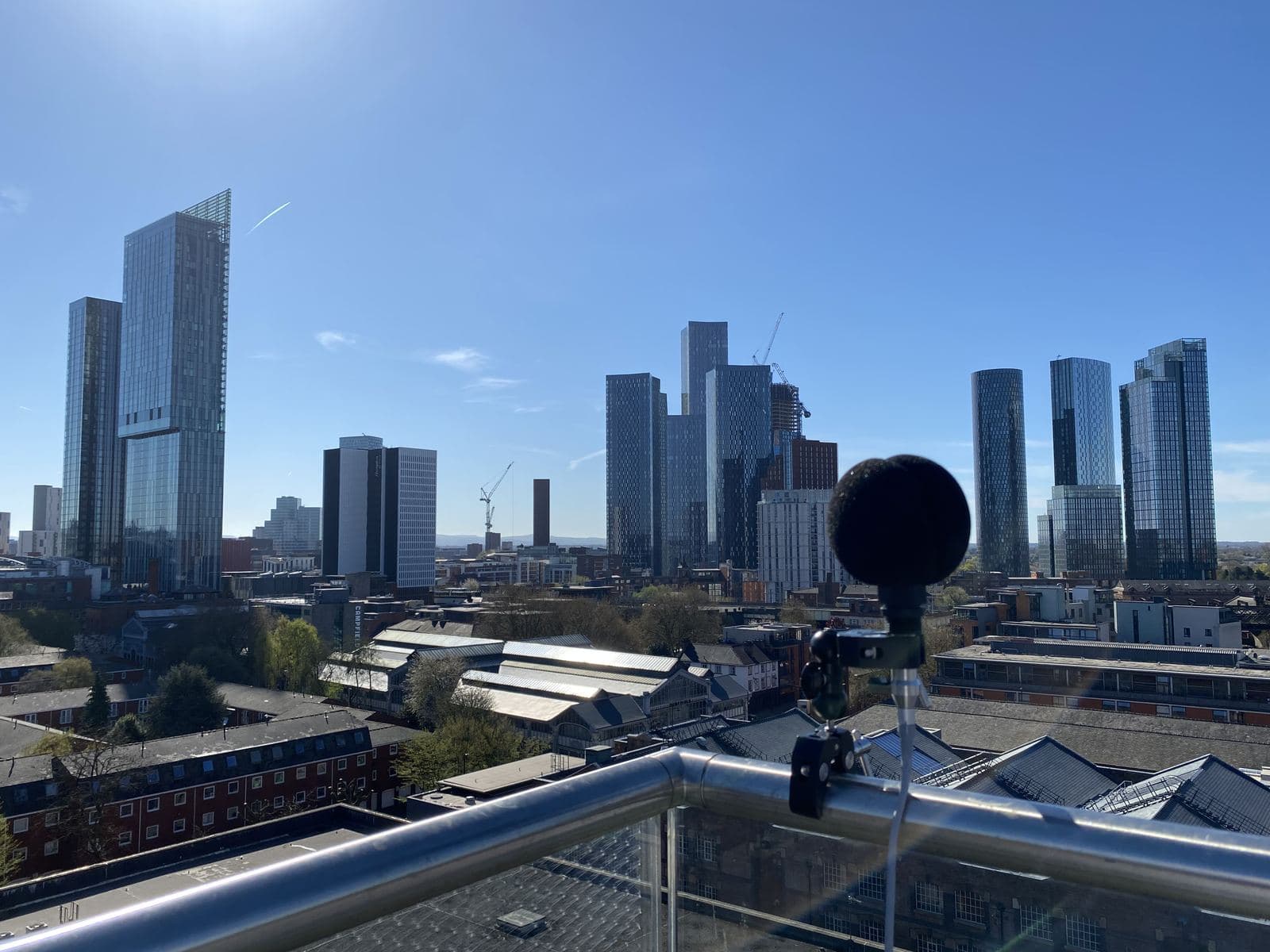
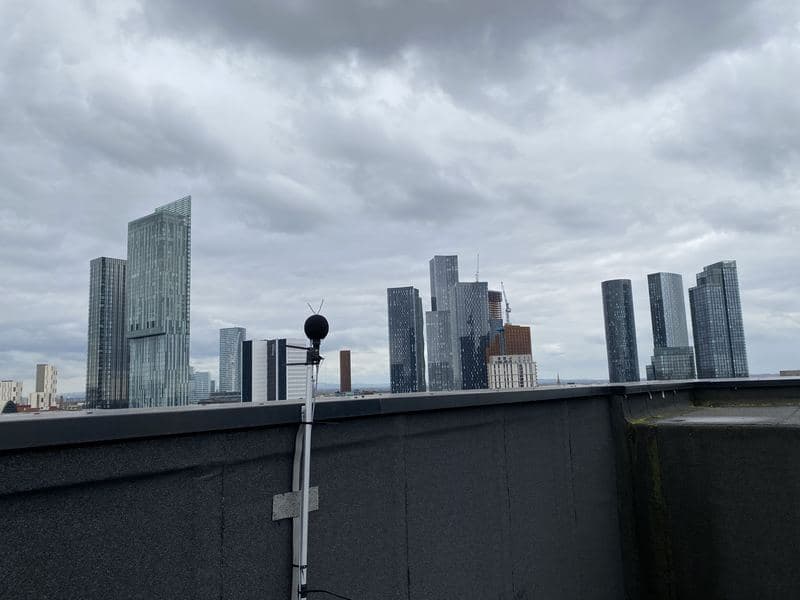
A sound level meter monitoring overnight on a Manchester rooftop

Need a BS 4142 assessment?

Send a postcode and a sentence. We're ready to price it right now.