Skip to content
Murray Acoustics
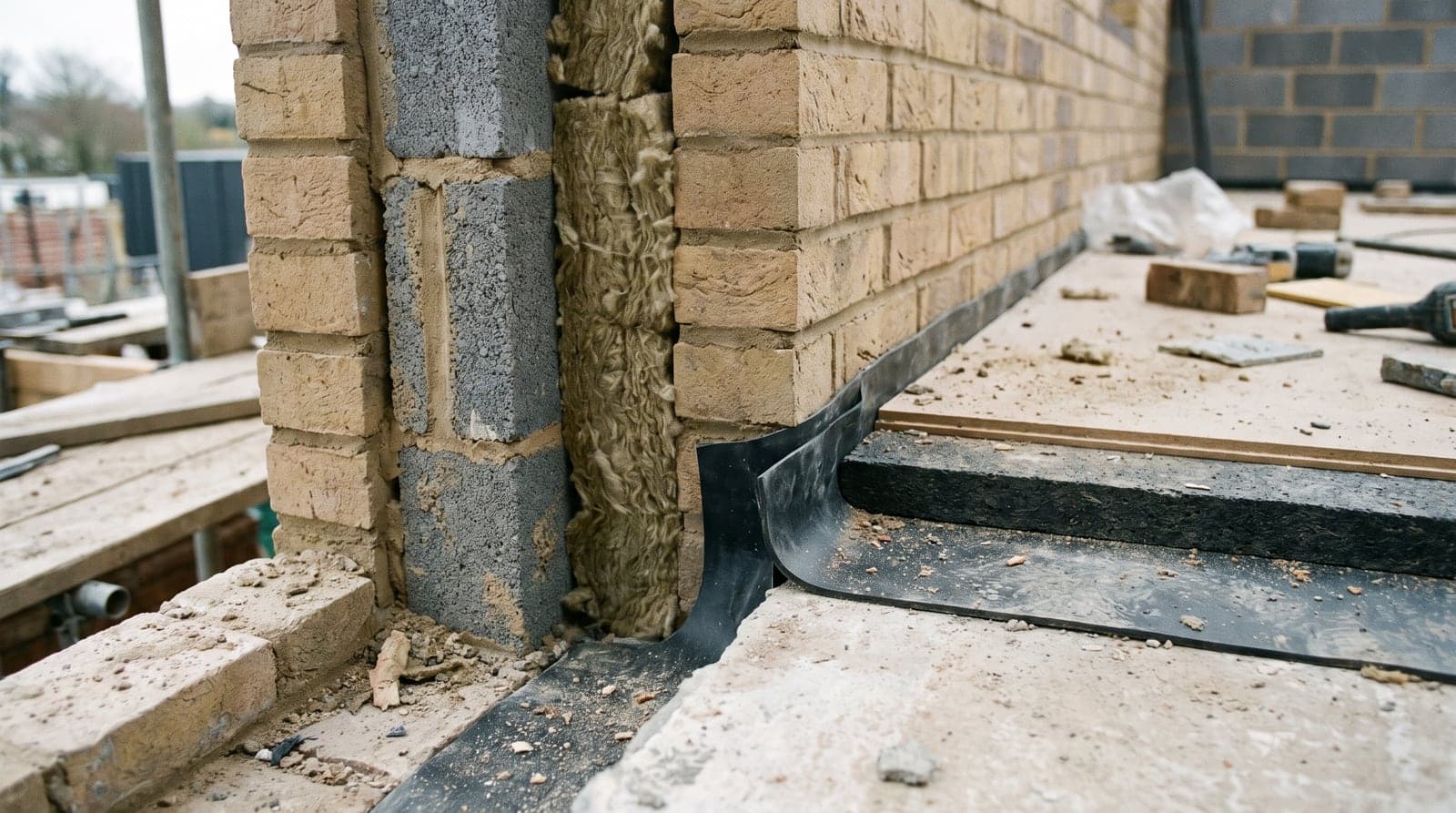
A building junction under construction, showing a twin-leaf wall and a floating floor build-up

Standards reference

BS 8233, and what it asks of a new home.

The guidance that sets internal noise targets for new residential development, and drives the glazing and ventilation specification for your scheme.

In one paragraph

BS 8233:2014 gives guidance on sound insulation and noise reduction for buildings. For planning purposes its most quoted content is a set of internal ambient noise level targets for living rooms and bedrooms, plus guidance on external amenity areas. It is the standard most often named when a council conditions a residential scheme near a road, railway or existing noise source.

The targets everyone quotes

  • Living rooms, daytime (07:00 to 23:00): 35 dB LAeq,16hour
  • Dining rooms and areas, daytime: 40 dB LAeq,16hour
  • Bedrooms, daytime: 35 dB LAeq,16hour
  • Bedrooms, night-time (23:00 to 07:00): 30 dB LAeq,8hour
  • External amenity: desirable up to 50 dB LAeq,T, with 55 dB LAeq,T described as an upper guideline

These are guideline values for steady external noise sources, not absolute limits, and the standard is clear that they are a starting point rather than a test to be passed mechanically. Where noise is dominated by individual events rather than a steady level, a maximum level criterion for bedrooms is normally applied alongside them, commonly drawn from WHO guidance.

The external amenity guidance is frequently misread. It applies to areas intended to be used for amenity, and the standard explicitly recognises that in higher-noise urban settings a compromise may be unavoidable where a development is otherwise desirable. Balconies on a city-centre scheme are the usual point of argument.
How the targets turn into a specification

The assessment works backwards. Measure the external noise level at each facade, subtract the internal target, and the result is the sound reduction the facade has to achieve. That number then drives the glazing specification, the ventilation strategy and sometimes the layout of the building itself.

Ventilation is the part that catches schemes out. If the internal target can only be met with windows closed, the scheme needs a means of ventilation that does not require opening them, and that ventilation route must itself be assessed for noise. An acoustic trickle vent, a mechanical system or full comfort cooling each carry different acoustic and Building Regulations consequences. Approved Document O, covering overheating, interacts directly with this and has made the trade-off considerably harder since it came into force.

Where BS 8233 sits alongside other guidance

BS 8233 is guidance on internal conditions. It does not by itself tell a planning officer whether a development is acceptable. For new residential development affected by transport noise, ProPG: Planning & Noise provides the assessment framework, and BS 8233 supplies the internal target values used within it. For industrial and commercial sources affecting the same scheme, BS 4142 applies instead.

A well-constructed residential assessment usually uses several together: BS 7445 for the measurement method, ProPG for the framework, BS 8233 for internal targets, BS 4142 where there is a commercial source nearby, and the NPPF and local plan policy for the planning balance.

What we deliver

  • Facade noise levels at every relevant elevation, measured and modelled
  • Internal levels calculated room by room against the BS 8233 targets
  • A glazing and ventilation specification your architect can build to, expressed in performance terms
  • External amenity assessment for gardens, balconies and communal space
  • A conclusion written for the planning officer, with the reasoning shown

Questions

BS 8233: common questions.

What internal noise level does BS 8233 require in bedrooms at night?

30 dB LAeq over the eight-hour night period, 23:00 to 07:00. Where individual noise events are the concern rather than the steady level, a maximum level criterion is normally applied as well, commonly 45 dB LAmax.

Are the BS 8233 values limits or guidance?

Guidance. The standard presents them as design targets for steady external sources and expects professional judgement in applying them. Councils frequently condition them as if they were limits, which is why the assessment needs to demonstrate compliance clearly rather than argue about status.

Does BS 8233 apply with windows open or closed?

The targets are internal levels however they are achieved. If they can only be met with windows shut, the scheme must provide an alternative ventilation route, and that route has to be assessed acoustically too. This is the single most common reason a residential assessment gets queried.

What about gardens and balconies?

The standard gives a desirable external amenity level of up to 50 dB LAeq with 55 dB LAeq as an upper guideline, and accepts that a compromise may be necessary in noisier urban settings where development is otherwise desirable.

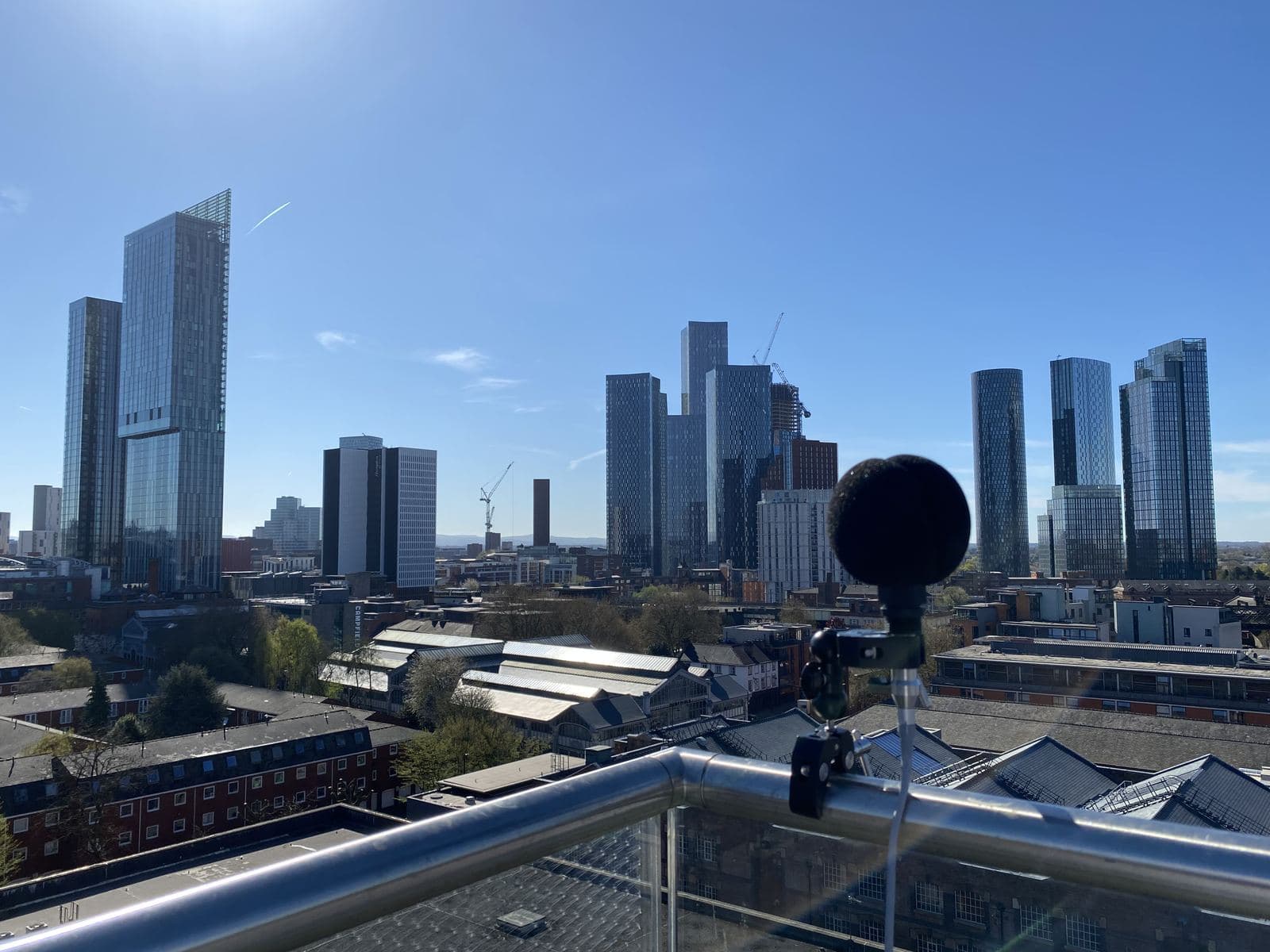
A sound level meter monitoring overnight on a Manchester rooftop

Need a BS 8233 assessment?

Send a postcode and a sentence. We're ready to price it right now.