Skip to content
Murray Acoustics
Bar frontage at night with open doors, a speaker stack inside and people on the pavement

Entertainment & Licensing Noise

Entertainment noise: music is not just noise with a beat.

Music breakout, patron noise and licence conditions. For venues defending what they do, and for schemes being built next door.

Fixed fee agreed up front · Quote back the same working day

The service

What it is, and when you need it.

Low frequency passes through buildings that stop everything else, and a venue that measures quiet on a broadband meter can still keep the flat upstairs awake. This needs assessing properly, from either side.

You are applying for a premises licence

Or varying one, and the licensing authority or environmental health has asked for a noise assessment or a noise management plan.

Residential is proposed next to your venue

Agent of change puts the responsibility on the incoming development, but only if the case is made properly and at the right time.

You are building near an existing venue

Your scheme has to protect itself. That means assessing what the venue actually does, including at closing time, and designing for it.

A complaint or a review has landed

Measurement establishes what is actually happening and what will resolve it, which is usually cheaper than the alternatives.

What you get

What the fee covers.

One fee, fixed before anything starts. Everything listed here is inside it.

Written to

  • Music noise level measurement inside and outside the premises, including low-frequency content
  • Assessment of breakout to the nearest noise-sensitive receptors
  • Patron and dispersal noise assessment, which is frequently the real problem rather than the music
  • Noise limiter settings, specified and commissioned, where one is required
  • A noise management plan the licensing authority can attach conditions to
  • Fixed fee agreed up front. No day rates, no extras

Why music needs its own method

Music is dominated by low frequency energy, and low frequency behaves differently from everything else in building acoustics. It diffracts around obstacles, passes through constructions that stop mid and high frequencies comfortably, and excites structures so that the sound arriving in a neighbouring room can be structure-borne rather than airborne. A wall that provides excellent broadband insulation can be close to transparent at 63 Hz.

This is why an assessment reported as a single overall figure is close to useless for entertainment noise. The measurement has to be made in frequency bands, and the assessment has to look at where the energy actually is, not at an average that hides it.
Agent of change, from both sides

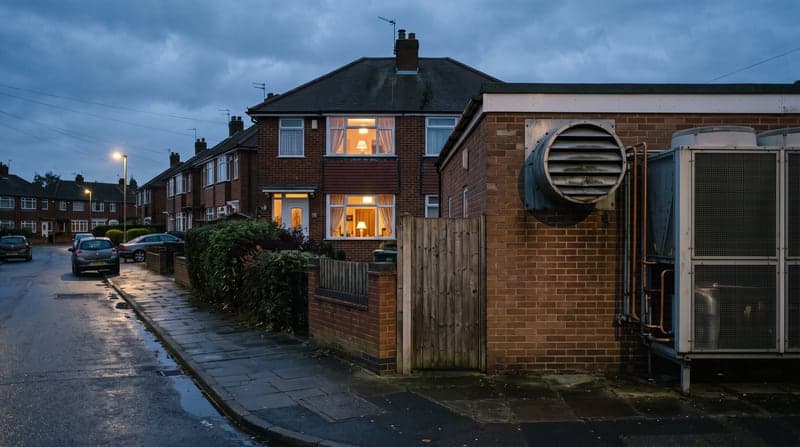
The agent of change principle, reflected in national planning policy, places responsibility for managing the effects of a change on whoever introduces it. New residential next to an established venue must be designed to protect its occupants, rather than the venue being required to curtail what it already lawfully does.

In practice this only works if the venue's actual operation is documented. We act for venues who want their existing activity evidenced before a neighbouring application is determined, and for developers who need to demonstrate their scheme has been designed around it. Both are legitimate; what does not work is either side arriving at appeal with assertions rather than measurements.

The part everyone forgets

Most entertainment noise complaints that reach enforcement are not about the music. They are about people: patrons outside on the pavement, smoking areas, dispersal at closing, taxis, deliveries and bottle collections early in the morning. These are harder to control than a sound system, which is precisely why a credible noise management plan deals with them explicitly rather than only with limiter settings.

Questions

Asked often.

What is a noise limiter and will I need one?

A device that cuts or limits the sound system if it exceeds a preset level, often required as a licence condition. It needs commissioning against a measured level that actually protects the neighbours rather than being set to a number someone guessed, otherwise it either fails to protect them or makes the venue unusable.

We are converting a building near a nightclub. What do we need?

An assessment of the venue's real output, in frequency bands and including closing time, and a facade and layout design that meets internal targets against it. Under agent of change the obligation is yours, so this needs resolving before the design is fixed rather than after.

Can you help with a licence review or a noise abatement notice?

Yes. Independent measurement of what is actually happening, plus a practical management plan, is usually what moves those situations forward. We would rather be involved before it reaches that point, but it is rarely too late.

What noise level is allowed from a venue?

There is no national limit. Licensing authorities set conditions locally, commonly framed as inaudibility at nearby dwellings or a margin relative to background. The applicable condition should be established before designing anything, because those two framings lead to very different technical answers.

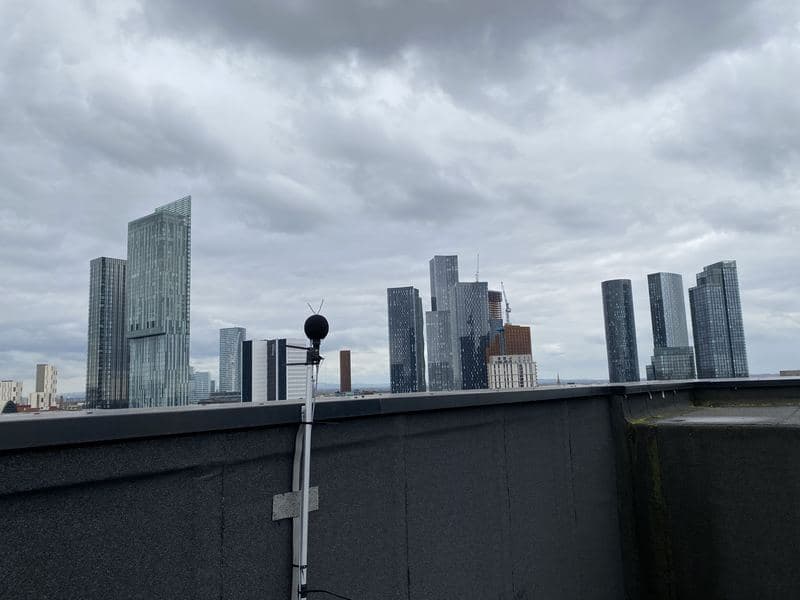
A sound level meter monitoring overnight on a Manchester rooftop

Send a postcode and a sentence.

That is genuinely enough to price most jobs. You will have a fixed quote back the same working day.