
Industrial & storage
Open storage change of use, South West
Round-the-clock access kept, by banning one activity at night instead of restricting the gates.
Assessed against
- BS 4142:2014+A1:2019
- BS 5228-1:2009+A1:2014
- ISO 1996-2:2017
- ISO 9613-2
The challenge
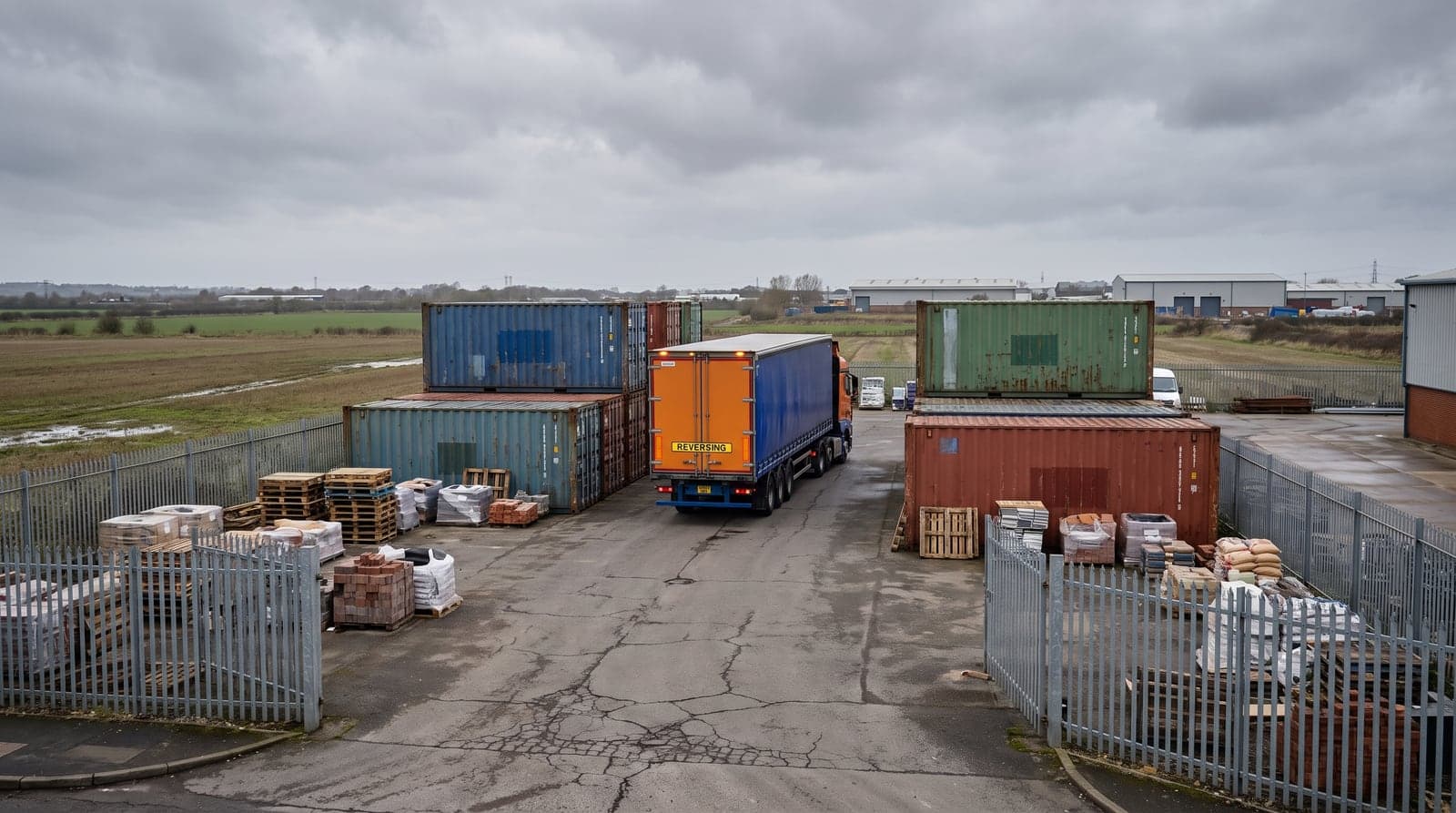
An applicant wanted to change the use of a site in an industrial area to open storage, split into four parcels and operating twenty-four hours a day. The case officer picked up the round-the-clock working and raised it against the neighbours' amenity. The nearest homes are a good distance away, but the land between is flat and open, and a previous consent nearby had come with an hours restriction attached.
The applicant could not accept restricted access, because a future tenant might run a self-storage business where customers come and go at any hour, and a condition limiting the gates would make the site unlettable for that use.
The real difficulty was that nobody knew who the tenants would be. There were no end users for any of the four parcels, so there was no single operation to assess. Whatever went to the council had to cover the realistic range of occupiers rather than one convenient example.
What we did
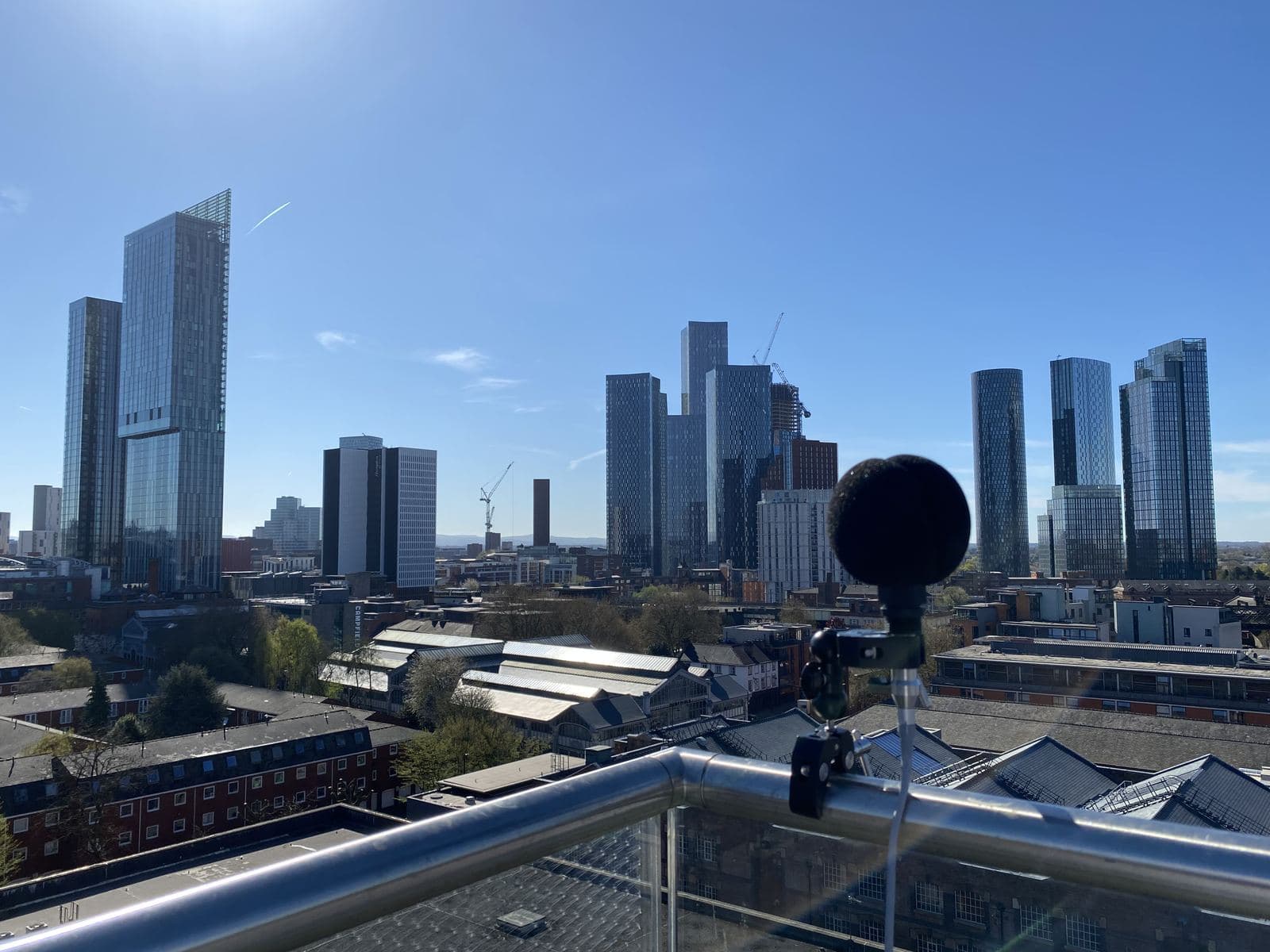
We monitored for just under four days to establish how quiet it gets at night, which is the period that decides a case like this.
Then, with the applicant, we agreed three plausible occupiers to bracket the range: ordinary self-storage with vans and hand loading; heavier plant and machinery storage with lorries and a tracked excavator; and scaffolding storage, which means metal being thrown onto metal.
Each was built up as a realistic sequence of activity and then multiplied to a deliberately pessimistic level of use across all four parcels at once.
Two of the three were comfortable at every hour. The third was not. Scaffolding handling is impulsive, sharp, clattering and unpredictable, and at night, when there is little else to mask it and nobody expects industrial noise, that character carries a penalty. It was the only combination that failed.
The outcome
Because the problem was one activity rather than the site as a whole, the fix could be aimed at the activity. A noise management plan bans impulsive handling of scaffold tube, steel sections, container doors and the like between eleven at night and seven in the morning, written into tenancy agreements, with those materials loaded during the day instead. Vehicle movements, forklifts, general loading and site security all carry on at any hour. The gates stay open, and the site stays lettable.
The environmental health officer then pushed on one more point: reversing alarms at night. We measured a lorry manoeuvring with its alarm sounding, carried it across to the houses, and showed it arrives below the noise already there at night, and that each alarm lasts seconds, so it barely registers over any meaningful period.
The officer accepted that, with one proportionate addition we agreed was fair: the operator cannot control visiting lorries, but can control its own machines, so the forklifts and telehandlers based on site must use broadband alarms at night. Visitors are encouraged to, but not required.
A similar project on your desk?
That is genuinely enough to price most jobs. You will have a fixed quote back the same working day.