
A Night in Astley
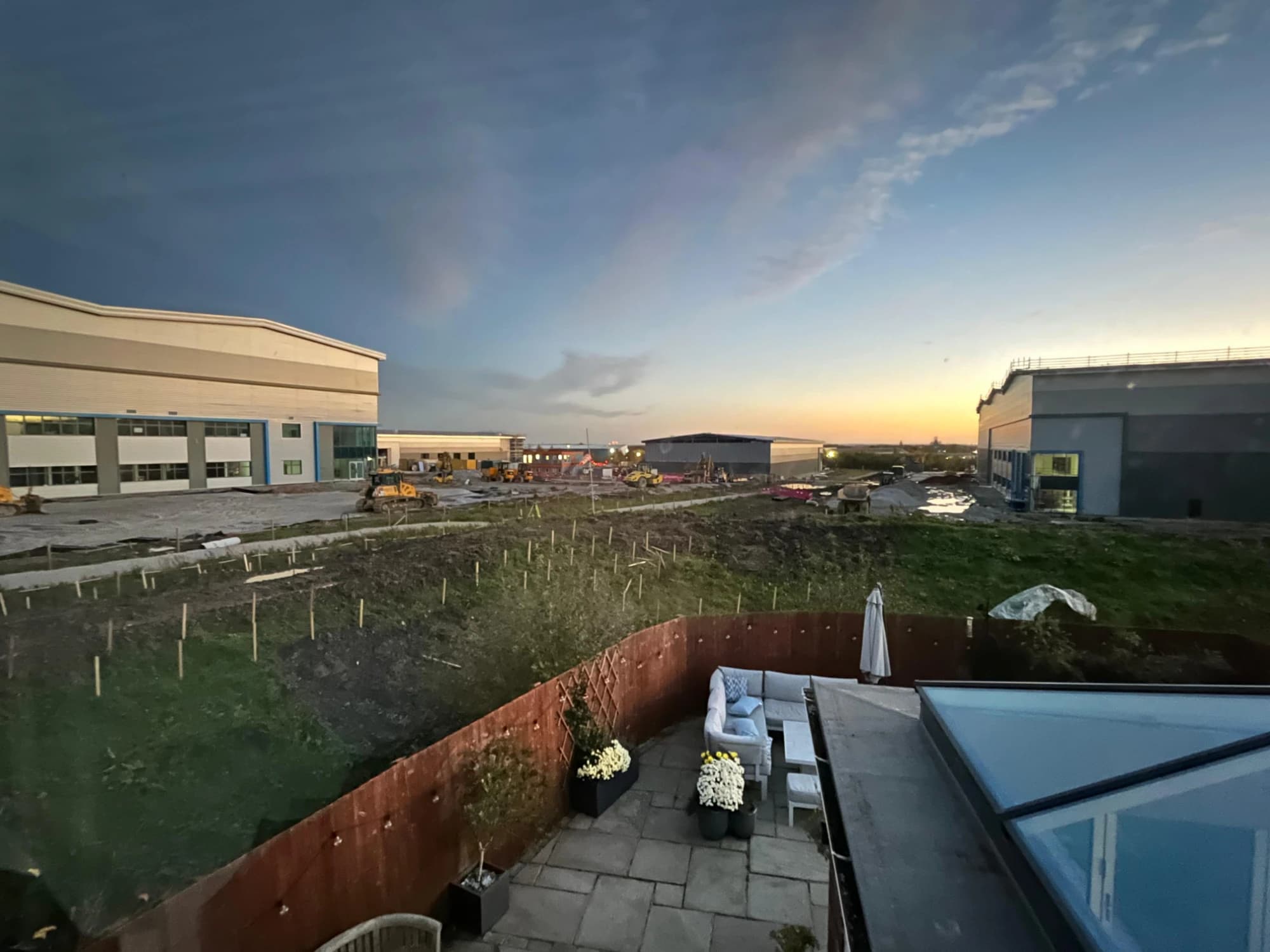
Measurements undertaken by an independent acoustic professional using a calibrated Class 1 sound level meter, from a neighbouring garden.
A marked moment: this minute peaked at 68.4 dB.
Who made this
Independent measurement, published in full.
Murray Acoustics is an independent acoustic consultancy in Manchester. For press enquiries, corrections, or the data in another form, email info@murrayacoustics.com.
Work like this is published at our own cost. If it was useful, a Google review helps us do more of it.
The report behind this page
Every figure here comes from the survey report, 21184-RP-NIA-01.
Questions
Asked about the night.
What am I actually listening to?
A continuous, calibrated recording made by the measuring microphone in a rear garden on Withington Drive, Astley, beside Astley Business Park. The meter records everything that reaches the garden: the estate, the road, aircraft, birds, wind, neighbours. The chart tells you the measured level at every second, and the moments list says what can be heard at the marked times.
How loud is 60 dB at night?
On this page you can hear it rather than imagine it: jump to any marked moment and read the meter while it plays. For context, the World Health Organisation's 1999 guidance for bedrooms at night is 45 dB LAmax for single events, and normal conversation sits near 60 dB.
Why does the page keep telling me to read the meter?
Because no loudspeaker or headphone can reproduce an absolute sound level. Your volume control decides how loud the playback is; the readout shows what the calibrated meter measured at that second. The numbers are the evidence, and the audio is what they felt like.
What are the two lines on the chart, and how is the big number counted?
Both lines are the approved planning assessment's own figures for this location. The 34 dB line is the night-time background level its baseline survey measured here before the estate was built; read the average trace against it. The 51 dB line is the loudest level it predicted outside the nearest bedroom windows at night with its mitigation in place; read the maximum levels against it, and anywhere the night went above it shows in red. The big number totals distinct exceedances of that 51 dB prediction up to the playhead: a run of seconds at or above the line counts once, a new exceedance is counted only after at least ten seconds back below it, and sections identified by ear as something other than the estate, an aircraft or the dawn chorus, are greyed on the chart and left out. One caveat, stated plainly: the prediction is for first-floor window height, 4.0 m, and the microphone stood at 2.5 m, which understates what reaches the bedrooms, so the comparison is conservative.
Can I use the audio and the data?
Yes. The level data downloads are licensed CC BY 4.0: use them freely and credit Murray Acoustics. Broadcast clips and stills are available for the press, and the whole player can be embedded on any site with one line of HTML. The links and the embed code are in the data section below.
Moments
Jump straight to a moment.
The largest separated peaks of the night, picked from the level record. Descriptions are added only after listening, and describe what can be heard, never who caused it. Every moment carries its own link, so you can send someone straight to what 3 a.m. sounded like.
- 22:1062.2 dB maxDescription to follow once the listening pass is complete.
- 22:1764.5 dB maxDescription to follow once the listening pass is complete.
- 22:2767.1 dB maxDescription to follow once the listening pass is complete.
- 22:4562.7 dB maxDescription to follow once the listening pass is complete.
- 00:0767.7 dB maxDescription to follow once the listening pass is complete.
- 01:2768.4 dB maxDescription to follow once the listening pass is complete.
- 01:3964.4 dB maxDescription to follow once the listening pass is complete.
- 02:0663.6 dB maxDescription to follow once the listening pass is complete.
- 02:4964.2 dB maxDescription to follow once the listening pass is complete.
- 03:1462.8 dB maxDescription to follow once the listening pass is complete.
- 03:3163.9 dB maxDescription to follow once the listening pass is complete.
- 03:4263.0 dB maxDescription to follow once the listening pass is complete.
- 03:5663.2 dB maxDescription to follow once the listening pass is complete.
- 04:0563.0 dB maxDescription to follow once the listening pass is complete.
- 04:2663.4 dB maxDescription to follow once the listening pass is complete.
Data and press kit
Take the night with you.
The level data is licensed CC BY 4.0: use it freely, credit Murray Acoustics. The same files drive every figure on this page.
Embed the night
The timeline, the readout and the play button in a strip, with the link back built in. Paste it into any page.
<iframe src="https://www.murrayacoustics.com/astley/night/embed" width="100%" height="460" style="border:0" loading="lazy" title="A Night in Astley, Murray Acoustics"></iframe>
Link to a moment
Add ?t=HH:MM:SS to the page address and the link opens on that moment, with its own share card. Every moment’s copy button does this for you.
https://www.murrayacoustics.com/astley/night?t=00:27:10
Comments
Heard this yourself?
Residents, neighbours, anyone who knows these nights: say what you hear. Comments are read before they appear.
A name and a comment is all that is asked; no account, no email. Comments are read before they appear and may be edited for privacy or declined; the measured record above stands either way.