Project updates
Astley Business Park: the noise report predicted 36 dB. We measured 61 dB.
An independent acoustic survey at Astley Business Park, Wigan. Outside the nearest bedroom windows, the approved noise assessment predicted 51 dB; measurement indicates 71. Inside the bedroom, the predicted 36 dB becomes 61.
This note has been superseded. The full survey report, 21184-RP-NIA-01, was issued on 19 August 2026 and prevails wherever the two differ: read the full report, and download it, here. What follows is the interim note as it was issued on 6 August, kept in place because it is a public document in a live matter.
Murray Acoustics has been commissioned by the Astley Warehouse Action Group to undertake an independent operational noise survey and assessment of the newly occupied Unit 2 at Astley Business Park, Astley Park Way, Tyldesley, Wigan. This note compares the night-time noise levels predicted in the noise assessment that supported planning permission A/23/96226/MAJOR with the levels measured on site in July 2026, both at the worst affected dwelling and spatially across the surrounding residential area.
It is an interim update, issued in advance of the full survey report. The comparison is preliminary, is based on an initial review of the measured data, and is limited to maximum noise levels at night. It is not a complete assessment of the site.
The measured night can now be heard as well as read: A Night in Astley plays the survey's own calibrated recording second by second, 22:00 to 06:00, with a running count of every noise event that exceeded the predicted maximum.
Download the technical note (PDF)21184-TN-01 · Issued 6 August 2026 · 1.9 MBDownloadThe approved noise assessment
The permission is supported by Tetra Tech report 784-B034505 Revision 7, dated 13 May 2024, this being the revision referred to in Condition 4 of the decision notice.
At its Table 2.1 the approved assessment adopts an internal criterion of 45 dB LAmax in bedrooms at night, taken from the World Health Organisation’s Guidelines for Community Noise 1999. Whilst BS 4142 provides the appropriate framework for assessing a source of this nature, this is the criterion the approved assessment adopted and against which it judged itself, and it is the level below which individual noise events are considered unlikely to disturb sleep.
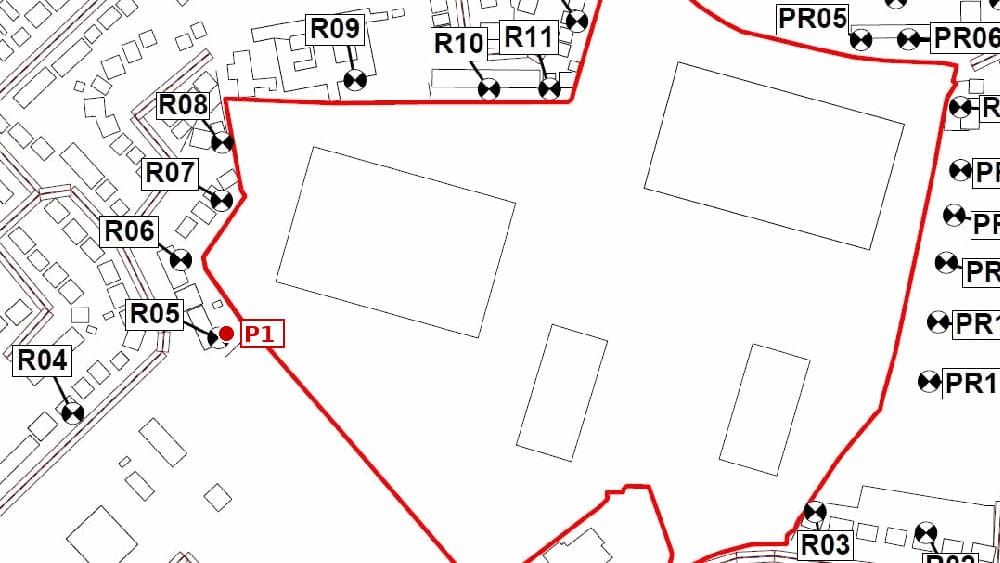
Receptor R05, 38 Withington Drive, is the closest and worst affected dwelling assessed. The night-time predictions are given at a receptor height of 4.0 m, representing first-floor bedroom windows. At that position Table 6.3 predicts a night-time maximum level of 51 dB LAmax externally, with the acoustic barriers secured by Condition 4 in place. The corresponding internal level is given as 36 dB LAmax with windows partially open, some 9 dB below the criterion.
The report states a 10 dB reduction from open windows. Every table uses a more favourable 15 dB. Those 5 dB are the difference between pass and fail.
Section 5.2 of the approved assessment states that a reduction of 10 dB has been applied for a partially open window, whereas the reduction applied throughout its assessment tables, including Table 6.3, is 15 dB. It is not clear why the stated method and the approach taken differ, although it is noted that had the 10 dB reduction been applied, the predicted levels would have exceeded the assessment criteria.
Deviation from BS 4142
BS 4142:2014+A1:2019, Methods for rating and assessing industrial and commercial sound, is the standard conventionally used to assess sound of an industrial or commercial nature against the prevailing background sound level. Its scope expressly includes sound from the loading and unloading of goods and materials at industrial and commercial premises, and sound from mobile plant and vehicles forming an intrinsic part of the sound emanating from the premises.
BS 4142 is the standard for assessing industrial noise affecting residential areas.
The approved assessment applies BS 4142 to the proposed building services plant, at its Table 5.2. It does not apply the standard to the service yard, docking and heavy goods vehicle activity, which is the dominant source of noise from the development at night. No reason for the distinction is given in the report.
Had the standard been applied to the yard activity, the approved assessment’s own figures indicate that a significant adverse impact would have been the likely outcome. Table 6.2 predicts an external night-time level of 45 dB LAeq at receptor R05. Table 5.2 adopts a night-time background sound level of 34 dB LA90 at that same receptor. The excess over background is therefore +11 dB before any correction for acoustic features, and BS 4142 indicates that a difference of around +10 dB is likely to be an indication of a significant adverse impact, depending on the context.
That figure takes no account of the character of the source. Reversing alarms are tonal and intermittent, and dock and trailer impacts are impulsive, each of which would attract a correction under Section 11 of BS 4142 and would raise the rating level further.
No reason for the deviation from BS 4142 is given in the report, and none appears to be recorded on file for why the Council accepted it.
For the avoidance of doubt, the most common application of BS 4142 is the assessment of new industrial and commercial operations proposed near existing residential uses. No other published British Standard supersedes it, and it is not clear why a bespoke assessment approach was proposed within the planning noise report.
Measured levels
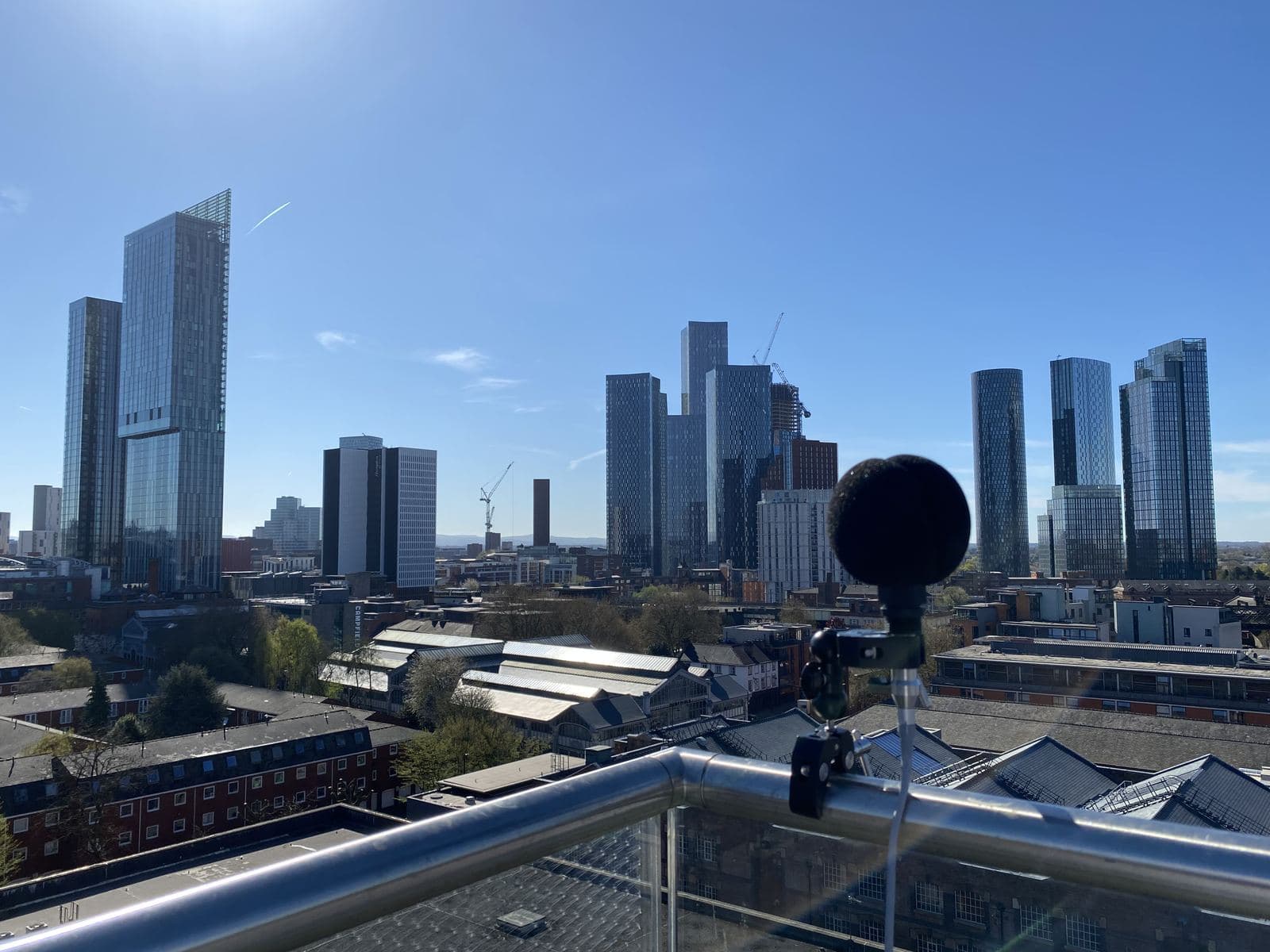
Continuous unattended measurements were undertaken between 27 and 29 July 2026 using a Class 1 sound level meter, at a position within the curtilage of the dwelling represented by receptor R05 and at a microphone height of 2.5 m. The equipment calibration was verified before and after use and no abnormalities were observed. Audio recordings were triggered alongside the logged data so that individual events could be identified.
Night-time maximum levels attributable to operations at the site reach 68 dB LAFmax at the measurement position. Attribution has been made by review of the triggered audio recordings and the associated time history.
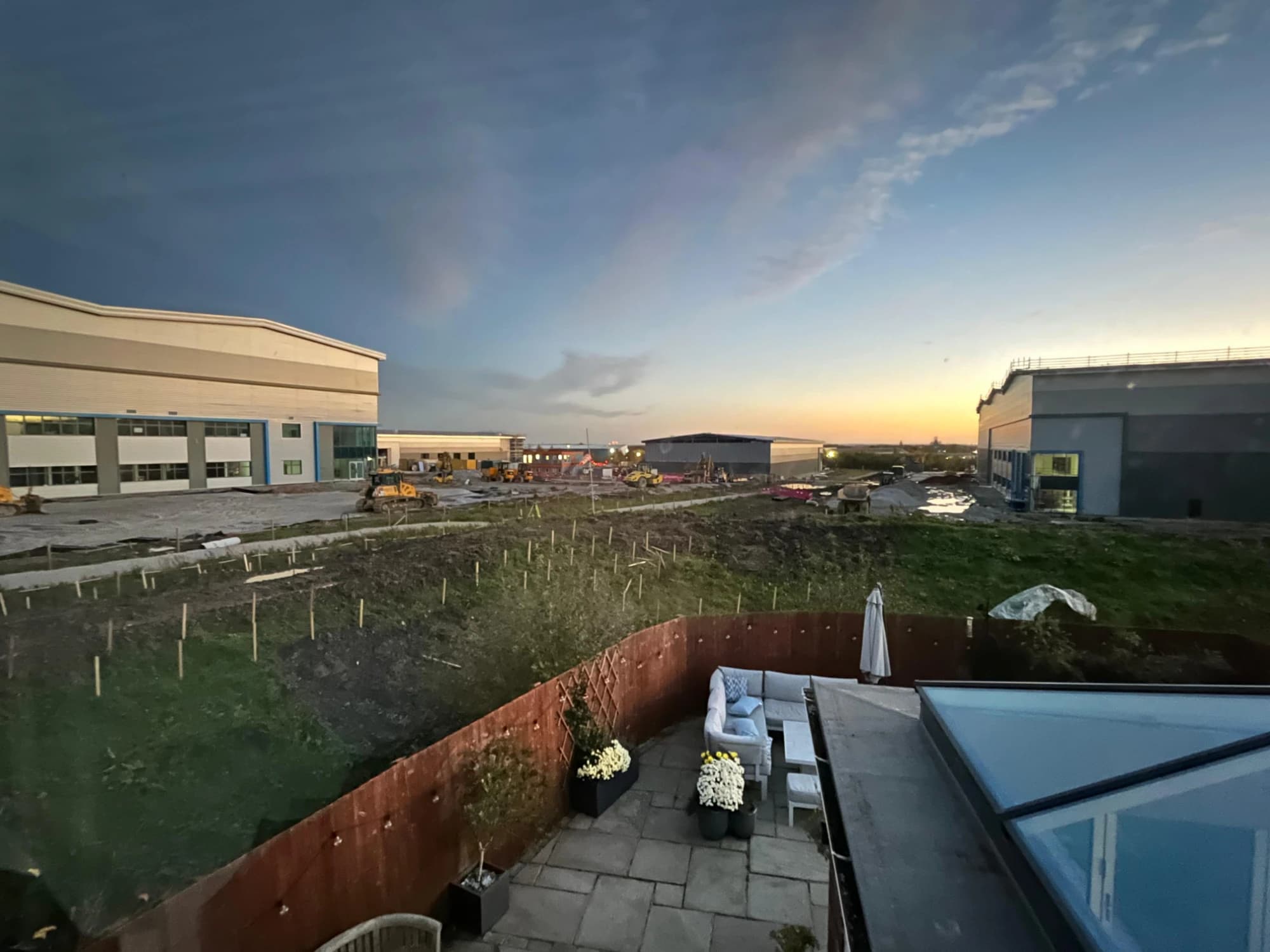
The measurement position is not the assessed receptor position. It sits nearer to the boundary barrier and at 2.5 m rather than the 4.0 m first-floor bedroom window height adopted by the approved assessment. The barrier is less effective at the greater height, and the measured level at 2.5 m therefore understates the level at the bedroom windows. Levels at the assessed receptor position have accordingly been derived by modelling.
Noise modelling
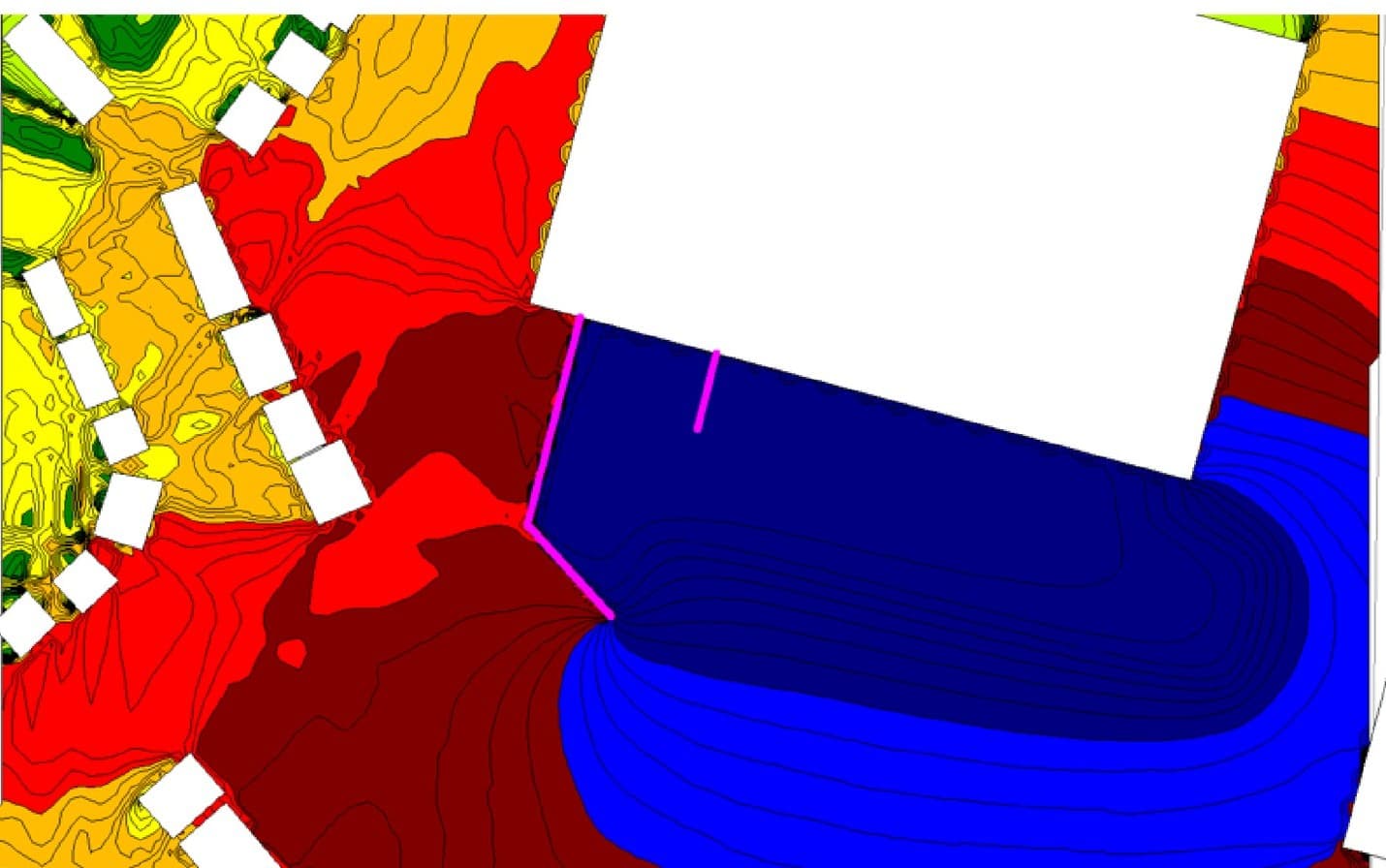
A three-dimensional acoustic model of the site and the surrounding residential area has been constructed in CadnaA using the ISO 9613-2 propagation algorithm. Scenario A applies the source data of the approved assessment. Scenario B applies source levels calibrated to reproduce the maximum levels measured at the survey position in July 2026. Every other model input is identical, including the site geometry, building heights and boundary mitigation of the approved assessment, so the difference between the two figures below is attributable solely to the source terms.
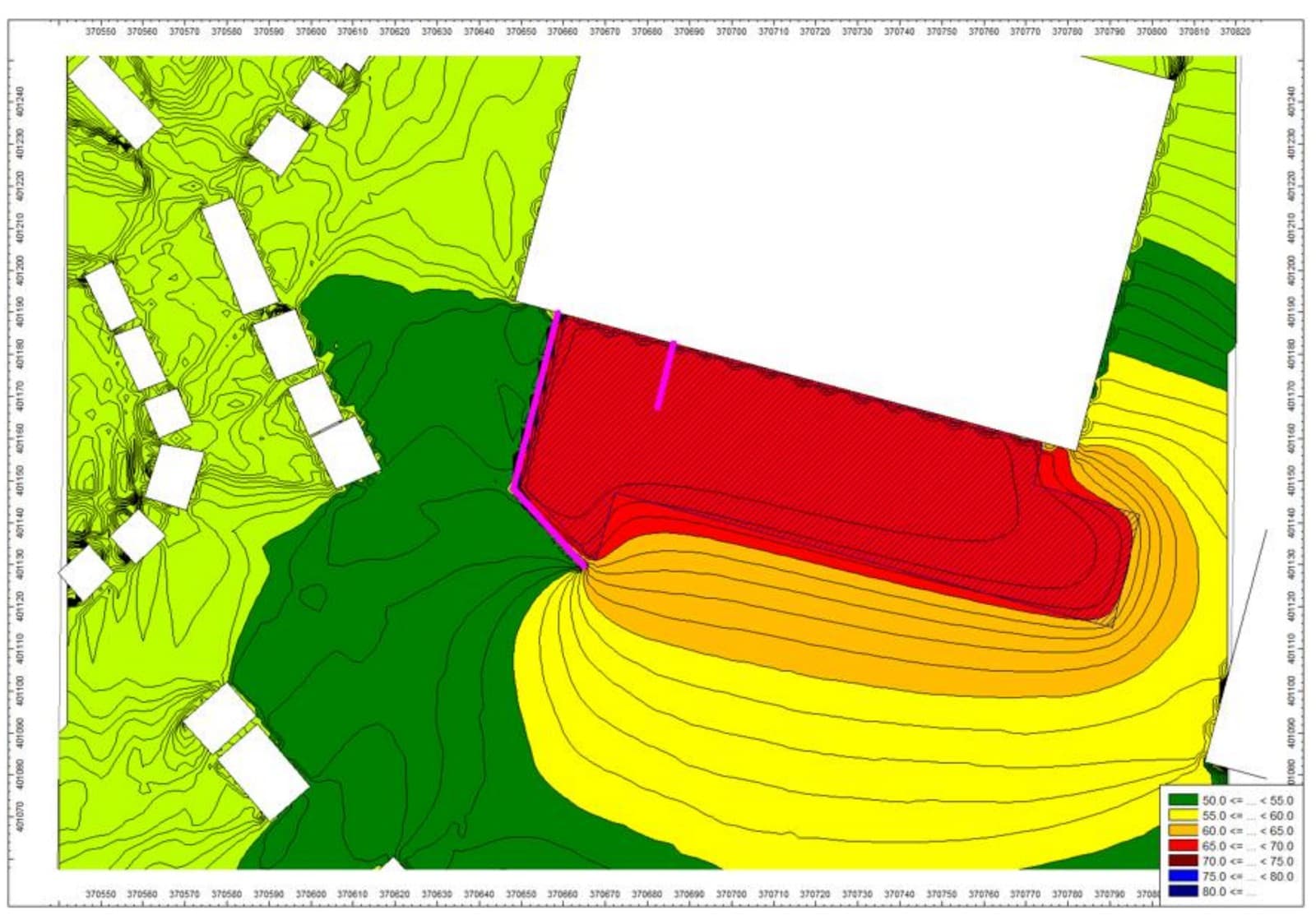
Same model. Same houses. Same barriers. The only thing that changed is how loud the site actually is.
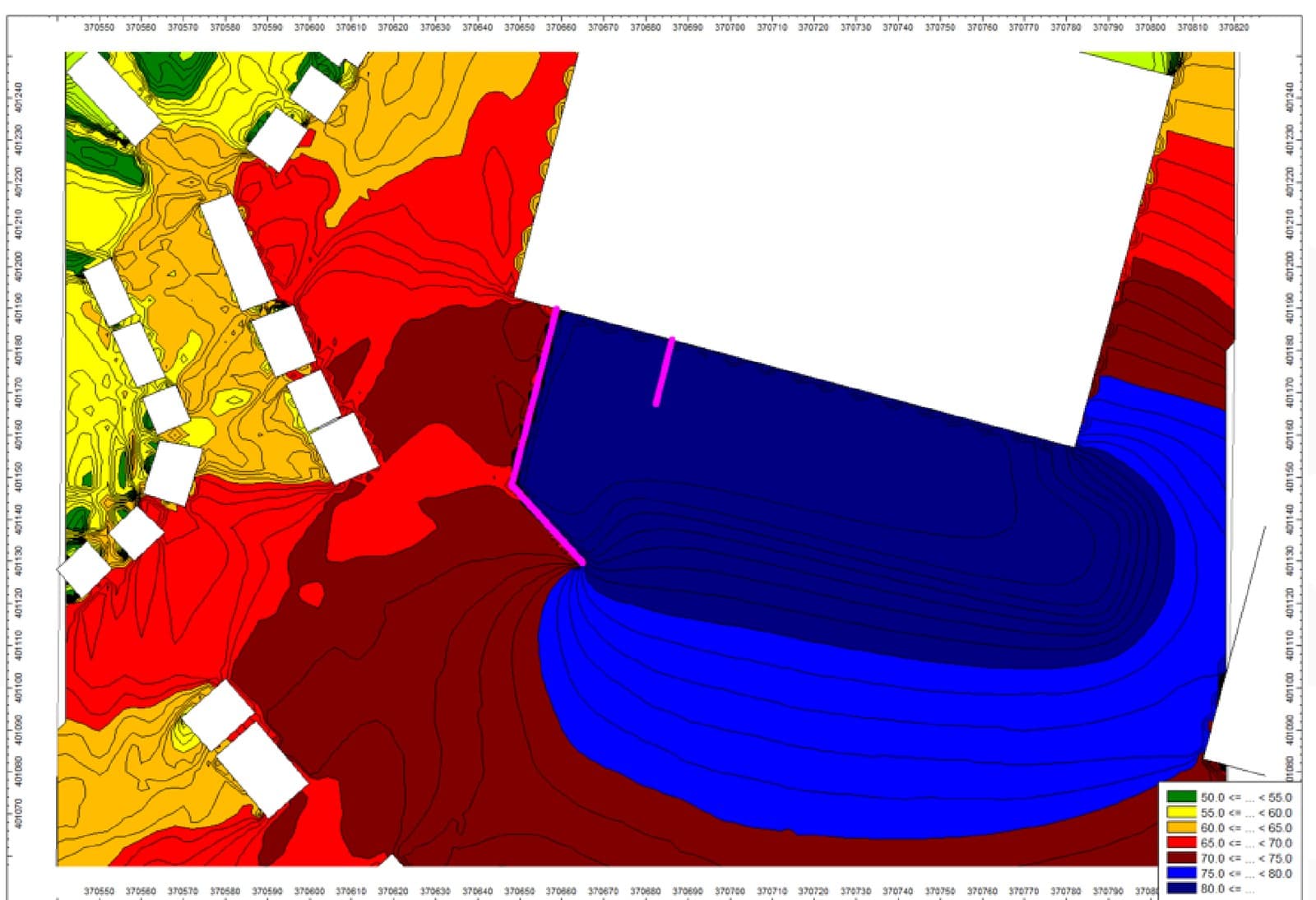
Scenario B gives a night-time maximum level of 71 dB LAmax at the first-floor bedroom window position of receptor R05, against the 68 dB LAFmax measured at 2.5 m at the survey position. The 3 dB difference reflects the reduced screening afforded by the boundary barrier at the greater receptor height.
Comparison at 38 Withington Drive
Figure 3 compares the levels derived from measurement at the worst affected dwelling against the corresponding predictions of the approved assessment, at the same receptor position and height. Internal levels are derived using the open-window reductions given in the approved assessment itself.
61 dB in a bedroom at night. Likely to be perceived as five times as loud as predicted during the planning process.
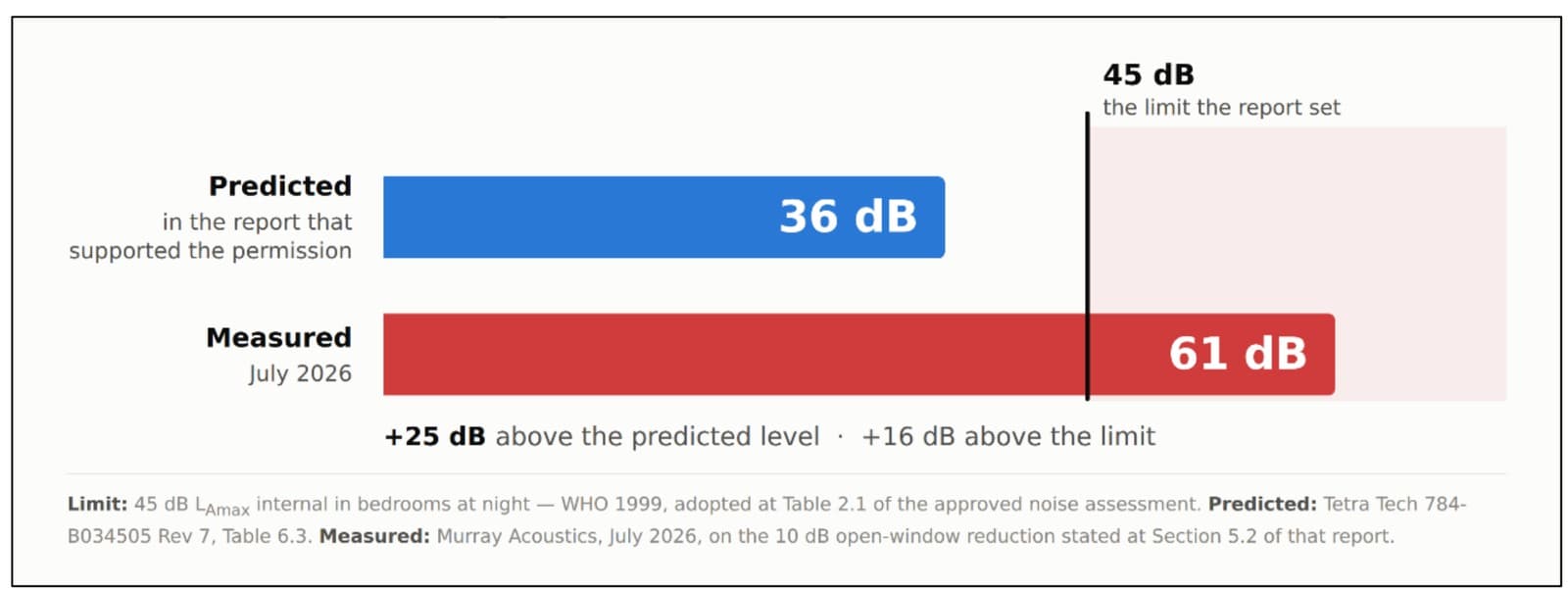
The predicted internal level applies the 15 dB open-window reduction used in the report’s assessment tables; the measured internal level applies the 10 dB reduction stated in its method. On a consistent 15 dB basis the measured internal level is 56 dB, and the difference 20 dB. On either basis it exceeds the 45 dB criterion the approved assessment adopted for itself.
The levels derived from measurement are approximately 20 dB above the predicted external level, and 25 dB above the internal level predicted for this dwelling. The decibel scale is logarithmic, and an increase of 10 dB is generally perceived as a doubling of loudness, so a difference of this order represents individual events of the order of four to five times as loud as those predicted.
Conclusion
At the worst affected dwelling assessed, 38 Withington Drive, the approved assessment predicted a night-time maximum level of 51 dB LAmax at the first-floor bedroom window. Levels derived from measurement at that same position are 71 dB LAmax, some 20 dB higher. Internally, against the 45 dB criterion the approved assessment adopted for itself, its predicted level of 36 dB compares with 61 dB derived from measurement.
The contour comparison at Figures 1 and 2 indicates that the difference is not confined to that dwelling, and extends across the first row of properties on Withington Drive.
The dominant source of night-time noise from the development was not assessed against BS 4142. On the approved assessment’s own predicted level, and its own adopted background sound level, such an assessment would have indicated a likely significant adverse impact before any correction for the character of the source.
These findings are preliminary and are issued in advance of the full survey report. They are, in the opinion of Murray Acoustics Ltd, sufficient to warrant a full assessment of operational noise from the site to BS 4142, together with measured verification of the mitigation secured by Condition 4 of the planning permission.
Basis and limitations
- This is an interim update. The full survey report will set out the complete measurement data, method, calibration records, meteorological conditions and event counts per night, and its findings and conclusions may differ from those presented here.
- Levels at the assessed receptor positions are derived by modelling calibrated to the survey position, and are not direct measurements at those positions.
- The model adopts the site geometry and boundary mitigation of the approved assessment as drawn. As-built barrier and bund heights have not been surveyed and may differ from those modelled; the full report will address this.
- The observations on BS 4142 are not a BS 4142 rating assessment. A full assessment to the standard, including contemporaneous background sound levels and acoustic feature corrections, will follow in the full report.
- The note is not a report prepared under Part 35 of the Civil Procedure Rules and is not expert evidence. It does not constitute legal advice, and no opinion is expressed on any question of law. Those are matters for the local authority and, ultimately, for a court.
- The findings represent the professional opinion of Murray Acoustics Ltd based on the information available at the time of writing, and are superseded by the full survey report upon its issue.
The full basis and limitations, and the formal status of the note, are set out in the document itself.
Download the technical note (PDF)21184-TN-01 · Issued 6 August 2026 · 1.9 MBDownloadAbout the author
Jamie Murray MIOA is Director of Murray Acoustics Ltd, a Member of the Institute of Acoustics with over 12 years in practice, advising developers, local authorities and private clients on environmental and industrial noise, including the assessment of industrial and commercial sound to BS 4142.
Declared interests
Murray Acoustics Ltd was instructed by the Astley Warehouse Action Group. Neither Jamie Murray nor Murray Acoustics Ltd has any commercial or personal interest in the site, in the development or in its occupiers.
The survey and this update have been undertaken without charge to the residents.