How it runs, start to finish
Send the postcode, a site plan showing where the sources sit relative to the nearest homes, and whatever the council has said: the condition wording, the validation request or the EHO's letter. Add operating hours, delivery patterns and any manufacturer sound data you hold. The engineer who will run the survey reads it, confirms the scope and sends a fixed fee; quotes come back within ten minutes on average, and a survey can usually start the next working day.
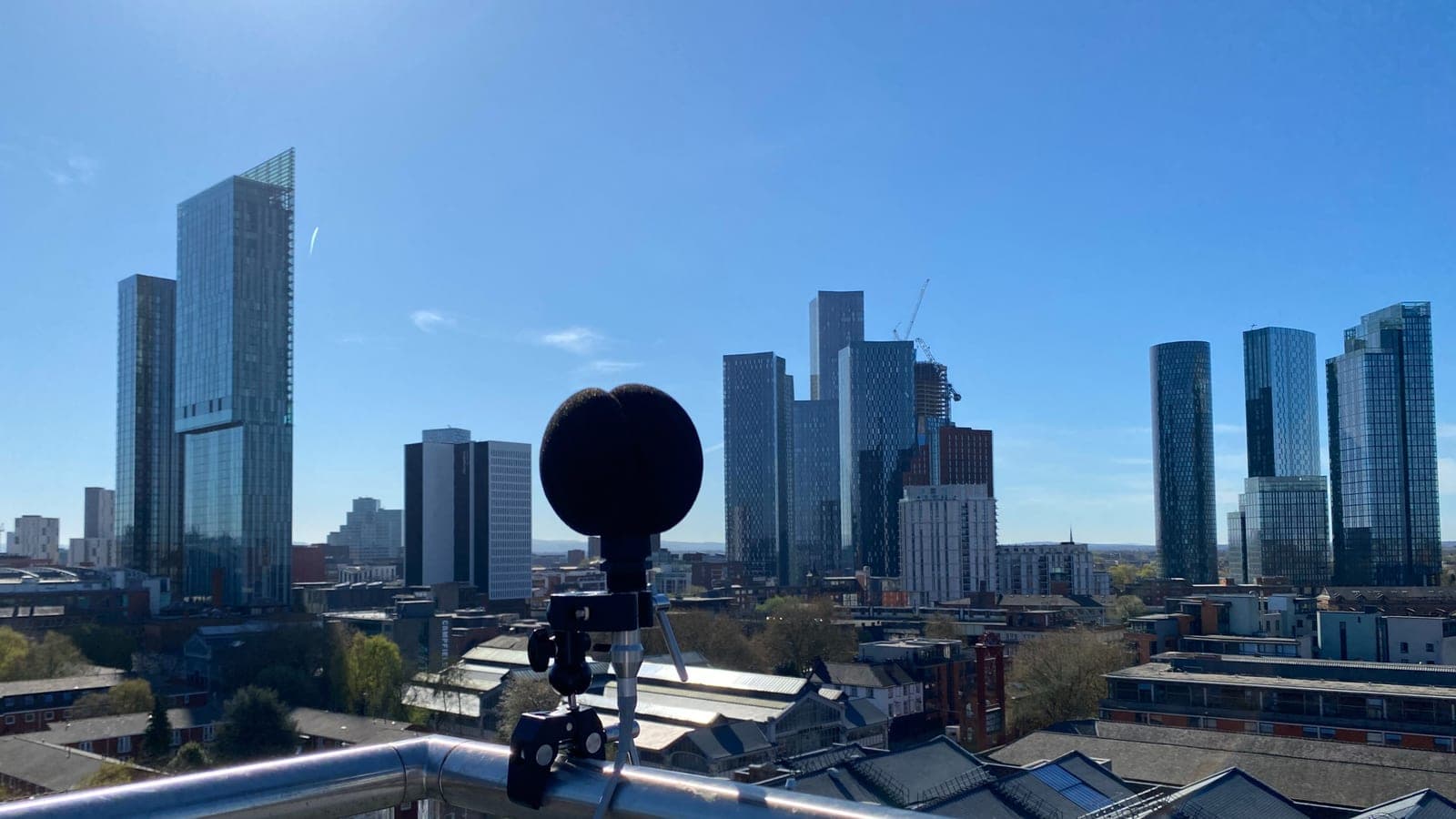
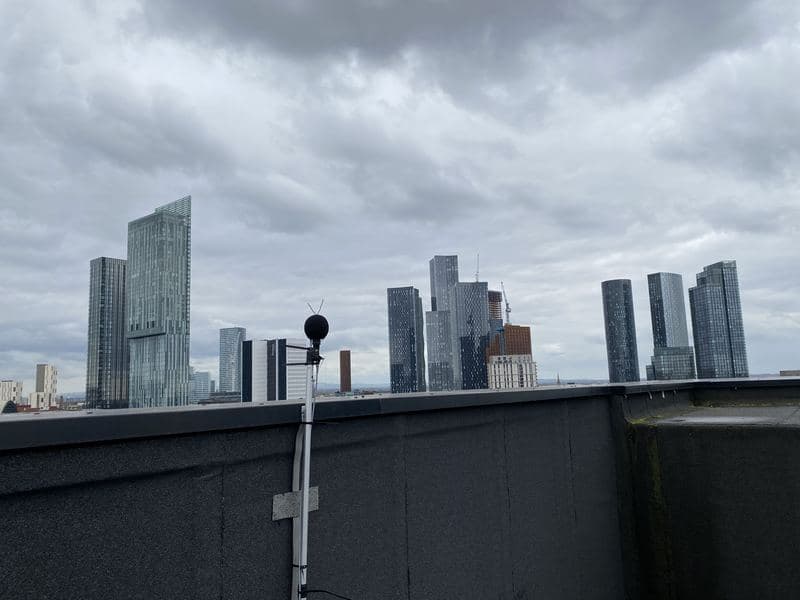
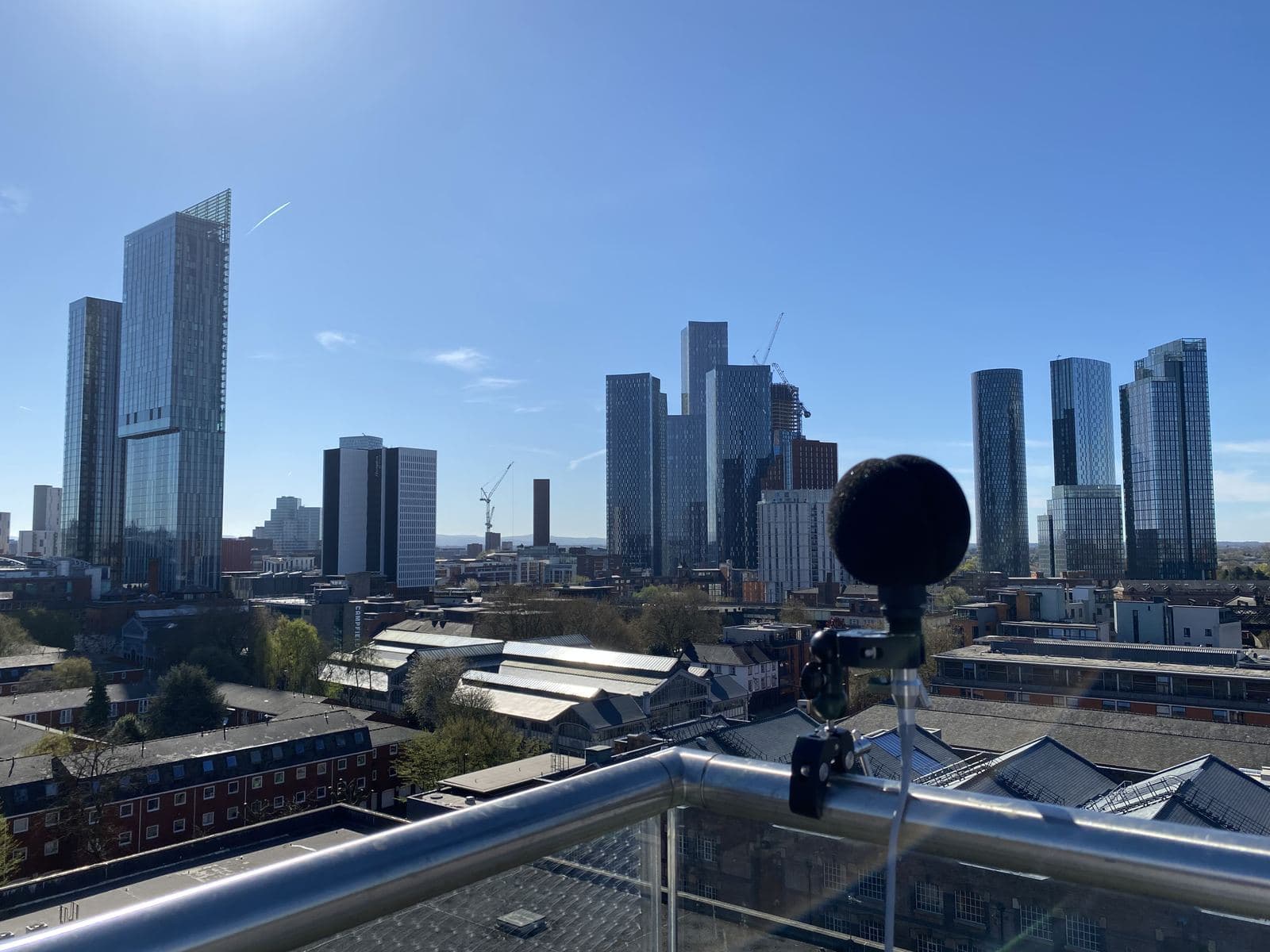
The background noise survey comes first, at the homes most exposed to the operation, on Class 1 sound level meters that hold current traceable laboratory calibration certificates and are checked against an acoustic calibrator before and after each deployment. It runs for as long as the operating hours require, which for a site working nights means at least one full night and often several, so the value adopted is representative rather than a single fortunate reading. The specific sound level of every source in scope is then measured where the operation already exists, or modelled from sound data and propagation where it does not, and combined at each home. Character corrections are applied and justified, and the rating level is compared with the background and read in context.
The report lands within five working days of the survey, written by the engineer who scoped and measured it, and that same engineer answers the council's technical questions. Where the quote says the Approval Guarantee applies and you adopt the approach the report recommends, a written technical objection from the council to the methodology, calculations or conclusions is met by revising the report at no additional cost until it is resolved, and if revision cannot resolve it the fee for that work is refunded. It guarantees the work, not the permission.
The rating level, and why context decides the outcome
BS 4142 reduces an industrial noise assessment to two numbers. The specific sound level is the sound from the source under assessment at the home in question, over a one-hour reference period by day and fifteen minutes at night. The background sound level is the LA90 measured at that home with the source absent: the level exceeded for 90% of the time, which is the quiet the sound has to be heard against. Where the sound has character that makes it more noticeable than its level alone suggests, the specific level is corrected upward. Fans and compressors are often tonal, reversing alarms tonal and intermittent, dock and trailer impacts impulsive. The corrected figure is the rating level, and the assessment turns on the difference between it and the background.
The standard gives no fixed limit. An excess of around 10 dB is likely to indicate a significant adverse impact and around 5 dB an adverse impact, and both are qualified by the words depending on context. The standard then requires that initial estimate to be read in context and modified where the context warrants it, taking account of the absolute level of sound, the character and level of the residual sound compared with the specific sound, and the sensitivity of the receptor. A 5 dB excess over a very low rural background can mean something different from the same excess beside a trunk road, and a report that stops at the arithmetic has done half the job.
Uncertainty belongs in the report too, not in a footnote. How representative the background period was, how the specific level was derived, how a modelled source might behave once installed. Writing it out gives the officer the means to agree with the conclusion rather than take it on trust, and it is the part a report most often skips.
Getting the background noise survey right
The background does most of the work in a BS 4142 noise assessment, and it is where most assessments are weakest. It has to represent the periods the source operates, at the homes the source affects. A background logged on a weekday afternoon tells you nothing about a still Sunday night, which is exactly when a refrigeration unit or a reversing alarm draws the complaint. For a 24-hour logistics operation the survey has to cover the quietest periods the site works through, the small hours and the weekend among them, and one night is rarely enough to show that the value chosen is representative rather than lucky.
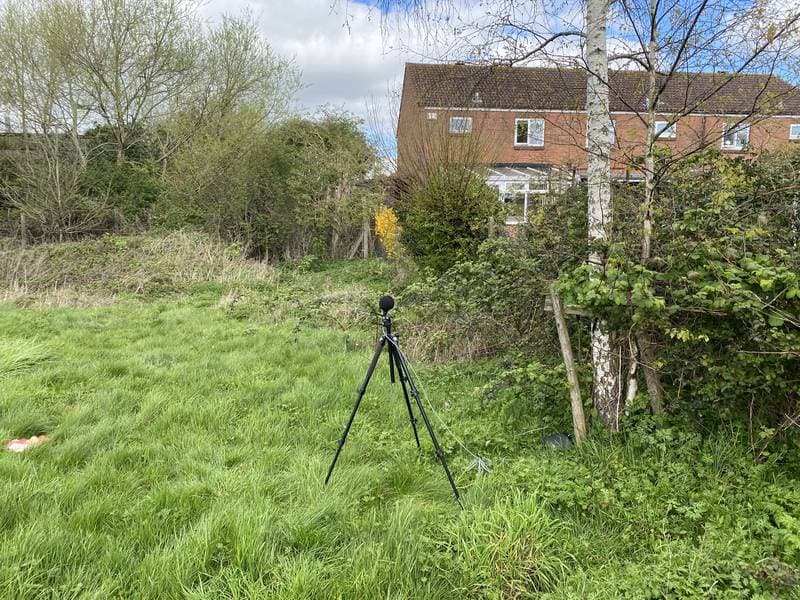
The measurement position matters as much as the duration. The nearest house on the plan is often not the most affected: a first-floor bedroom with a clear view of the yard can be more exposed than a ground-floor room a few metres closer behind a boundary wall. Where the source is already running and cannot be switched off, the standard allows the background to be measured at a position that represents the sound climate at those homes without the source contributing, and the report has to explain why that position is a fair proxy.
The value then has to be chosen defensibly. BS 4142 asks for a representative background for each assessment period, not an average of everything that was logged, so the value adopted is chosen from the measured distribution and the choice justified. We report the whole dataset, state the value adopted and say why, so the officer can see the judgement rather than guess at it.
Where BS 4142 assessments fall down
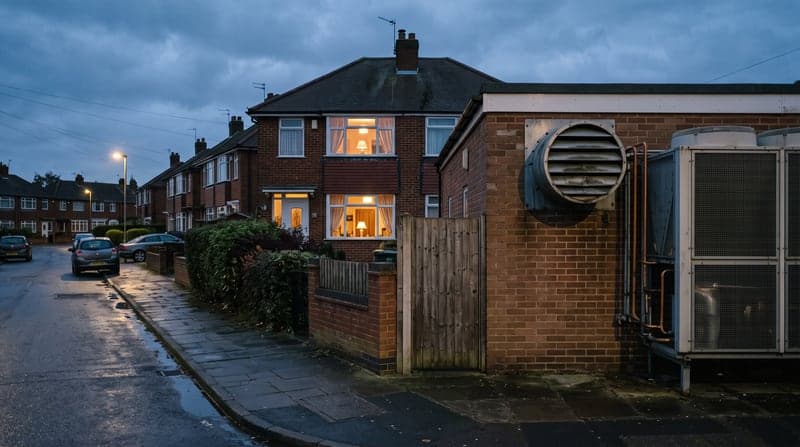
The commonest failure is scope. BS 4142 covers the loading and unloading of goods, and the mobile plant and vehicles that form an intrinsic part of the sound from the premises, so a service yard, a dock or a trailer park is in scope alongside the rooftop plant. Assessments that quietly rate the plant and leave the yard out are a recurring weakness in reports we are asked to review, and an EHO who has stood at the fence on a night shift will notice the omission before anything else.
The second is the night assessed against the day: a daytime background applied to a 24-hour operation, or a background from the wrong season or the wrong day of the week. The third is character. Plant that is audibly tonal and a report that applies no correction, or manufacturer sound power data used as though the unit were free-field when it sits in a corner between two hard walls, ducted, in a bank of six. Each of these flatters the result by a few decibels, and together they can turn a clear adverse impact into a comfortable pass on paper.
Where a result is marginal, the report says so and sets out the options. For an operator with an EHO letter in hand that is also the cheaper path: a measured assessment that identifies a real problem early, and a remediation designed and delivered voluntarily, costs less and disrupts less than one imposed under an abatement notice with a deadline attached. Mitigation is specified in terms a contractor can build to and a later officer can verify: barrier heights and extents, enclosure performance, attenuator insertion loss, operating hours or vehicle routing.
When you want plant noise instead
The method is the same whatever the source, but the job is not. Our plant noise page covers mechanical plant serving a building: air source heat pumps, condensers and chillers, kitchen extract and refrigeration for a shop, restaurant or small commercial premises, where the sources are few and well defined and the survey is usually a shorter one. If your question is a single unit on a wall or a roof, start there.
This page is for operations: warehouses and distribution centres, service yards and trailer parks, manufacturing and process plant, and any commercial site where vehicle movements, loading and several sources running together make up the sound at the nearest homes. The survey is longer, the source inventory is wider and the modelling has to combine them. If you are not sure which you need, send the council's wording and we will tell you before any fee is agreed.