Skip to content
Murray Acoustics
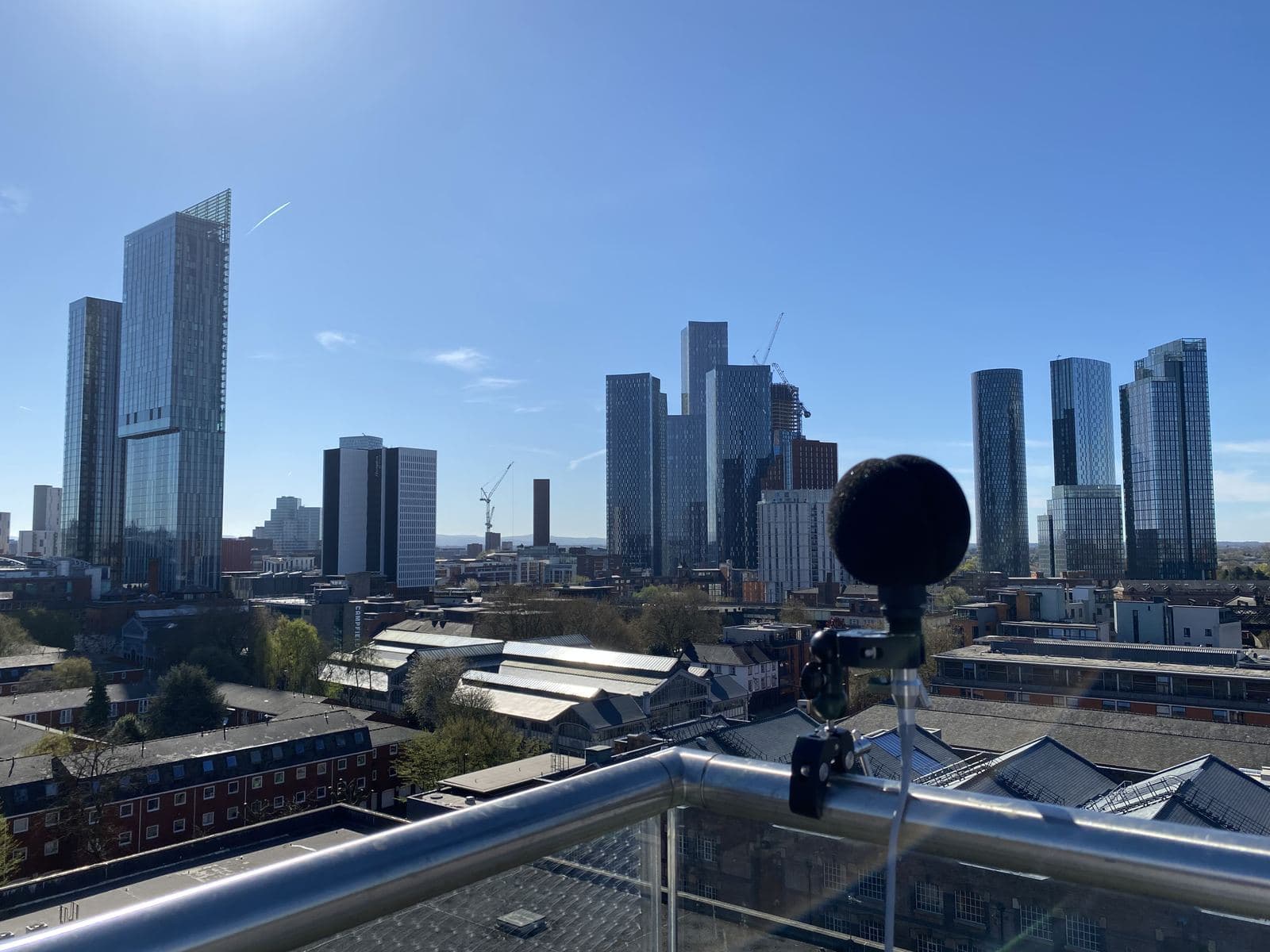
A Class 1 sound level meter monitoring on a city-centre rooftop

Noise Condition Discharge

Noise condition discharge that answers the exact wording on your decision notice.

Read the condition, run the survey it calls for and write the submission that answers it.

Fixed fee agreed up front · Quote back the same working day

The service

What it is, and when you need it.

A noise condition that reserves details for approval has to be discharged before the point its wording sets. The wording also decides what that takes. Noise condition discharge is the job of reading that wording, running the survey it actually calls for, writing the submission that answers it and dealing with the case officer's questions until a decision is issued. We write ours the way officers read them: condition quoted, each limb answered, conclusion stated.

A pre-commencement condition

The development the condition covers cannot lawfully begin until the council has approved the noise assessment or scheme. Your start date now depends on the discharge date.

A pre-occupation or verification condition

Mitigation has to be installed and, where the condition asks for it, shown by measurement to work: before anyone moves in, or within the period the condition sets after the plant is commissioned. The test, and the report of it, sit between you and handover.

A scheme of mitigation to be approved

The condition asks for a scheme rather than a number: glazing, ventilation, plant screening or a noise management plan, set out so the officer can approve it and a later officer can check it.

An application in, and the clock running

The discharge application has gone in, the environmental health officer has come back with queries, or the determination period is nearly up. If another consultant wrote the report, we review it against the condition and the queries, and answer or revise from there, in the officer's language, with data.

What you get

What the fee covers.

One fee, fixed before anything starts. Everything listed here is inside it.

  • A written reading of the condition, sent with the fee quote: when it bites, what the council has to approve and which standard the wording points at
  • Where the condition needs one, a survey measured to BS 7445 with Class 1 sound level meters holding current traceable laboratory calibration certificates, field-checked before and after each deployment
  • Assessment to the standard the condition names, BS 4142, BS 8233 (within ProPG where the noise is from transport) or BS 5228-1, against the criteria in the condition itself, the officer's report and the local plan
  • A discharge submission the case officer can approve: the condition quoted, each limb answered in turn, mitigation specified in terms a contractor can build and a later officer can verify
  • Written answers to the case officer's and environmental health officer's queries from the engineer who wrote the report
  • Fixed fee agreed up front. No day rates, no surprises.

Reading the condition first

Every noise condition discharge starts with the decision notice, not the site. The wording tells you three things: when the condition bites, what the council has to approve, and what evidence it expects. A pre-commencement condition has to be discharged before the development it covers begins, and a pre-occupation one before the building is first occupied or the use begins. A scheme-of-mitigation condition asks you to submit the measures that will achieve a stated outcome and have them approved, usually before they are built. A verification condition asks for proof that the approved measures, once installed, achieve it. That usually means a measurement after completion or, where that is all the wording asks for, evidence of what was installed. Many decision notices carry two of these on the same scheme, a scheme to be approved before commencement and verification before occupation, and the second cannot be answered until the measures approved under the first have been built.

Not every noise condition reserves details for approval. A compliance condition, one that says plant noise shall not exceed a stated level at the nearest dwelling, has nothing to submit: it has to be met for as long as the plant or use it controls is operating. The council can be asked in writing to confirm that it has been complied with, which a buyer's solicitor sometimes wants, but that confirms a fact rather than approving a design. Where a condition of that kind is on your notice, the useful work is a design check that the installation will meet it and, once it is running, a measurement that shows it does. We say so when we quote, rather than selling a submission the condition does not call for.

The reason printed under the condition, and the officer's report that recommended it, tell you what the council was worried about: a particular neighbour, a particular source, a local plan policy. That is what the submission has to answer. National policy expects every condition to meet six tests, among them that it is necessary, precise and enforceable, but wording drafted from a template sometimes names a standard that does not fit the source, or asks for a survey the application already contains. Reading it closely before quoting is where the scope, and the fee, are settled.
Which standard the wording points at

A condition naming BS 4142 is about an industrial or commercial source affecting homes: plant, extract, deliveries, a service yard. The discharge needs the background sound level at the nearest homes, the specific sound level of the source as installed or as specified, and a rating level set against that background with the context assessed. Our BS 4142 explainer sets out how the rating level is built. A condition naming BS 8233, with or without ProPG, is usually about the people who will live in the new homes: facade levels, internal levels room by room against the guideline values, external amenity, and the glazing and ventilation specification that follows. Our BS 8233 and ProPG pages explain the documents themselves.

A condition on construction noise points at BS 5228-1: a construction noise assessment, a noise management plan or the noise section of a construction environmental management plan, usually to be approved before works start. Our construction noise page covers that work in full. A condition on a mixed-use scheme may name BS 4142 and BS 8233 together. The submission then has to show how the two interact rather than leave the officer to reconcile them. Where the wording names no standard and asks instead for an assessment to a recognised or appropriate method, the choice is ours to make and to justify, and the justification goes in the report, because an officer who is not told why a method was chosen will ask.

The criteria are the council's, not the textbook's: some authorities set the plant's rating level a fixed margin below background, and some set internal levels tighter than BS 8233's guideline values. Our noise impact assessments page sets out how local policy shapes an assessment; for a discharge, we check the local plan and any supplementary guidance for the authority before a meter leaves the office, and if that changes the scope, the quote changes before you instruct, not after.

The survey and assessment it actually needs

A planning condition noise assessment is scoped by the wording, and different conditions need very different amounts of fieldwork. A pre-commencement condition asking for a baseline survey and an assessment needs the full exercise: unattended logging at the position that represents the affected homes or the proposed facades, long enough to capture the periods the condition is concerned with, which for night-time plant or a bedroom facade means at least one full night and often more. A verification condition on installed plant may need an attended measurement with the plant running and switched off, on one visit. A scheme-of-mitigation condition on a facade may need no new measurement at all if the application's survey still represents the site, in which case the work is desk-based and priced as such.

Measurements are made to BS 7445 with Class 1 sound level meters holding current traceable laboratory calibration certificates, field-checked against an acoustic calibrator before and after each deployment, with the weather recorded so the conditions of every measurement are on the record. The engineer who reads the condition runs the survey, writes the report and answers the officer's questions. Quotes come back within 10 minutes on average, a survey can usually start the next working day, and the report lands within five working days of the survey. Where the condition has to be discharged by a date, tell us the date and we will say whether it can be met before you instruct.

If the application-stage survey, ours or another consultant's, is recent, well documented and still represents the site, we will reuse it rather than measure again. A survey from several years ago, or one taken before a nearby road or business changed, is unlikely to survive an officer's scrutiny and should not be relied on. We say which it is when we quote, with the reason.

Writing the discharge submission

To discharge a noise condition in England or Wales you apply to the council, normally through the Planning Portal, for approval of the details reserved by that condition, and pay the council's fee; in Scotland and Northern Ireland the route differs, and we confirm it for the authority concerned. You or your agent can lodge it, or we can prepare the application pack for you to submit. What goes in is a report written to the condition: the condition and its reason quoted in full at the front, each limb answered in the order the condition sets it, the survey or the existing data it relies on identified, and a conclusion that says, limb by limb, whether the condition is met and what that depends on. Where mitigation is part of the answer it is specified so that the officer handling any verification condition can check it against what was built.

Several conditions can be discharged on one application, and a condition can be partly discharged where it has limbs that fall due at different times. Both are worth doing where the wording allows it. We also check the submission against the permission's approved plans, so that a plant position or a facade build-up in the report matches the drawings the council has already approved; a report that quietly assumes a different layout gives the officer a reason to refuse it without reading the acoustics. Our noise impact assessments page sets out what makes an officer accept a report in general. Here the point is narrower: the submission has to answer the condition, and nothing else.

The officer's queries, and the clock

A noise discharge is normally sent to the environmental health officer for comment, and the EHO's queries come back through the case officer. They are usually specific: the survey period, the choice of background value, a correction not applied, a policy margin not addressed. The engineer who wrote the report answers them in writing, with the data, and revises the report where the point is fair. Where the quote says the Approval Guarantee applies and you adopt the approach the report recommends, a written technical objection from the council to the methodology, calculations or conclusions is met by revising the report at no additional cost until it is resolved, and if revision cannot resolve it the fee for that work is refunded. It guarantees the work, not the decision.

In England the council has eight weeks to determine a discharge application unless a longer period is agreed with you in writing. Where the queries are reasonable and the extra time is being used, agreeing an extension is normally the sensible course. Where nothing is happening, the planning procedure rules in England allow you to serve a deemed discharge notice once six weeks have passed since the application was received. The notice names a date. It can be no earlier than the end of the determination period, and at least two weeks after the council receives the notice. If no decision has issued by that date, the condition is treated as discharged on the terms of what you submitted. Certain classes of condition are excluded, and a council served with one may issue a refusal rather than let the date pass. It is a lever, not a shortcut: it binds you to the details exactly as submitted, and a condition deemed discharged on a thin submission still leaves you building mitigation nobody has checked. The other route is an appeal against refusal or non-determination, which is slower and is best avoided by getting the first submission right.

The most expensive mistake is starting work with a pre-commencement condition undischarged. Works begun in breach of a condition of that kind may not be authorised by the permission at all: the council can take enforcement action against them, and if the permission's time limit runs out before the development has lawfully begun, the consent can lapse. If the start date is close and the condition is not yet discharged, tell us the date when you send the notice and we will programme the survey and report around it.

What noise condition discharge costs

Fixed fees start from £1,250 + VAT. Most plant and residential noise conditions that need a survey and an assessment, before commencement or before occupation, land between £1,250 and £2,500 + VAT, survey and report together. A desk-based discharge, a scheme of mitigation worked up from an existing survey or a plant check from manufacturer data, can cost less than one that needs a survey. Schemes with several sources, or a BS 4142 and a BS 8233 condition to be answered in one report, cost more. The fee is priced to the condition's wording, agreed before anything starts, and does not move: no day rates, no extras, and the programme runs the same wherever the site is. The council's application fee is separate and is paid to the council.

To quote we need the decision notice, or at least the condition and its reason, the site postcode, the approved drawings you have and any correspondence with the officer so far. The quote comes back within 10 minutes on average and says, in plain terms, what the condition requires, what we propose to do about it and what that costs.

Questions

Asked often.

What is noise condition discharge?

A planning permission is often granted subject to a condition about noise: a survey and assessment to be approved before the development it covers begins, a scheme of mitigation to be approved before the works it covers are built, or a verification test once plant or a facade is built. Discharging the condition means submitting what it asks for to the council, as an application for approval of details reserved by the condition, and obtaining the council's written approval. Until that approval is issued, or the condition is deemed discharged, it is outstanding, and for a pre-commencement condition that means the development it covers cannot lawfully begin.

How do I discharge a noise condition on a planning permission?

Read the condition and its reason, work out when it bites and which standard it points at, carry out the survey or assessment it calls for, and submit a report written to that condition with the council's discharge application and fee. The case officer usually consults the environmental health officer, who may raise queries; those are answered in writing and the council then issues a decision. Send us the decision notice and the postcode and the quote will set out the route.

Which planning condition noise assessment do I need, BS 4142 or BS 8233?

The wording decides. BS 4142 is for an industrial or commercial source, such as plant, extract or a service yard, affecting homes. In a planning condition, BS 8233 is usually about the people who will live in new homes, and gives guideline values for internal levels and external amenity; where the noise is from road, rail or air traffic, ProPG frames the assessment around it. A construction noise condition points at BS 5228-1. Where the condition names both, the report has to deal with both and show how they interact. Where it names none, we choose the method and justify it in the report. Our standards pages explain each document.

Can I start work before the noise condition is discharged?

Not the development a pre-commencement condition covers. Works begun in breach of a condition of that kind may not be authorised by the permission at all, and the council can take enforcement action against them. Read the trigger closely: some conditions bite before any works, others before a named stage such as above-ground construction, and the wording decides which. If the condition bites before occupation or on completion, construction can proceed, but the mitigation it will eventually have to verify is being built in the meantime, so the design should be settled before it is. Send the notice and we will tell you which kind you have.

How long does the council have to decide a discharge of condition application?

In England, eight weeks from receipt of the application, unless a longer period is agreed in writing. Once six weeks have passed with no decision you can serve a deemed discharge notice. It names a date no earlier than the end of the eight weeks, or any longer period agreed, and at least two weeks after the council receives it. If no decision issues by then, the condition is treated as discharged on the terms you submitted. Some conditions are excluded, and the council can still refuse before the date, so keep talking to the officer. An appeal against refusal or non-determination is the other route.

What happens if the officer does not accept the report?

The queries come back in writing, usually from the environmental health officer through the case officer, and the engineer who wrote the report answers them in writing with the data. Where the point is fair the report is revised. Where the quote says the Approval Guarantee applies and you adopt the approach we recommend, a written technical objection from the council to the methodology, calculations or conclusions is met by revising the report at no additional cost until it is resolved, and if revision cannot resolve it the fee for that work is refunded. The guarantee covers the work, not the decision.

How much does it cost to discharge a noise condition?

Fixed fees start from £1,250 + VAT. Most plant and residential noise conditions that need a survey and an assessment land between £1,250 and £2,500 + VAT; a desk-based discharge can cost less than one that needs a survey, and a scheme with several sources or two standards to answer costs more. The fee is agreed before anything starts and does not move, and the programme runs the same wherever the site is. The council's own application fee is separate and is paid to the council.

Can the noise survey from the planning application be used to discharge the condition?

Often, if it is recent, well documented and still represents the site. Where the application included a survey, a condition that asks for a scheme of mitigation can often be worked up from it without measuring again, which makes the discharge desk-based, and desk-based work can cost less. A condition that asks for a baseline survey, or one where the surroundings have changed since the application, needs new measurements. We tell you which when we quote.

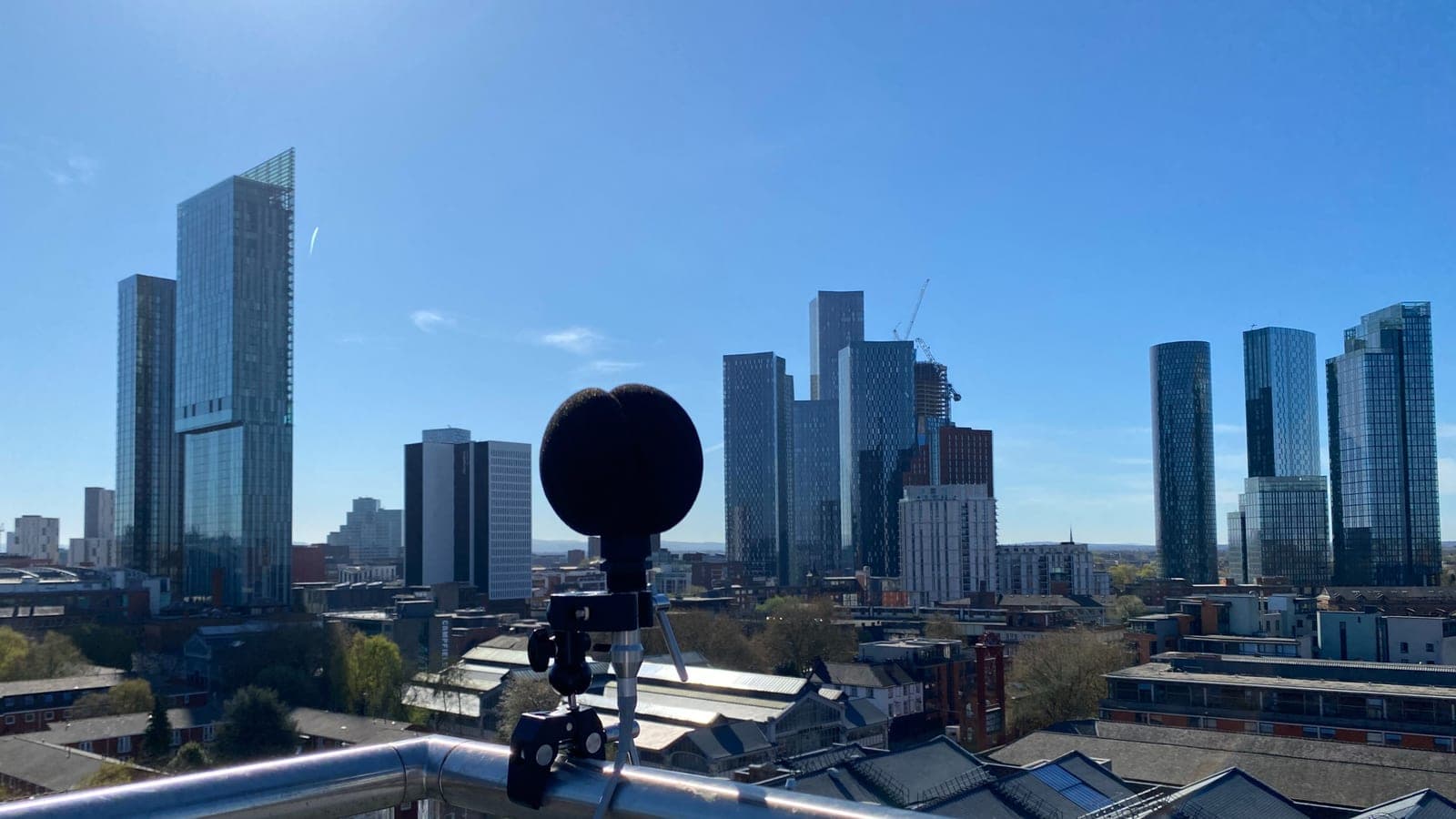
A sound level meter monitoring overnight on a Manchester rooftop

Send a postcode and a sentence.

That is genuinely enough to price most jobs. You will have a fixed quote back the same working day.