
Greater Manchester
Acoustic consultants in Oldham for noise surveys and BS 4142 assessments.
A noise survey in Oldham has to deal with two places in one borough: the dense town and its Chadderton and Failsworth edges, where the M60 and the Metrolink run past mills that sit a wall away from houses, and the Saddleworth valleys, where the night is quiet enough for a single piece of plant to carry. We measure both on their own numbers and write the report for the Oldham Council officer who has to sign it off.
The local picture
What we deal with in Oldham.
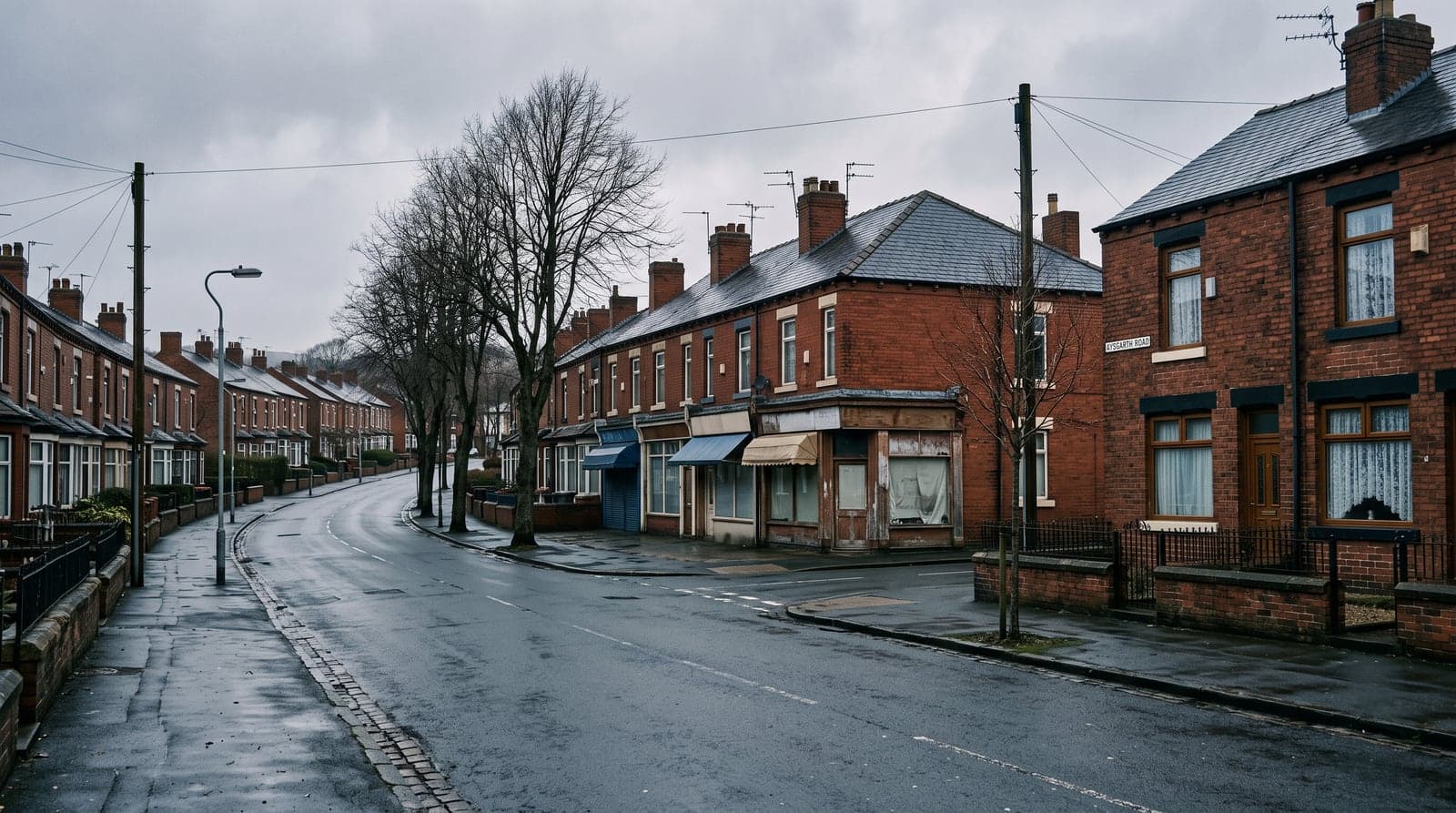
Oldham's noise climate is shaped by its history as a cotton-spinning town. Mills were built across Oldham, Chadderton, Royton, Shaw and Lees, and the ones still standing have mostly gone one of two ways. Some are being converted to flats, which brings sound insulation and facade noise questions into a structure that was built to carry machinery rather than separate homes. Others are in use as warehousing, storage and light manufacturing, often with terraced housing close on more than one side, and that is where much of the BS 4142 work in the borough arises: a long-standing source, homes that have always been there, and a new application that changes the hours, the plant or the yard.
The west of the borough carries the transport load. The M60 runs through Chadderton, Hollinwood and Failsworth, the A627(M) brings traffic in from the M62 and continues as the A627 into the centre, the A663 Broadway links the M60 to the A627(M) along the Chadderton side, and the A62 and the A671 Rochdale Road through Royton are the main radial routes. Broadway Business Park and the industrial estates around Chadderton and Hollinwood sit close to established housing, and warehouse and distribution sites in the borough can operate through the night. A residential scheme on this side of Oldham is usually dealing with a road source and a commercial one at the same time, and the assessment has to separate them: the commercial sound is rated against the background under BS 4142, while the road is assessed to ProPG and BS 8233 against internal and external targets.
Metrolink changed the town centre's sound. The Oldham and Rochdale line replaced the old railway loop and now runs on street through the centre, with stops at Oldham King Street, Oldham Central and Oldham Mumps, out through Shaw and Crompton towards Rochdale in one direction and Freehold, South Chadderton, Hollinwood and Failsworth in the other. Trams run early and late, they can squeal on tight curves, and on the street-running sections they pass within a few metres of upper-floor windows. The council's town centre regeneration is bringing new homes into the centre, close to the tram, so the tram is now a routine source in a noise survey in Oldham town centre rather than an afterthought. Heavy rail still matters too: the Huddersfield line runs through Greenfield and into the Standedge tunnel at Diggle, and the Calder Valley line passes close to the Chadderton edge of the borough.
Saddleworth is the other half of the borough and it behaves like a different place. Uppermill, Delph, Dobcross, Diggle, Greenfield and Denshaw sit in steep Pennine valleys with the moors above them, and at night the background sound level in these villages is very low. That is good news for residents and hard news for anyone proposing plant. A heat pump, a refrigeration condenser or an extract fan that would disappear into the traffic in Chadderton can be the dominant sound in Dobcross at three in the morning. Against a background that low, a quiet source can still show a large excess over background, and BS 4142 expects the absolute levels and the character of the area to be weighed as context. In a still valley that context can cut either way, so the report has to set it out rather than leave the outcome to the arithmetic. The valley sides also do unusual things to sound: a source part way up a hillside can be screened from the houses on the road below and clearly heard across the valley, and a propagation calculation that assumes flat ground gets the wrong answer.
Oldham Metropolitan Borough Council determines planning applications across the borough outside the Peak District National Park, and its planning policy now sits within Places for Everyone, the joint plan for nine Greater Manchester districts, alongside the borough's own development plan documents. Its validation requirements generally look for a noise assessment where new residential development is proposed near roads, the tram, railways or commercial and industrial uses, and where a noise-generating use is proposed near existing homes. Conditions on consents commonly require BS 8233 internal levels to be achieved in habitable rooms, a BS 4142 assessment of any fixed plant against the measured background, and a construction method statement with working hours where a site is close to neighbours. The environmental health team reads the reports, so the assessment has to answer the condition in the words it uses rather than in general terms.
The way we programme a noise survey in Oldham follows from that geography. A town or Chadderton site gets at least 24 hours of unattended logging with Class 1 meters, and several consecutive nights where the night background governs or where night-time deliveries or weekend trading matter. An exposed site on the Saddleworth moorland edge gets a longer deployment again, because more of the record is lost to wind and rain. We log the weather throughout and set the affected periods aside before the background level is fixed. Where a scheme runs from a busy road out to open country, as some of the borough's larger housing sites do, we measure at more than one position rather than carry one number across a site where it does not hold. The engineer who scopes the survey runs it, writes the report and answers the council's questions, so the person the officer speaks to is the one who was on site.
Typical instructions
Work that comes up here.
Taken from the job book rather than a service list. If yours is not on it, it is still likely to be routine. Send the wording and we will say so.
- Noise Surveys for residential schemes on the town centre regeneration sites and along the Metrolink route
- BS 4142 Assessments for mills in industrial use, distribution units and workshops beside housing in Chadderton, Royton and Shaw
- Residential Noise Assessments to ProPG and BS 8233 for new homes near the M60, the A627(M) and the Huddersfield line through Greenfield
- Sound Insulation Testing and design advice for mill conversions and new build flats across the borough
- Heat Pump Noise Assessments to MCS 020(a) and BS 4142 in the Saddleworth villages, where night backgrounds are very low
- Plant Noise assessments for pubs, restaurants and small commercial units in Uppermill, Delph and Greenfield
- Construction Noise & Vibration assessments and monitoring to BS 5228 for sites close to terraced streets
Local detail
We read your checklist before we price it.
Validation requirements vary between authorities and between applications. We read the one for yours before quoting, so the scope matches what is being asked for rather than what is usually asked for.
- Determined byOldham Metropolitan Borough Council
- CountyGreater Manchester
- CoverageOur main office is in Manchester, with a network of engineers across the UK ready for your site.
- InstrumentationClass 1, calibrated and certificated
- Fee basisFixed, agreed before we start
- Report turnaroundFive working days from survey
The fee is fixed before we book the survey, wherever the site is. Most surveys use unattended monitoring: the equipment is installed, left for the period the standard asks for, and collected.
What you can instruct
Services available in Oldham.
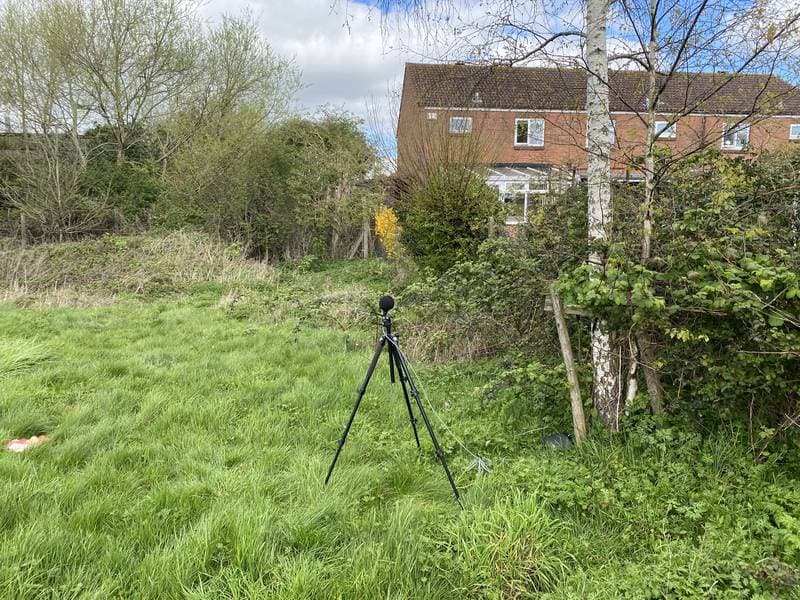
Noise Surveys
Baseline and environmental monitoring, attended or unattended.
Learn more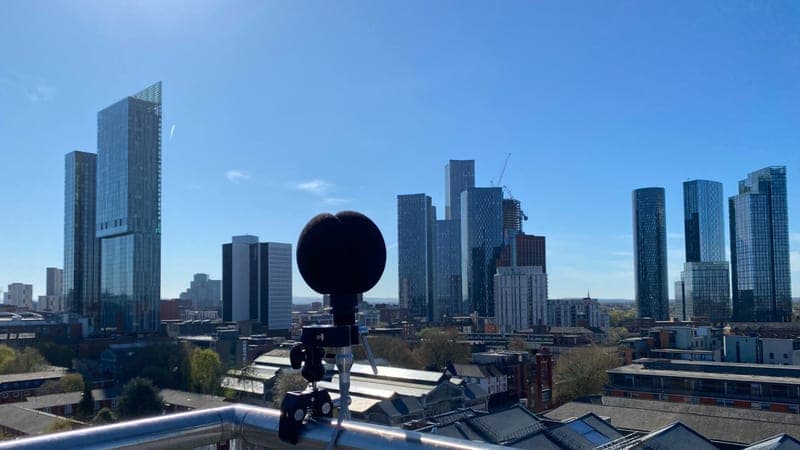
Residential Noise Assessments
ProPG and BS 8233 assessments for new homes, conversions and Class MA, down to the glazing specification.
Learn more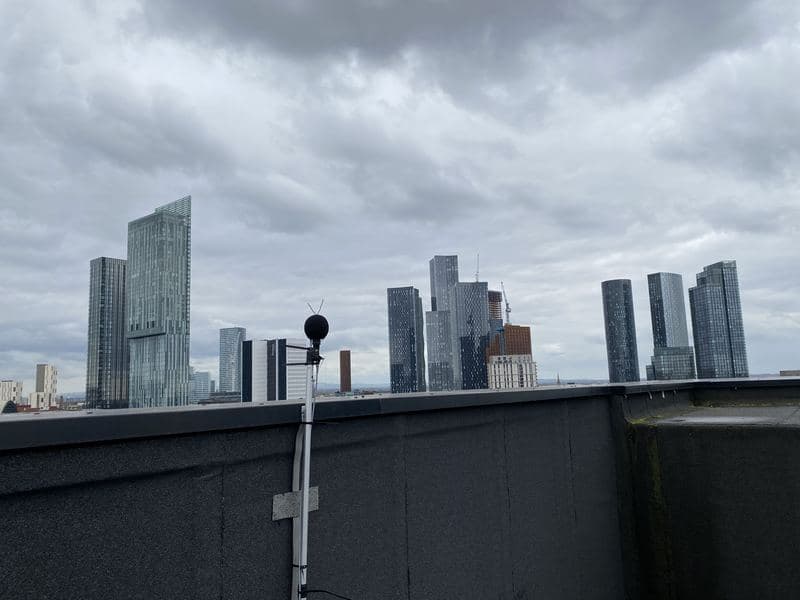
Plant Noise
ASHPs, chillers, kitchen extract and refrigeration, assessed against background.
Learn moreBS 4142 Assessments
Industrial and commercial sound rated against the background at the nearest homes: warehouses, yards, manufacturing and fixed plant.
Learn more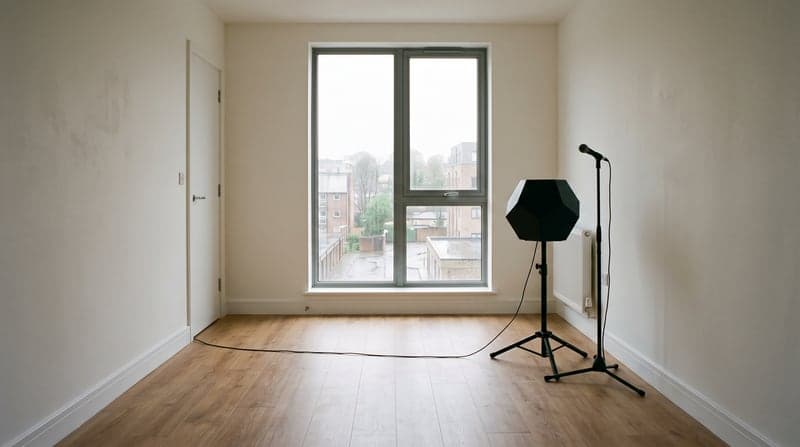
Sound Insulation Testing
Pre-completion testing to Approved Document E, scheduled around handover.
Learn more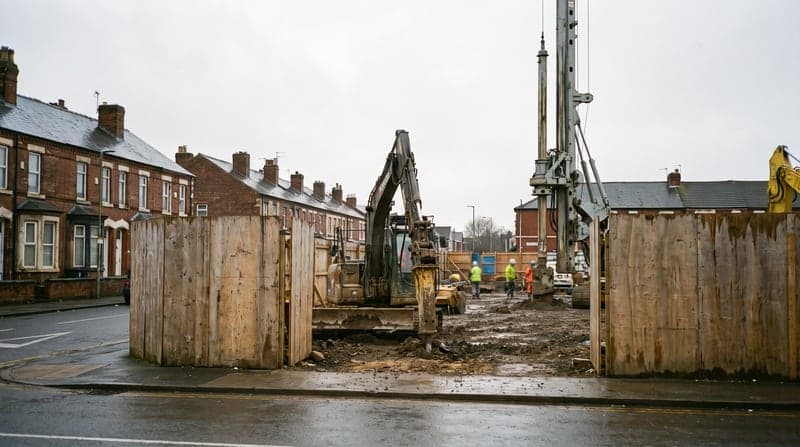
Construction Noise & Vibration
BS 5228 assessments, Section 61 consents, CEMPs and site monitoring.
Learn moreNot sure which standard applies to your condition? The ProPG, Noise at Work Regulations, Approved Document O references explain what each one asks for, or send us the letter and we will tell you.
Questions
Oldham: common questions.
What does Oldham Council ask for in a noise assessment?
It depends on the application, but the pattern is consistent. New homes near the M60, the tram or a commercial neighbour will usually need a noise assessment at validation, normally to ProPG and BS 8233 for transport sources and BS 4142 where plant or a yard affects the site. A noise-generating use near existing housing needs a BS 4142 assessment of the plant and operations against the measured background. Conditions then ask for the internal levels or the rating level to be demonstrated. We read the validation checklist and any condition wording with you before quoting, so the survey measures what the officer will ask about.
How much does a noise survey in Oldham cost?
Fixed fees start from £1,250 + VAT, and most planning surveys and assessments land between £1,250 and £2,500 + VAT. Desk-based work can be less; multi-source and EIA work costs more. The fee is sized to the scope the council has asked for, agreed before anything starts, and it does not move. Send the postcode, a sentence on what is proposed and the council's wording, with drawings if you have them, and the quote comes back within 10 minutes on average.
Do you cover Saddleworth and the Pennine villages as well as Oldham town?
Yes: Uppermill, Delph, Dobcross, Diggle, Greenfield, Denshaw and the rest of the parish, along with Chadderton, Royton, Shaw, Lees and Failsworth. The fee is fixed and the programme runs the same wherever the site is. One point to check early: the moorland on the eastern edge of Saddleworth lies inside the Peak District National Park, and applications there go to the National Park Authority rather than Oldham Council, which changes the policy the report has to answer.
Why does a plant assessment in Saddleworth need its own background survey?
Because the night background in the valleys is typically far lower than in Oldham town or Chadderton, and BS 4142 rates the plant against the background actually present at the receptor. A level borrowed from a town survey can make a heat pump or a condenser look acceptable when it is not, and an officer reviewing the report will ask where the background came from. We log long enough to capture the quiet periods, record wind and rain so affected periods can be set aside, and take the background from the data rather than an assumption. Our BS 4142 explainer sets out how the rating level is built.
I am converting a mill in Oldham into flats. What acoustic work is needed?
Two strands. Part E sound insulation between the new dwellings, which in a mill means designing around continuous floors, columns that carry sound between storeys and masonry that was never meant to separate homes, then pre-completion testing to Approved Document E once built. And a facade noise assessment if the mill sits near a road, the tram or a working industrial neighbour, which many do, so the glazing and ventilation can be specified from measured levels. Our Sound Insulation Testing page covers the Part E side; our Residential Noise Assessments page covers the planning side.
Does the Metrolink tram count as a noise source for homes in Oldham town centre?
Yes. On the street-running sections through the centre the tram passes close to facades, runs from early morning until late evening, and can produce wheel squeal on tight curves that a road traffic calculation does not predict. For new homes along the route it is assessed as a transport source, with ProPG as the framework and BS 8233 the internal targets, and because each passby is a distinct event the night assessment looks at maximum levels as well as the average. The survey runs long enough to capture the first and last services. Our Road, Rail & Aircraft Noise page explains how transport sources are measured.
- ManchesterGreater Manchester
- SalfordGreater Manchester
- StockportGreater Manchester
- TraffordGreater Manchester
- LiverpoolMerseyside
- CheshireCheshire
- LancashireLancashire
- BuryGreater Manchester
- TamesideGreater Manchester
- RochdaleGreater Manchester
- BoltonGreater Manchester
- WarringtonCheshire
- WiganGreater Manchester
Working on something in Oldham?
Send a postcode and a sentence. We're ready to price it right now.