

Greater Manchester
Noise surveys and BS 4142 assessments in Tameside.
Acoustic consultants for Ashton-under-Lyne, Hyde, Stalybridge, Dukinfield, Denton and Droylsden, from the M60 corridor to the Pennine edge. A noise survey in Tameside has to answer the condition Tameside Metropolitan Borough Council actually wrote, and that is what ours are built to do.
The local picture
What we deal with in Tameside.
Tameside's noise climate runs from a motorway interchange that rarely goes quiet to residential streets on the Pennine edge where very little is heard at night, all inside a single borough. The M60 runs north to south down the west of the borough, past Droylsden and through Audenshaw and Denton, and the M67 leaves it at Denton to run east past Hyde to Hattersley and Mottram. The junction between the two at Denton carries the traffic heading east for Longdendale, Glossop and the Woodhead and Snake routes beyond. Any residential scheme within sight of either road is dealing with a steady, broadband level that governs the glazing and ventilation specification directly. A survey there has to run long enough to show the night-time average and the maximum levels from individual vehicles. Those are what the fabric is designed against, not the afternoon figure a short visit records.
Ashton-under-Lyne is the administrative centre and where most of the borough's regeneration has landed: the interchange that pairs the bus station with the Metrolink terminus, the civic and college building on the market square, and the old baths brought back into use. Town-centre housing near the interchange has to deal with buses and trams at once. The East Manchester tram line runs in from Droylsden through Audenshaw and Ashton Moss to the stop beside the town centre. Tram noise is not loud in the way a motorway is, but wheel squeal on the tighter curves and the first services of the morning are what residents notice, so a residential noise assessment near the line has to measure through a full service pattern rather than infer it from road traffic. The railways matter too. Guide Bridge is a junction, with the Glossop line running out through Newton for Hyde, Godley and Hattersley and the loop through Hyde towards Marple, while the Huddersfield line through Ashton, Stalybridge and Mossley is part of the Transpennine Route Upgrade.
The Tame valley through Stalybridge, Dukinfield and Hyde was built for cotton, and the mills it left behind are now housing stock in waiting. The difficulty for Approved Document E is the structure itself: timber floors or brick jack arches carried on cast iron beams and columns, running unbroken beneath the walls between flats and carrying sound sideways as well as down. Where the building is listed, the separating construction has to be resolved within what the conservation officer will accept, and a facade that cannot be upgraded moves more of the external noise question onto secondary glazing and the ventilation strategy. We advise on the separating construction before the layout is fixed, then carry out the pre-completion sound insulation testing that building control will ask for. The Huddersfield Narrow Canal through Stalybridge and Mossley, and the Ashton and Peak Forest canals meeting at Portland Basin, put many of these buildings beside water and a public towpath. Voices on a towpath under a bedroom window late at night belong in the survey alongside the road and rail.
Dukinfield, Hyde and Denton keep working industrial estates inside their residential grain. The estates around Globe Lane in Dukinfield, the mill-era units in and around Hyde, and the industrial land off Windmill Lane in Denton all sit close to terraced streets. That puts BS 4142 at the centre of much of the planning work here, in both directions. An operator adding a compressor, an extract system or a night shift needs to show that the rating level sits acceptably against the background at the nearest bedroom window. A developer proposing homes on a cleared plot beside the estate needs to show that the new residents will not be the ones complaining about what was there first. Our BS 4142 explainer sets out how the rating level is built; the local point is that the background in these streets is often lower than their appearance suggests once the road traffic falls away after midnight.
East and north of Stalybridge the borough climbs. Mossley, Carrbrook, Millbrook, Hollingworth and Broadbottom sit on the Pennine edge with the moor behind them, and night-time background sound levels there can fall into the twenties. That changes the answer to almost every plant question. A domestic air source heat pump that meets the MCS 020 a) permitted development limit, and would go unnoticed against the night-time traffic in Denton, can be clearly audible in a Mossley garden at three in the morning, and a BS 4142 assessment against the measured background is the way to find that out before a neighbour does. The same applies to pool and spa plant, cold stores and the small commercial units that have grown up in the valley bottoms, all of them judged against a background that gives very little headroom.
The borough's allocated growth sits where these conditions meet. Godley Green, east of Hyde, is the council's garden village allocation, close to the M67 and the Glossop line. Ashton Moss, beside junction 23 of the M60, pairs new employment land with the existing retail and leisure park and the tram stop. Hattersley, at the eastern end of the M67, has seen long-running estate renewal, and the A57 Link Roads scheme now under construction at Mottram will change where through traffic runs around the Longdendale villages. Godley Green and Hattersley put new homes beside a motorway, a railway or both, and Ashton Moss puts new commercial sources near existing homes. Each needs a noise survey in Tameside that measures the existing sources over the periods that matter, and where the road network is changing, as around Mottram, an assessment that carries the measured baseline forward to the traffic the scheme will actually face.
Tameside Metropolitan Borough Council determines applications across the borough, against the Places for Everyone joint plan it shares with eight other Greater Manchester districts and its own local policies. Its local validation list includes a noise impact assessment among the documents that may be required depending on the proposal, which in practice means residential development near roads, railways, the tram or commercial and industrial uses, and noise-generating uses near homes. Conditions commonly require internal levels to meet the BS 8233 guideline values, a BS 4142 assessment for fixed plant with the rating level tied to the measured background, and a scheme of mitigation approved before work starts and in place before anyone moves in. We programme a noise survey in Tameside to answer the condition as worded: a weekday and a weekend where the tram or a night shift is the source, at least one full night and often several where the background governs, and a report that quotes the condition and answers it directly. The engineer who scopes the survey runs it, writes the report and answers the council's questions.
Typical instructions
Work that comes up here.
Taken from the job book rather than a service list. If yours is not on it, it is still likely to be routine. Send the wording and we will say so.
- Noise Surveys and Residential Noise Assessments for apartments in Ashton town centre and beside the Metrolink line
- BS 4142 Assessments for compressors, extract and night-time yard activity on the industrial estates of Dukinfield, Hyde and Denton
- Sound Insulation Testing and Acoustic Design advice for mill conversions along the Tame valley
- Road, Rail & Aircraft Noise assessments for housing on the M60 and M67 corridors and the Glossop line
- Heat Pump Noise Assessments against low backgrounds in Mossley, Stalybridge and Longdendale
- Construction Noise & Vibration assessments and section 61 consent support for the larger regeneration and allocation sites along the M60 and M67
- Noise Complaints investigation where a resident has approached Tameside's environmental health team
Local detail
We read your checklist before we price it.
Validation requirements vary between authorities and between applications. We read the one for yours before quoting, so the scope matches what is being asked for rather than what is usually asked for.
- Determined byTameside Metropolitan Borough Council
- CountyGreater Manchester
- CoverageOur main office is in Manchester, with a network of engineers across the UK ready for your site.
- InstrumentationClass 1, calibrated and certificated
- Fee basisFixed, agreed before we start
- Report turnaroundFive working days from survey
The fee is fixed before we book the survey, wherever the site is. Most surveys use unattended monitoring: the equipment is installed, left for the period the standard asks for, and collected.
What you can instruct
Services available in Tameside.
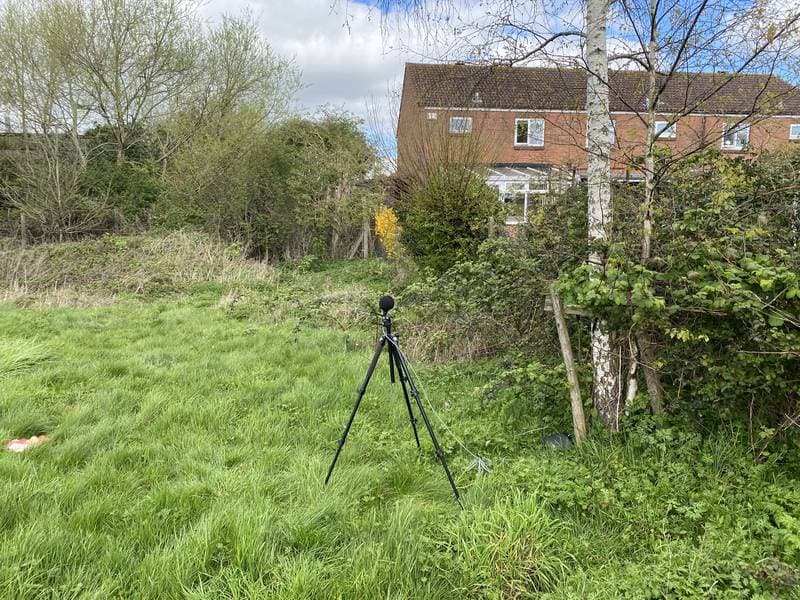
Noise Surveys
Baseline and environmental monitoring, attended or unattended.
Learn more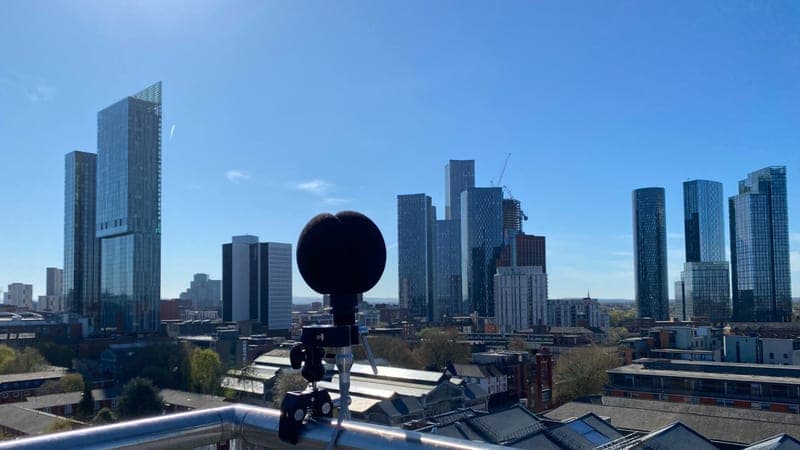
Residential Noise Assessments
ProPG and BS 8233 assessments for new homes, conversions and Class MA, down to the glazing specification.
Learn moreBS 4142 Assessments
Industrial and commercial sound rated against the background at the nearest homes: warehouses, yards, manufacturing and fixed plant.
Learn more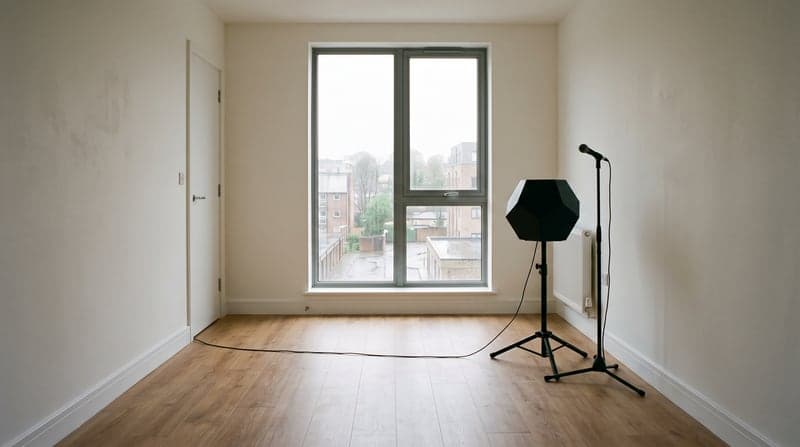
Sound Insulation Testing
Pre-completion testing to Approved Document E, scheduled around handover.
Learn more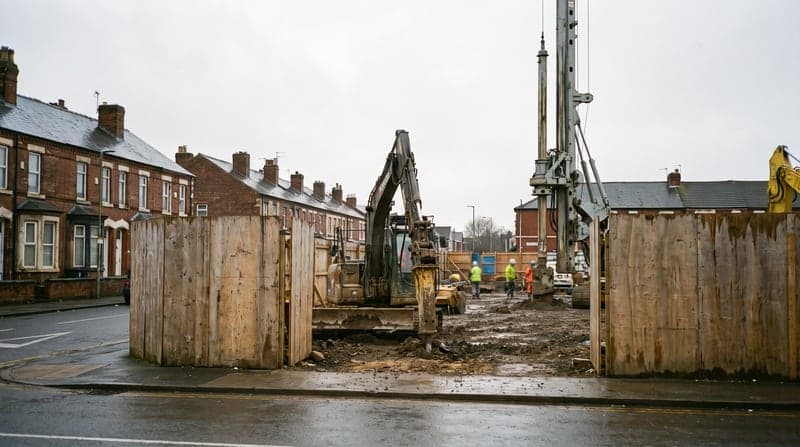
Construction Noise & Vibration
BS 5228 assessments, Section 61 consents, CEMPs and site monitoring.
Learn more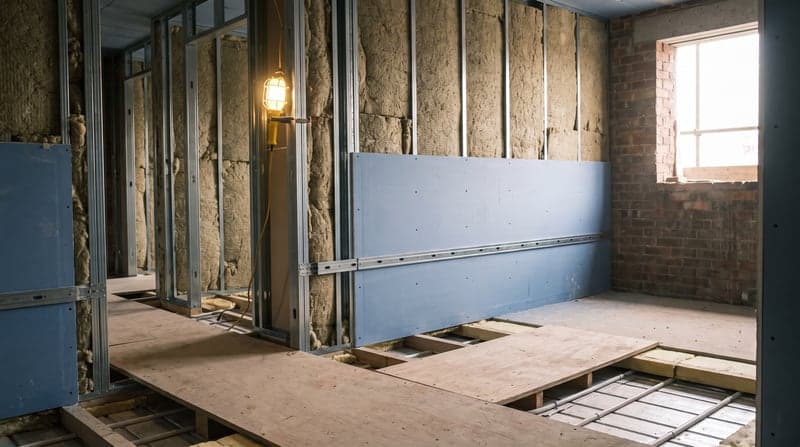
Acoustic Design
Practical input at every RIBA stage: specifications contractors can build from.
Learn moreQuestions
Tameside: common questions.
What does Tameside Council ask for in a noise assessment?
It depends on the scheme. For new homes near the M60, the M67, the railways or the tram, conditions commonly cite the BS 8233 guideline values for internal noise and require a mitigation scheme to be approved before work starts and in place before occupation. Where commercial or industrial plant is nearby, or you are the one installing it, a BS 4142 assessment against the measured background is the usual requirement. The council's validation checklist is the place to confirm it, and we check the scheme against it when we scope the work, so the survey answers the condition rather than a template.
How much does a noise survey in Tameside cost?
Fixed fees for a noise survey start from £1,250 + VAT, and most planning noise surveys and assessments land between £1,250 and £2,500 + VAT. Desk-based work with no site measurement can come in under that; multi-source schemes and EIA chapters go over it. The fee is sized to the scope and fixed when it is agreed. Send a postcode and a sentence through the form and a quote comes back within ten minutes on average.
Do you cover Hyde, Stalybridge, Denton and Mossley as well as Ashton?
Yes, the whole borough: Ashton-under-Lyne, Hyde, Stalybridge, Dukinfield, Denton, Droylsden, Audenshaw, Mossley, Hattersley and the Longdendale villages of Mottram, Hollingworth and Broadbottom. The fee is fixed and the programme runs the same wherever the site is: a survey can usually start the next working day, and the report lands within five working days of the survey.
Do I need a BS 4142 assessment for plant on an industrial estate in Dukinfield or Hyde?
If the plant needs planning permission or a condition covers it, and there are homes near enough to hear it, usually yes. Where no application or condition is involved, nothing requires one, but a complaint can still bring a statutory nuisance investigation, and that is the expensive time to start. Extract fans, compressors, refrigeration condensers and yard activity at night are the usual sources, and tonal or impulsive character attracts corrections that can turn a small excess over background into an adverse impact. An assessment before installation lets the plant be positioned and specified to sit low against the background; one after a complaint is fixing an existing problem.
I am converting a mill in Stalybridge to flats. What acoustic work will I need?
Usually two things. At planning, a noise survey and residential noise assessment covering the road, rail and any neighbouring industry, with the glazing and ventilation specification that follows. For building control, a sound insulation strategy for the separating floors and walls, agreed at design stage, followed by pre-completion sound insulation testing to Approved Document E. Mill floors that run continuously between flats are the usual failure point, and a weak floor is far cheaper to put right on the drawing than after a failed test.
Will a heat pump in Mossley or the Longdendale villages need more than an MCS 020 a) calculation?
Often, yes. MCS 020 a), the permitted development standard in England, checks a fixed limit and takes no account of how quiet the area is; our MCS 020 explainer sets out why that matters. On the Pennine edge of the borough the measured night-time background decides the question, so in Mossley, Carrbrook, Hollingworth and Broadbottom we usually log it near the property over at least one full night and assess the unit under BS 4142 against it. The position and specification are then settled before installation, not after a neighbour notices.
What happens if the council's environmental health officer objects to the report?
We answer the objection, in the officer's language, with the data. Where our quote says the Approval Guarantee applies and you have adopted the recommended approach, a written technical objection from the council to the methodology, calculations or conclusions is met by revising the report at no additional cost until it is resolved. If revision cannot resolve it, the fee for that work is refunded. It is a guarantee of the technical work, not of planning permission.
Working on something in Tameside?
Send a postcode and a sentence. We're ready to price it right now.